Travelling with extensions: the water rules change
Extensions change what a holiday's waters can do to you, because the hair is no longer the only thing in them. Underneath sits a join, keratin, tape, thread or a metal bead, and each join has its own rules for showers, pools and the sea. What each method can take, what quietly shortens its life, and the short kit that keeps a trip from ending in a refit.
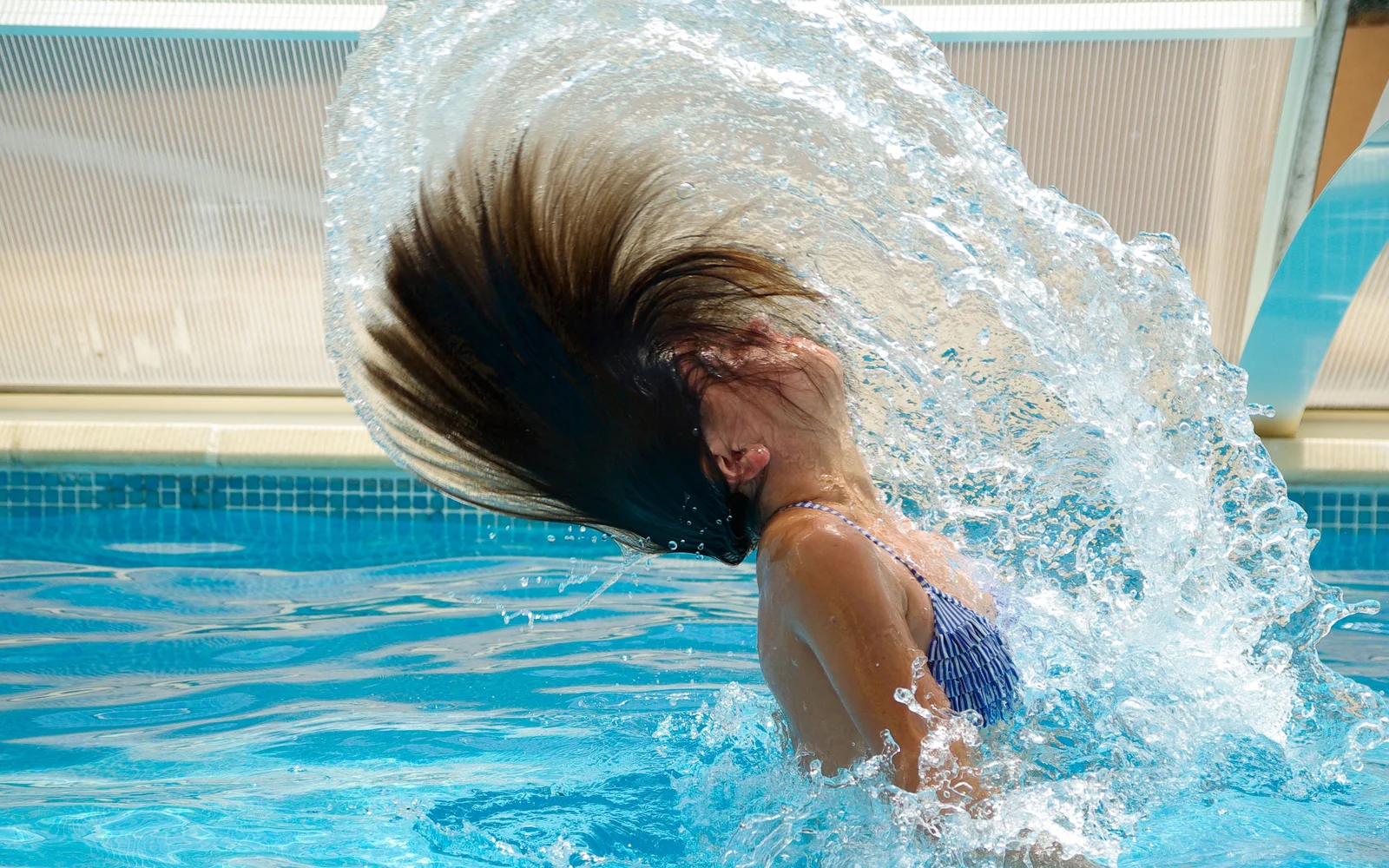
Extensions are the classic pre-holiday appointment, booked in the same spirit as the manicure: arrive looking finished. What the fitting also does is change the terms of every water you are about to meet. Your own hair is fed by your scalp and replaced by growing. Bought hair is neither. It gets no oil from your scalp, is usually coloured or processed, and porous, and it drinks in water faster than your own hair does, with nothing growing to replace what the water takes. It is held on by a join, keratin, tape, thread or a small metal bead, and each join has its own view of showers, pools and the sea. At home there is one water to reckon with. On a trip there are three, and they do not all attack the same place.
Keratin bonds: dry is safe, damp is not
A keratin bond is a small plug of keratin polymer melted around a section of your hair. Washing does not frighten it; being left damp does, and so do the wrong products. Great Lengths says it in its own maintenance guide: activities that result in a constant damp environment, especially swimming in sea water and chlorine, may lessen the longevity of the extensions. The same guide keeps conditioners and masks on the mid-lengths and ends only, away from the bond area, and warns that unapproved products may result in bonds slipping or degradation of the bond. Oils are the particular enemy: worked into the root, they loosen the bond's grip and the section slides out. The wash matters too: gentle and sulphate free, because sulphate shampoos break keratin bonds down faster. Rinse after a swim and dry the base properly, rather than leaving bonds to sit wet. And mind the calendar: Great Lengths asks for no wetting at all in the first 48 hours after a fitting, so a bond fitted the day before a beach holiday spends its first two days in its worst water.
Tape-ins: the tab is the weak point
Tapes are thin wefts held by adhesive strips, with your own hair sandwiched between two of them. The hair can take a holiday. The adhesive is wearier about it. Chlorine and salt water weaken tape adhesive over time, and oils and conditioner near the tabs do the same job faster. Long soaking is the real risk: a tape that stays wet and warm, loaded with heavy wet hair, is working towards slipping. So tape wearers swim on conditions: occasionally, briefly, hair braided or up, a rinse the moment you are out, and the tape area dried completely afterwards. Never sleep on wet tapes; a damp tab overnight is where matting and slipping start. Fresh tapes need settling time too: 48 hours after fitting before any swimming. Of the four methods, tapes are the one where the honest summary is swim if you must, and keep it short.
Sew-in weaves: nothing to dissolve, everything to dry
A weave is thread and your own braids, wefts sewn onto a plaited base: no adhesive for chlorine to attack, and the calmest of these methods in water. Its problem is underneath. The braided base holds water, salt and pool residue in a place that washes less freely and dries slowly, and a base that stays damp turns musty and can mildew. So the weave rule is not about the swim, it is about the hour after it: wash the base properly on swim days, then dry the roots and tracks completely, however long it takes. The wearers who come home with weave trouble are rarely the ones who swam. They are the ones who let the base stay damp for three days under hair that looked dry on top.
Micro-links: no glue, but a ring to keep clean
Micro-links, beads and nano rings hold each section with a small metal ring clamped shut. There is no glue to soften and no tape to lift. What collects is the problem. Chlorine, salt and mineral residue lodge around the bead, at exactly the point doing the holding, and wet, heavy hair slips at the clamp more easily. The care is housekeeping rather than chemistry: rinse after swims, keep the attachment points clean, dry them properly, and brush holding the hair at the root, so the pull does not land on the bead. Beads forgive water sooner than bonds or tapes do. They do not forgive being left dirty and damp.
The shower does the steady work
Pools and the sea get the attention, but the tap runs every day, and it may be the largest of the three exposures. Hard water lays a calcium and magnesium film on hair, wash by wash, and extension hair, oil free and porous, collects it faster: duller colour, rougher feel, tangles. The film gathers around bonds, tabs and beads too: extension specialists describe tape edges lifting and keratin bonds turning chalky in hard water areas. On our dataset, London runs at 320 mg/L, Paris at 269 and Rome at 346, all very hard, against a home like New York at 32, which is soft. A week of daily showers at those numbers is a slow mineral coating no single swim could match. The undo is a chelating wash, used the extension way: through the lengths, worked gently around the attachments rather than scrubbed into them, then the mask on the lengths. What the washes lift is in chelating, clarified; check your destination's number before you pack, in read your own city's number. Great Lengths even sells an Anti-Tap Water remedy for after swimming. When the bond maker bottles a tap water antidote, tap water counts as an exposure.
The one thing that does not wash out
Most holiday damage to extensions is gradual and manageable. One kind is neither. Light extensions, blonde especially, can turn peach or pink where chemical sunscreen meets chlorinated or mineral rich water, and the change is permanent. The filters named in salon aftercare are avobenzone and octocrylene. The defence is dull and complete: mineral sunscreen on holiday, and washed hands before you touch your hair after applying it. The green cast a pool can leave on fair hair is a different accident, copper in the hair, and a chelating wash lifts it, as our swimmer's guide explains. The pink does not lift. It grows out, or it is cut out.
What to pack
The kit is short. The wash is the planner's gentle slot: a sulphate free shampoo such as Briogeo's Be Gentle, Be Kind Aloe and Oat Milk Shampoo. The mask earns its place weekly, kept off the attachments and worked through the mid-lengths and ends: the planner's shelf holds Briogeo's Don't Despair, Repair! Deep Conditioning Mask, made for dry, over processed hair, a fair description of extension hair by week two of a trip. Add a leave-in conditioner for the lengths, a chelating wash if your destination is hard or very hard water, a mineral sunscreen and an extension friendly brush. Then the habits, which weigh nothing: wet your hair with clean water before the pool or the sea, so it drinks less of what is in them (the rinse first rule, from our swimmer's guide); braid it or put it up; rinse as you get out; dry the attachments completely; never sleep on it wet. A cap, if you swim daily, beats the lot: unfashionable, unbeatable.
None of this is a reason to leave the extensions at home. It is a reason to know which part of the arrangement the water is negotiating with: on your own hair the strand takes the damage and is replaced by growing; with extensions the strand is a purchase, the join is the weak point, and a looked after join will outlast the holiday. Know your water, and pack for the join.