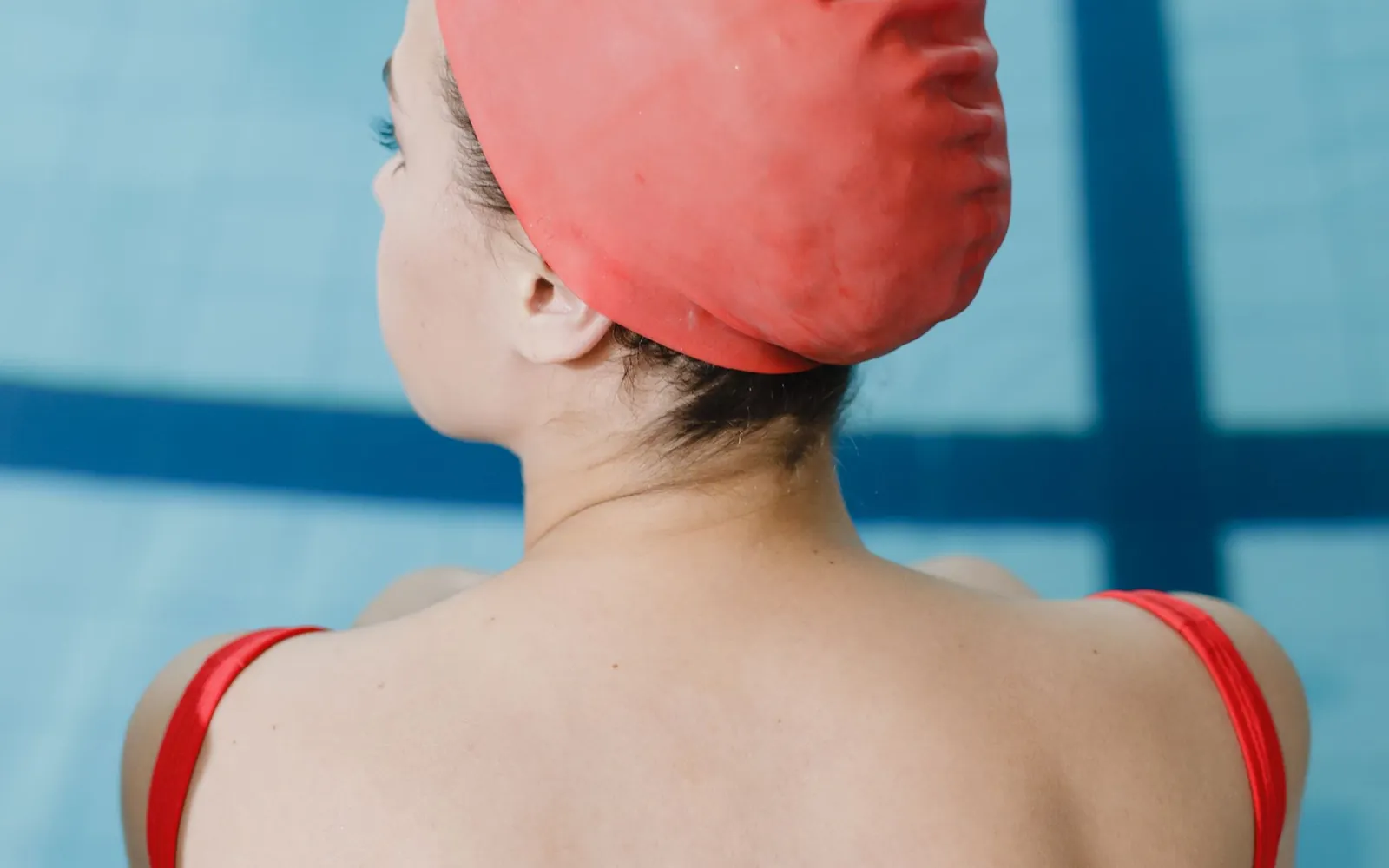
The holiday hair in the photos rarely matches the hair that comes home.
Most of the hair damage people bring home from a holiday was not done by the tap. It was done by the other two waters of a trip, the pool and the sea, working on hair for hours at a time while its owner was thinking about lunch. The good news is that the two waters damage hair in different, well understood ways, and most of both is preventable with one habit.
The pool: an oxidiser at work
Pool chlorine is held deliberately low, typically between 1 and 3 parts per million, enough to keep the water sanitary. But chlorine is an oxidising agent, and hair is one of the things it oxidises. It strips the sebum that waterproofs the strand, attacks the keratin the strand is built from and fades colour pigments, salon colour first. One swim does little. A holiday's worth of daily swims, in and out of the sun between them, is a slow bleach bath: hair comes home dry, porous, tangly and lighter than it left, and porous hair then absorbs everything faster, including the next swim.
The green tint is copper
The famous green cast on fair hair after a pool week is not chlorine, and treating it as chlorine sends people to the wrong remedy. The colour is copper: from algaecide treatments dosed into pools and from corroding copper plumbing, oxidised by the chlorine and bound onto the hair, where porous and bleached strands take it up most eagerly. Chlorine's role is accomplice: it oxidises the copper and roughens the hair so the copper sticks. This is why purple shampoo disappoints. It lays a compensating tint over the surface while the metal stays in the hair. A chelating wash (a detox wash) is the actual fix, because chelating ingredients bind copper ions and carry them out, the same binding chemistry that removes hard water minerals from hair in a London shower.
The sea: salt, crystals and sun
Sea water is about 3.5 per cent salt, and salt is hygroscopic and drying: it draws water out of the strand, and as hair dries between swims, salt crystals form on and in it, roughening the cuticle and setting the tangle. Wet hair full of salt then meets the day's other two agents, ultraviolet light, which degrades keratin and colour, and wind, which works the roughened strands against each other. None of this argues against swimming. It argues that sea hair is a managed condition, not an accident, and that the management is cheap.
Before you get in: the rinse first rule
Hair takes up water like a sponge, and a sponge that is already full takes up very little more. So the single most useful act in this entire guide costs nothing: before you swim, soak your hair thoroughly with clean tap water. A strand saturated with fresh water absorbs a fraction of the pool or sea water a dry strand would. Work a little leave in conditioner through it as a barrier layer, braid long hair or put it up so the lengths are not trailing and tangling, and if you swim seriously or daily, wear a cap: unfashionable, unbeatable. Every later step in this guide is a partial repair of damage this one step prevents.
After: rinse, wash gently, chelate occasionally
Rinse with fresh water as soon as you leave the pool or the beach, even if a full wash has to wait. At the end of a swimming day, wash gently: a mild shampoo aimed at the scalp, a proper conditioner on the lengths. Shampooing harder does not remove chlorine damage and adds its own. Then, the rhythm that ties this guide back to the rest of this site: after a heavy swimming week, or whenever fair hair starts to show a cast, use one chelating wash. It clears copper, mineral load and pool residue in a single pass, and it is the same product a hard water traveller already has in the bag.
When the tap joins in
The two exposures compound in hard water destinations. A swimmer in Cancún, where the tap water runs close to 700 mg/L, some of the hardest in this site's dataset, is laying pool chemistry over mineral film every single day, and the rinse first habit plus one mid week chelating wash stops being a refinement and becomes the plan. The planner treats swimming the same way: tell it your destination and it weighs the water from the tap and the water you will be swimming in together, which is how your hair experiences them anyway.