Kids' hair on holiday: chlorine, tangles and burnt parts
A holiday week asks more of a child's hair than any other week of the year: hours in the pool, salt in the sea, sun on the parting, and a comb at the end of it that can end in tears. Almost all of it is preventable with one habit before the swim and one patient routine after it. The children's version of the swimmer's guide, with the detangling done in the right order.
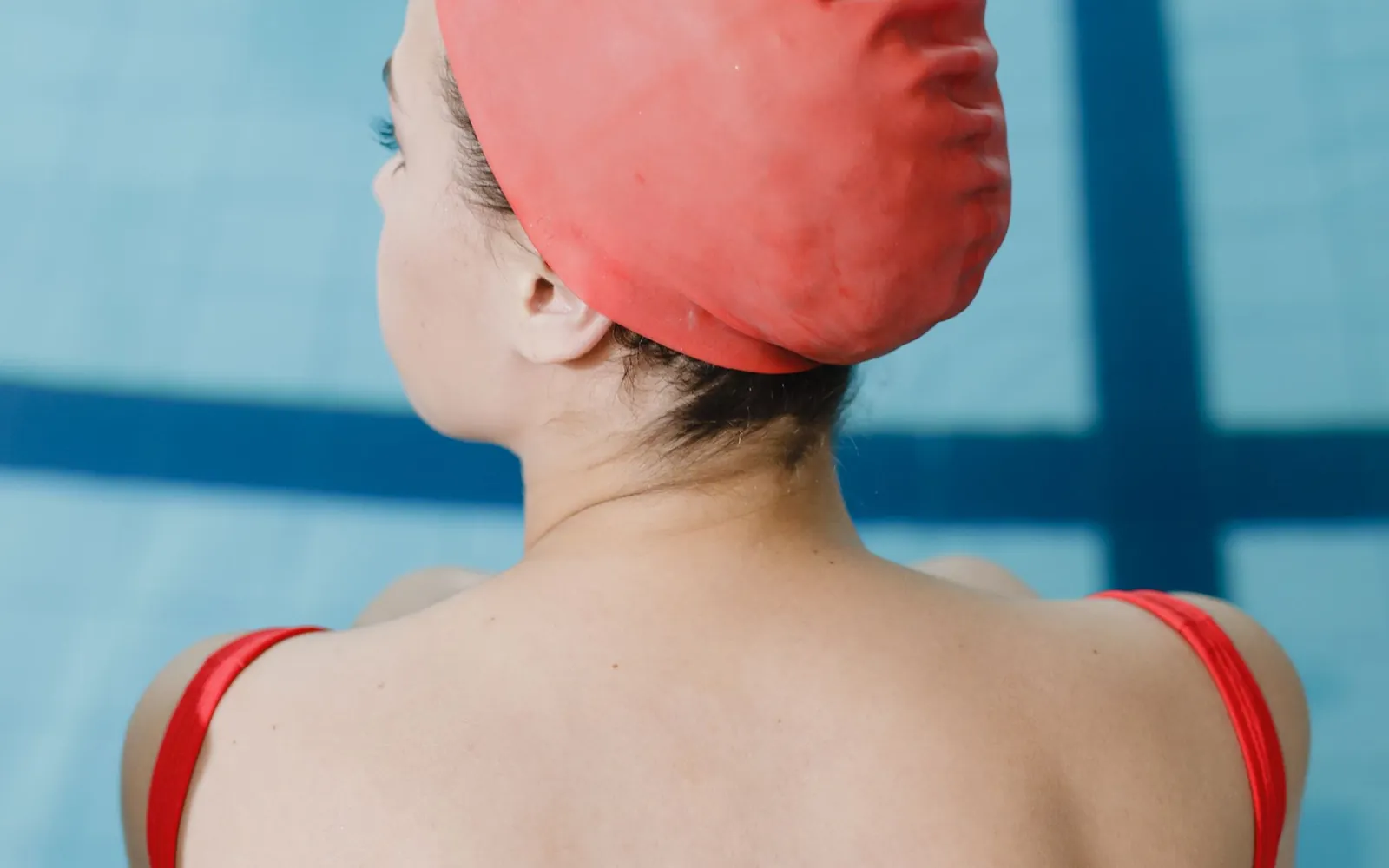
The difficult moment of a family holiday rarely makes the photographs. It is the bathroom at seven in the evening: a tired child, hair still damp from the last swim, and a knot at the nape of the neck that has been building since Tuesday. One parent holds the comb. Everyone knows how this can go.
Children's hair does not meet worse water than yours does. It meets more of it, for longer, with less done about it. A nine-year-old swims four times and wears yesterday's salt into today's pool. The good news is that the children's routine is shorter than the adult one: one habit before the swim, one patient ten minutes after it, and a hat.
Why holiday hair tangles so fast
Start with what the water does, because it is the same chemistry as in our swimmer's guide, just given longer to work. Pool chlorine is kept deliberately low, around 1 to 3 parts per million, but chlorine is an oxidiser. It strips the natural oil that waterproofs a strand and roughens the hair's surface, and roughened strands grip each other instead of sliding. That grip is the beginning of every tangle.
The sea adds its own version. Sea water is about 3.5 per cent salt. Salt draws water out of the hair, and as it dries between swims, salt crystals form on and in it, roughening it further and setting loose waves into something closer to felt. Add wind and sun all afternoon, and by dinner the hair has been lightly matted by three processes at once. None is serious alone. Stacked over a week, they are the knot in the bathroom.
Before the swim: fill it with clean water first
The single most useful act costs nothing, and it is the lead rule of the adult guide too. Hair takes up water like a sponge, and a sponge that is already full takes up very little more. So before a child gets into the pool or the sea, soak their hair thoroughly under a tap or a beach shower. Saturated hair absorbs a fraction of the water that dry hair would drink.
While it is wet, work a little conditioner through the lengths as a barrier layer. Then put long hair up: a plait, a bun, anything that keeps the lengths moving together instead of trailing and tangling separately. Keen swimmers in the water every day can wear a swim cap, unfashionable and unbeatable in roughly equal measure. Our planner's rule for under-18s is the whole philosophy in one line: keep it simple, a gentle detangling conditioner is enough, no treatments needed.
The parting burns first
The one place a child's sun routine usually misses is the strip of scalp along the parting, plus the hairline and the tops of the ears. Hair covers the rest of the head. The parting is skin, it is horizontal, it faces the midday sun directly, and it burns as any other uncovered skin burns. A pink, tender parting on day three is one of the commonest sights of a beach holiday, and sore enough to make the evening detangle miserable.
Prevention is ordinary sun care, nothing specialised. A hat is the easiest answer, provided it is one the child will actually keep on; a cap protects the parting even if it does less for ears and neck. Where a hat will not stay, dab the sunscreen you already own along the parting with a fingertip before you go out, and put it back on after swimming, the same as on shoulders. That is the American Academy of Dermatology's advice for any exposed scalp: sunscreen on it, or a hat over it. No special scalp product is needed.
After the swim: rinse now, wash gently later
Rinse the hair with fresh water as soon as the swimming is done, even if a proper wash has to wait until the evening. The rinse does the urgent work: it takes the salt and most of the pool water back out before they dry in place. At the end of the day, wash gently, and only then. A child does not need shampoo after every dip. One gentle wash, aimed at the scalp, with the rinse carrying it through the lengths, is plenty. Shampooing harder or oftener does not undo chlorine; it adds its own drying to the pile.
The planner's gentle list is a family bathroom shelf, and its lead name is the one to pack: Davines MOMO Shampoo, a moisturising wash for dry or dehydrated hair, mild enough to repeat daily. One shampoo covers the whole trip, for the children's hair as much as your own. Follow it with the detangling conditioner, worked through the lengths and left for a couple of minutes: the planner's partner pick, Davines MOMO Conditioner, which hydrates and detangles without heaviness. On children's hair the conditioner is not the supporting act. It is the product the whole evening depends on.
Detangling without tears, in the right order
Detangle wet, conditioned hair, never dry post-swim hair. Wet hair breaks more readily than dry, but dry, salt-set hair has to be dragged apart, and dragging is what hurts and snaps. Conditioner gives wet hair slip, and slip lets a knot loosen instead of tightening. So the detangle happens in the bath or at the end of the shower, with the conditioner still in.
The order matters more than the tool. Fingers first, to ease the worst knots apart by hand. Then a wide-tooth comb, starting at the very ends: clear the last few centimetres, then a little higher, then a little higher again, rather than pulling from the root through the whole tangle at once. Hold the hair above the section you are combing, so the pull is absorbed by your hand, not the child's head. That grip is most of the difference between a detangle and an ordeal. Rinse last, once the comb runs clean.
It takes ten patient minutes on a bad day. A brush through dry hair, or a firm yank, costs more hair and more goodwill than the ten minutes do.
If fair hair turns green
It is the classic alarm of the second week: a fair child's hair comes out of the pool with a green cast, and chlorine takes the blame. The green is not chlorine. It is copper, from copper-based algaecides and from pool plumbing, binding onto the hair. The cosmetic science was settled in the 1970s: hair exposed to copper turns green, chlorine on its own does not do it, and chlorine's real role is rougher: it oxidises the hair, and oxidised, porous hair grabs the copper fastest. Fair hair shows it most because there is the least colour behind it.
Prevention is the routine above: pre-wetted, conditioned hair takes up far less of everything, copper included. If the green has already arrived, ordinary shampoo will not shift it; the original research found the colour could not be washed off by normal shampooing. What removes copper is a chelating wash (a detox wash), whose ingredients bind the metal so it rinses away. For a child that is a one-off remedy if the tint appears, not a routine, and not a reason to put a detox bottle in a child's everyday bag.
What to pack
A wide-tooth comb, the one thing here that cannot be improvised at the other end. One gentle shampoo. One detangling conditioner, in the bigger bottle if two children share it, because conditioner is what a swimming week actually consumes. Hair ties, a hat each, and the sunscreen you already own. That is the whole kit. No mask, no bond builder, no treatment shelf: children's hair needs fewer products than the adult routine, used in the right order, at the right end of the day.