The Mediterranean runs hard: one sea, two kinds of shower
The summer sea has a water story nobody packs for. Antibes runs at 476 mg/L, Naples at 360 and Rome at 346, with Valencia, Venice, Palma and the Côte d’Azur all very hard, while Madrid, at 30, is one of the softest capitals in Europe and Lisbon runs moderate at 81. The limestone pattern behind the numbers, the two famous exceptions, and the routine a Mediterranean fortnight calls for.
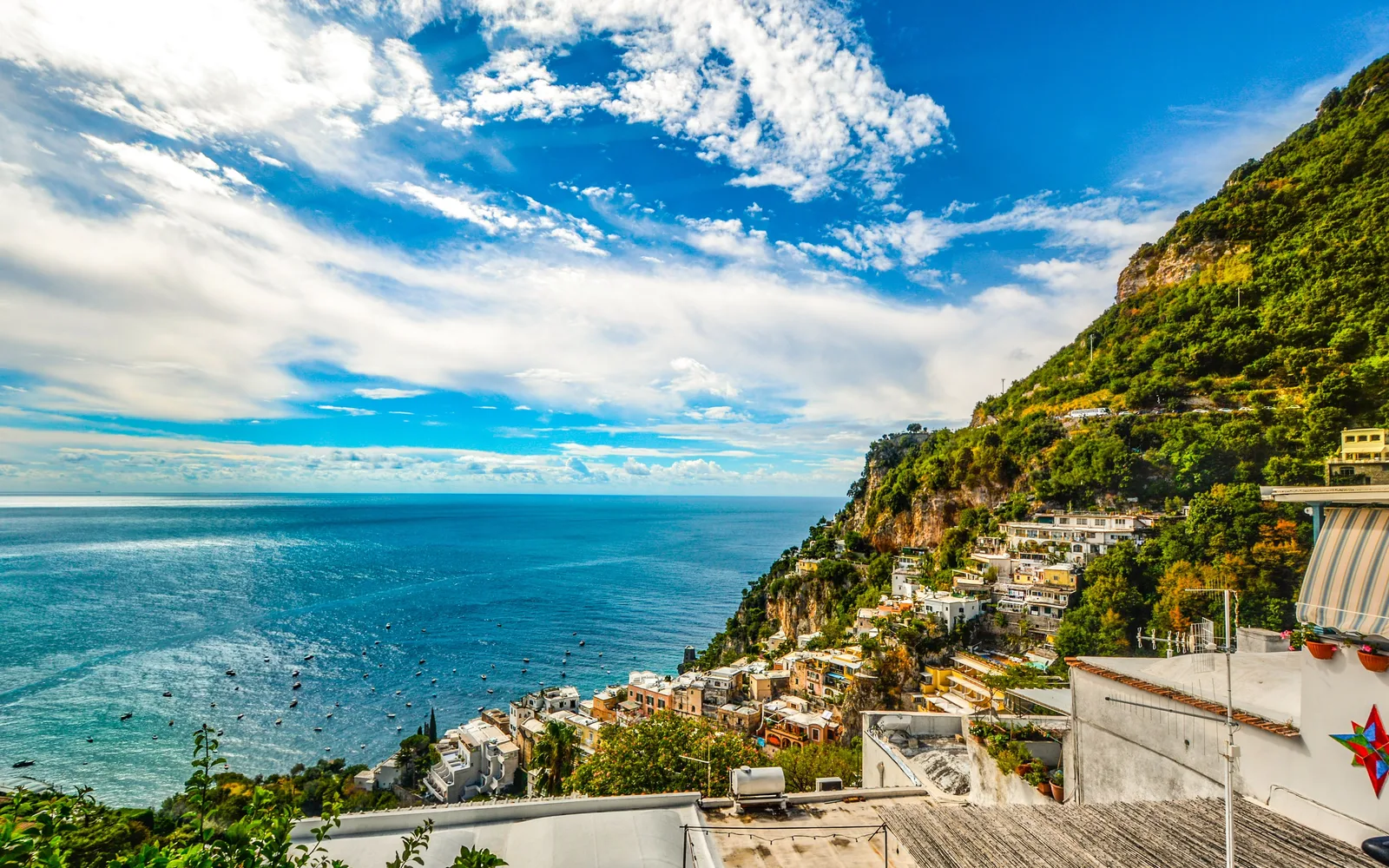
The Mediterranean trip is planned around water: which beach, which boat, which pool. The water nobody plans for is the shower’s. It deserves a thought, because the Mediterranean is, with a couple of famous exceptions, hard water country, and a fortnight of it lands on hair at exactly the moment the sun and the sea are doing their own work. These are our dataset figures for the cities and resorts we map around the sea, and the routine they add up to.
The hard core
The hardest figure we hold anywhere on the Mediterranean belongs to Antibes, at 476 mg/L. Read that again if you know the Alps piece: it is nearly double Megève’s 255, the toughest ski town shower in our dataset. Naples runs at 360, Rome at 346. Valencia is at 300, Venice at 285, Palermo at 276, Alicante at 272, Cannes at 270, Palma de Mallorca at 267, Nice at 255, Florence at 210 and Marseille at 206. Every one of those is very hard water, over 180, most of them far over.
Below that top tier, the hard band holds the two biggest city breaks on the sea: Barcelona at 175 mg/L and Athens at 145. Hard rather than very hard is a difference of degree, not of kind: the film builds more slowly than in Naples, and across a fortnight it builds all the same.
The pattern underneath is the one this Journal keeps meeting. The Mediterranean coast is limestone country, and water that has travelled through limestone arrives loaded, as we set out in Hard water and your hair. The sea is blue, the rock is white, and the shower carries the rock with it.
The two exceptions
Then there is Madrid. Spain’s capital is not on the coast, but it is where half of Mediterranean trips begin or end, and it runs at 30 mg/L, soft, one of the softest capitals in Europe. The reason is the mirror image of the coast’s: Madrid’s reservoirs sit in the granite of the Sierra de Guadarrama, and its water supplier, Canal de Isabel II, describes the city’s water as soft and low in minerals for exactly that reason. A trip that pairs Madrid with Valencia is a trip between 30 and 300, and your hair will know which city it is in before you check the map.
The second exception is the Portuguese coast. Lisbon runs at 81 mg/L, moderate, Porto at 100, Faro at 87, and Málaga and Seville, on Spain’s southern coast but off the hardest limestone, sit at 96 and 118, both moderate. Moderate water asks little: the rhythm stretches out, the home routine mostly survives, and the detox wash becomes an occasional item rather than the trip’s organising fact.
Spain alone holds the whole range of this article inside one country’s borders: 30 in the capital, 300 in Valencia, 272 in Alicante, 267 across in Mallorca. A Spanish road trip is a tour of every band the planner recognises, sometimes in a single week, and it is the clearest demonstration in Europe that a country’s name tells you nothing about its showers. The region tells you. The rock tells you. The number settles it.
The islands divide too
The islands are not one story either. Mallorca runs at 267 mg/L, very hard, the full top-tier pattern an hour from the mainland. Corsica splits down its own middle: Bastia, in the north east, runs at 133, hard, while Ajaccio, on the west coast, runs at 64, moderate, a gentler shower than anywhere on the French mainland coast we hold. An island is not a water supply. It is several, divided by the same limestone lines as the mainland, and the resort’s number, not the island’s name, is the one to pack by.
The coasts with no number
Two famous coasts are missing from the league table, on purpose. We hold no solid published figure for Dubrovnik or for Ibiza, and this site does not print a number it cannot stand behind, so they stay gaps until an official supplier figure or a citable published source lands. If one of them is your summer, the cautious default costs nothing: pack for hard water, as the rest of the Croatian and Balearic pattern suggests, and if the shower turns out kinder, the detox wash simply stays in the bag.
Summer stacks the work
A Mediterranean trip never sends the water in alone. The same fortnight usually holds sea swimming, a pool, strong sun and heat, each with its own claim on hair, and we have covered those in Salt water and sunshine and Chlorine, salt water and your hair. The mineral film matters more in that company, not less. Build-up roughens the surface of the hair, roughened hair takes up more of everything else the day offers, and colour, which the sun is already fading, loses its brightness faster over a mineral film than over clean hair. The traveller who blames the sea alone for the state of their hair in week two is usually looking at the sea plus 300 mg/L of shower.
The fortnight’s routine
In very hard water the planner’s rhythm is a chelating wash (a detox wash) every second wash, and a fortnight’s holiday at a wash every second day holds about seven washes: three or four of them chelating is the full version, and it is worth doing properly in the top tier, Rome, Naples, the Côte d’Azur. K18’s Peptide Prep Detox Shampoo is the planner’s default in this slot, and OUAI’s Detox Shampoo is the deep reset of the group, the one that comes in a travel bottle for exactly this trip. For coloured and lightened hair, L’Oréal Professionnel’s Metal Detox answers the Mediterranean’s particular problem, the copper that washing leaves inside the fibre, behind dull colour and hair that snaps more easily; coloured hair chelates at most every eighth wash whatever the water. K18’s Leave-In Molecular Repair Mask is the mask list’s standing default, and a summer fortnight in hard water is precisely its case: once a week, on the ends, against the combined work of minerals and sun.
In the hard band, Barcelona and Athens, the rhythm relaxes to every fourth wash, about once a week. In the moderate exceptions the detox wash becomes a single last-night reset, and in Madrid it can stay home entirely. The full rhythm is set out in Chelating, clarified.
One habit is worth forming for the whole sea: the last-night reset. Whatever the band, a chelating wash on the final evening of a Mediterranean trip sends you home with the fortnight’s minerals removed rather than travelling with you, and it matters more here than on most trips because the Mediterranean holiday stacks its exposures, sun, sea and hard showers arriving together and compounding. The traveller who does the reset on the last night starts the next trip, and the autumn at home, from clean hair. The one who skips it brings the Amalfi Coast home in their lengths, and spends September wondering why the home routine has stopped working.
Start with the number
The Mediterranean sells itself on one kind of water and showers you in another. So read the number before the trip the way you read the resort: over 180 across most of the Italian, French and Spanish coasts, soft in Madrid, moderate down the Portuguese side. Pack for the shower you are actually getting, and the sea can go back to being the only water story of the holiday.