Beyond the Alps: the Rockies run harder, Japan runs soft
When the Alps went on the scale, Megève topped the table at 255 mg/L. Widen the lens and the toughest shower in skiing is not in Europe at all: Park City, Utah runs at 327 mg/L, the hardest figure we hold for any ski town, while Japan’s powder towns run softer than almost anywhere in the Alps. The numbers for the Rockies and Hokkaido, the seasonal swing hiding inside them, and the routine each one calls for.
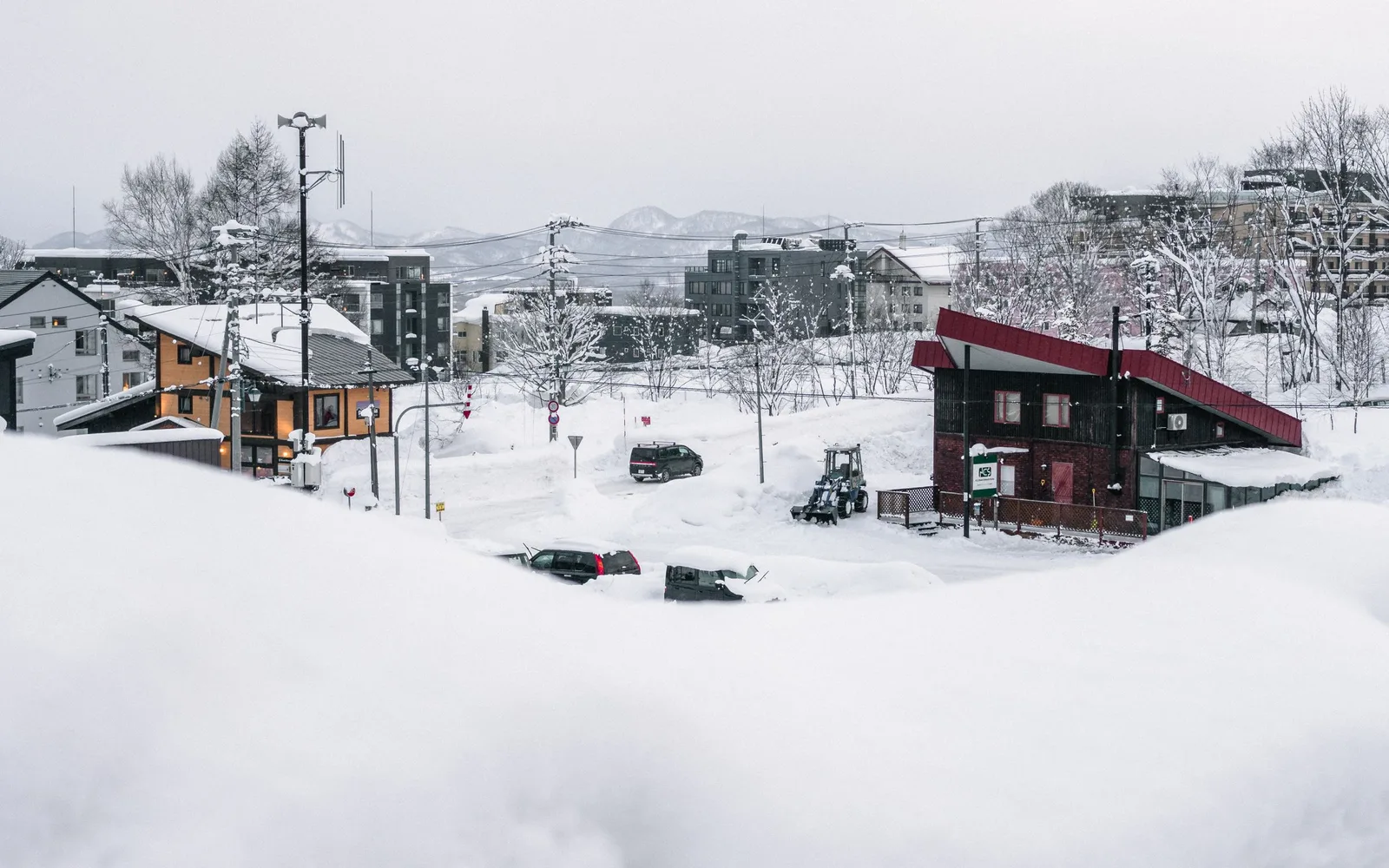
In October this Journal put sixteen Alpine ski towns on the scale, and the surprise was Megève: 255 mg/L, very hard, an hour from soft Chamonix. Skiers carry the same assumption to the other great ranges, that water which fell as snow a few weeks ago must be gentle on hair. Widen the lens to North America and Japan and the scale tips further still. The hardest shower we hold for any ski town is not in Europe. It is in Utah. And some of the softest famous showers in skiing are not in the Alps either. They are in Japan.
The Rockies run very hard
Start with the leader. Park City runs at 327 mg/L, very hard, an official figure from Park City Municipal, and the highest number we hold for a ski town anywhere in our dataset. The town’s published figures also carry the range behind the headline: readings between 182 and 516 mg/L across the year. Even the bottom of that range sits over the very hard line. A season in Park City is a season in very hard water, on the kindest reading the supply ever gets.
Behind it, the Rockies stack up. Vail runs at 250 mg/L, very hard, an official figure from the Eagle River Water and Sanitation District. Aspen runs at 215, official, with its own reported swing of 130 to 300 across the seasons. Jackson, in Wyoming, runs at 202, official. Banff runs at 190, the single average the town publishes. Count them: five North American ski towns in the very hard band, over 180 mg/L, where the Alps manage three, and the leader of this list beats Megève, the leader of the European one, by 72 mg/L.
Then the continent relaxes. Mammoth Lakes runs at 115 mg/L, moderate. Breckenridge runs at 80, moderate, and its own drinking water report gives the honest shape of that number: readings from 35 to 110 across the year, averaging about 80. Truckee, the Lake Tahoe town, runs at 78, moderate. And Whistler runs at 37 mg/L, soft, on the Resort Municipality’s own annual report: a world famous ski town where the mountain assumption turns out true, and the shower is as kind as the scenery promises.
The swing hiding inside the averages
There is a wrinkle in these numbers that the Alps piece did not have to deal with. A mountain supply is usually two waters blended: groundwater, which has sat in the rock and loaded itself with minerals, and surface water, which snowmelt and rain dilute. Vail’s water district says this about its own supply in so many words: the groundwater is harder, and the surface water runs softer when snowmelt dilutes it. Aspen’s 130 to 300 and Park City’s 182 to 516 are that blend moving through the year.
Which is why the planning advice for the Rockies carries a footnote the Alps did not need. The headline figure is an average. The dilution that softens these supplies arrives with the spring melt, not in the middle of ski season. And a shower that feels loaded in January is telling you something true about that week’s blend, whatever the annual average says. The geology underneath it all, limestone loading water on its way through and granite shedding almost nothing, is set out in Hard water and your hair, and it decides here exactly as it decides in the Savoy: the rock, not the altitude, and not the snowfall.
Japan: the soft end of the ski world
Cross the Pacific and the scale inverts. Niseko runs at 56 mg/L, soft, a published figure compiled from Japan Water Works Association statistics: the supply behind the Hirafu ski district, whose treatment plants read between 21 and 56. Hakuba runs at 30 mg/L, soft, softer even than Chamonix’s 36, on a snowmelt-fed supply whose readings run from 21 to 46. Set the two ends of a world ski season side by side: Hakuba at 30, Park City at 327. One tap carries more than ten times the minerals of the other, and both towns spend the winter buried in the same white stuff. The southern hemisphere runs softer still, for anyone planning a July season instead: Queenstown at 23 mg/L and Bariloche at 12 are the gentlest ski town figures we hold.
Japan has one exception, and it is the kind that keeps a dataset honest. Furano, inland in Hokkaido, runs at 121 mg/L, hard: the average of two town sources reading 102 and 140. Even in Japan, one town’s shower asks for the hard water routine, and no traveller would guess which one from the scenery.
The practical difference is the wash bag. In Niseko and Hakuba the planner schedules no chelating wash at all. The onsen at the end of the ski day is a soak, not a wash; the shower you take before it runs on the town supply, and that supply asks nothing of your hair beyond moisture. What still works on hair in Japan is everything above the neckline that is not water: the dry air and the heated rooms of static season, and the mountain sun and thin air of Après-ski hair. Pack the leave-in, not the detox bottle.
The routine, by band
For the Rockies, the routine is the Alps routine stepped up at the top, and Chelating, clarified holds the full version. In very hard water, over 180 mg/L, the planner’s rhythm is a chelating wash every second wash. K18’s Peptide Prep Detox Shampoo is the default in that slot, Malibu C’s Hard Water Shampoo the other strong pick, and for coloured and lightened hair L’Oréal Professionnel’s Metal Detox answers the copper problem, the metal that washing leaves inside the fibre to dull colour and weaken it. One cap applies in every band: colour-treated hair chelates at most every eighth wash. In the hard band, Furano’s 121, the rhythm relaxes to every fourth wash, with K18’s Leave-In Molecular Repair Mask on the weekly mask cycle. In moderate water, Breckenridge, Mammoth Lakes and Truckee country, it stretches to every eighth wash. In soft water, Whistler, Niseko and Hakuba, there is no chelating wash in the plan at all: spend the weight allowance on moisture instead.
The holiday discount still applies. A week’s skiing in Park City does not need the season routine: one chelating wash on the last night clears the week’s film, the way it does in Megève. It is the season workers, washing in 327 mg/L water week after week through the winter, for whom the full rhythm exists, and the traveller staying a month who starts to feel the build-up bookkeeping we set out in the Alps piece.
Start with the number
Every figure in this article is the town’s own published reading, the same number the planner plans from, which is why the advice and the dataset never drift apart. So find your resort before you pack. If its number is over 180, the detox wash is a core item, not an extra, and the mask goes in beside it. If it is 30, you are flying to the gentle end of the skiing world: pack the leave-in, leave the detox bottle at home, and enjoy the rare ski town where the shower is exactly as kind as everyone assumes.