Hard water in the Alps: the ski towns with the toughest showers
The picture in most people’s heads is mountain water straight off the peaks, soft as the snow it fell as. The numbers say otherwise. Megève’s tap water runs at 255 mg/L, very hard; Chamonix, about an hour away, runs at 36, soft. These are our dataset figures for sixteen Alpine ski towns, what they do to hair over a week and over a season, and the routine each one calls for.
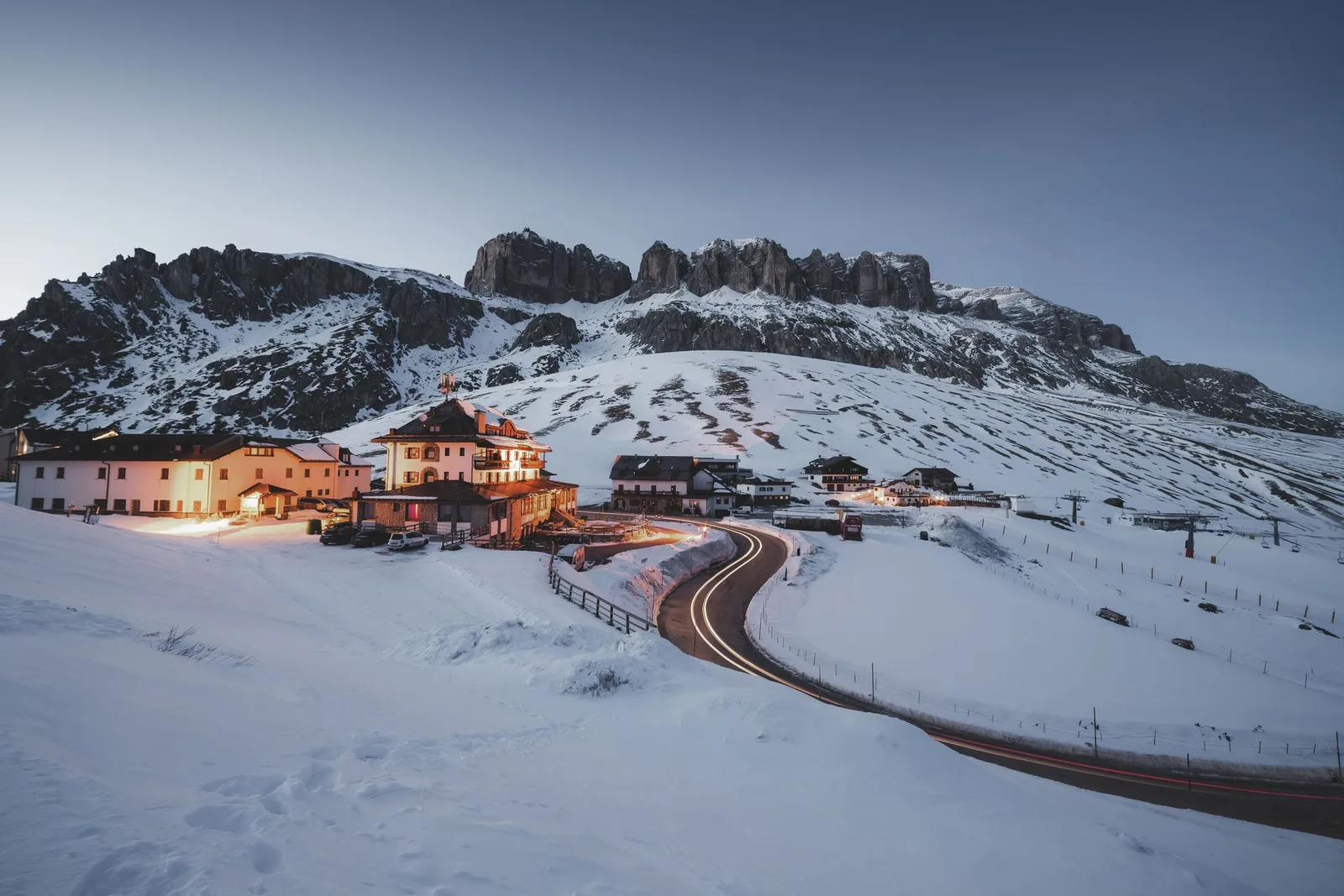
The assumption is built into the scenery. Snow on the peaks, springs in the valley, water that fell as snow a season ago: surely the softest water in Europe comes out of an Alpine tap. Our dataset, which holds the published tap water figure for every town it maps, tells a less picturesque story. Sixteen of the biggest ski towns in the Alps run from 36 mg/L to 255, soft to very hard, and the order they fall in has almost nothing to do with how high they are.
The toughest showers in the Alps
The hardest water we hold for a major ski town belongs to Megève, at 255 mg/L, very hard, an official figure from the French national water quality system. Water at that level is not a subtle influence on a ski season. The mineral film starts building from the first wash: lengths that feel coated however carefully they are rinsed, colour that dulls weeks early, ends that tangle against the collar of a ski jacket and stay tangled.
Les Arcs is next at 230 mg/L, very hard on official figures, and Gstaad follows at 206, published by its own supplier, the Wasserversorgung Saanen. Three resorts, three very hard showers, before the list even reaches the band most skiers will actually meet.
That band, hard water at 120 to 180 mg/L, holds seven of the most famous names in skiing: Avoriaz at 169, Morzine at 163, Val d’Isère at 149, Crans-Montana at 130, Tignes at 128, Alpe d’Huez at 126 and Serre Chevalier at 122. Tignes’ figure is an official one, from the French Hub’Eau network. Hard is the band where a single week is survivable on a normal routine and a whole season is not: the build-up is slower than Megève’s, and just as certain.
An hour apart, seven times the minerals
Now the exception that explains the rule. Chamonix runs at 36 mg/L, soft water, an official figure, the kind of water where hair rinses clean and fine hair goes flat rather than coated. Chamonix and Megève sit at roughly the same height, about a thousand metres up, and about an hour’s drive apart. One has seven times the minerals of the other.
Altitude is simply not the dial. Val Thorens, the highest resort in Europe at 2,300 metres, runs at 113.5 mg/L: moderate, and still less than half of Megève’s figure at twice Megève’s height. If altitude softened water, the league table above would run downhill. It does not.
Geology does the deciding, and we have set the full science out in Hard water and your hair. The short version: water that has travelled through limestone arrives loaded with calcium and magnesium, and water that runs off granite and other crystalline rock arrives with very little. Chamonix sits in the granite of the Mont Blanc massif and sheds almost nothing into its supply. Megève sits in limestone country, and its water carries the rock with it. The same pattern, soft off crystal and hard off limestone, repeats down the list.
It also explains the moderates. Méribel and La Plagne both run at 104 mg/L, Courchevel at 96 and Les Deux Alpes at 69, all moderate, water a home routine survives almost unchanged. Much of the Three Valleys, in other words, is a moderate-water ski, while the high Tarentaise resorts an hour east run hard. Neighbours differ. The number, not the valley, is what you pack for.
The resorts with no number
Three famous names are missing from this article, on purpose. We hold no solid published figure for Verbier, Zermatt or St Moritz, and this site does not print a number it cannot stand behind, so they stay gaps until an official supplier figure or a citable published source lands. If one of them is your winter, the cautious default costs nothing: pack for hard water, and if the shower turns out soft, the detox wash simply stays in the bag.
What a ski week does with water like this
Mineral build-up is bookkeeping, done one wash at a time. In hard and very hard water, each wash leaves a little of its calcium and magnesium behind on the hair, and the film is cumulative: by the fourth or fifth day of a ski week the lengths feel coated, conditioner seems to slide off without helping, and coloured hair starts to lose its brightness as minerals roughen the surface it reflects from. The ends show it first, because they are the oldest hair you own and have survived the most washes.
Stretch that week into a season and the arithmetic turns serious. A seasonaire in Megève or Tignes washes in that water for four or five months, through the coldest, driest part of the year, with heated rooms and helmet liners adding their own work on top. The mountains bring their own separate pressures, the stronger sun and the very dry air we covered in Après-ski hair, but the water is the one pressure that arrives with a number attached, which makes it the one you can plan for exactly.
The routine, by band
In very hard water, over 180 mg/L, the planner’s rhythm is a chelating wash (a detox wash) every second wash. K18’s Peptide Prep Detox Shampoo is the planner’s default in this slot, the first name in its hard water lists. Malibu C’s Hard Water Shampoo, made specifically for hard water homes, is the other strong pick. For coloured and lightened hair, L’Oréal Professionnel’s Metal Detox answers the particular problem: it targets the copper that washing leaves inside the fibre, the metal behind dull colour and hair that snaps more easily. One cap applies whatever the water: colour-treated hair chelates at most every eighth wash, because it is the hair that grabs metals fastest and has the least to spare.
In the hard band, Tignes and Val d’Isère country, the rhythm relaxes to every fourth wash, about once a week on a normal pattern. That is the seasonaire’s sustainable pace: one detox wash a week, a gentle shampoo for the washes in between, and a mask on the same weekly cycle for the ends. K18’s Leave-In Molecular Repair Mask is the mask list’s standing default here, as it is in our winter plans generally.
In moderate water the rhythm stretches to every eighth wash, and in soft water the planner does not schedule a chelating wash at all. In Chamonix, spend the effort on moisture instead: the dry mountain air is still doing its work even when the water is kind. The full rhythm, band by band and hair type by hair type, is set out in Chelating, clarified.
And for a short trip, all of this softens sensibly. A week’s holiday in hard water does not need the season routine: one chelating wash on the last night does the job, and on a stop of only a wash or two it is optional. You need the full rhythm by week six of a season. You do not need it on day three of a holiday.
Start with the number
Every figure in this article is the town’s own published reading, the same number the planner plans from, which is why the advice and the dataset never drift apart. So find your resort before you pack. If its number is over 180, the detox wash is a core item, not an extra, and the mask goes in beside it. If it is 36, pack the leave-in, leave the detox bottle at home, and enjoy the one famous ski town where the shower is on your side.