Coloured hair in hard water: why your colour fades faster, and what actually helps
Fresh colour leaves the salon exactly right, and two weeks of holiday showers later it has drifted: the blonde warmer, the brunette flatter, the red gone quiet. The colourist usually gets the blame. More often it is the water. Coloured hair is the most absorbent hair in the room, hard water loads it with minerals and metals wash by wash, and every wash takes a little of the dye back out. What the water is actually doing to your colour, and the order to do things in, before the appointment, on the trip and after it.
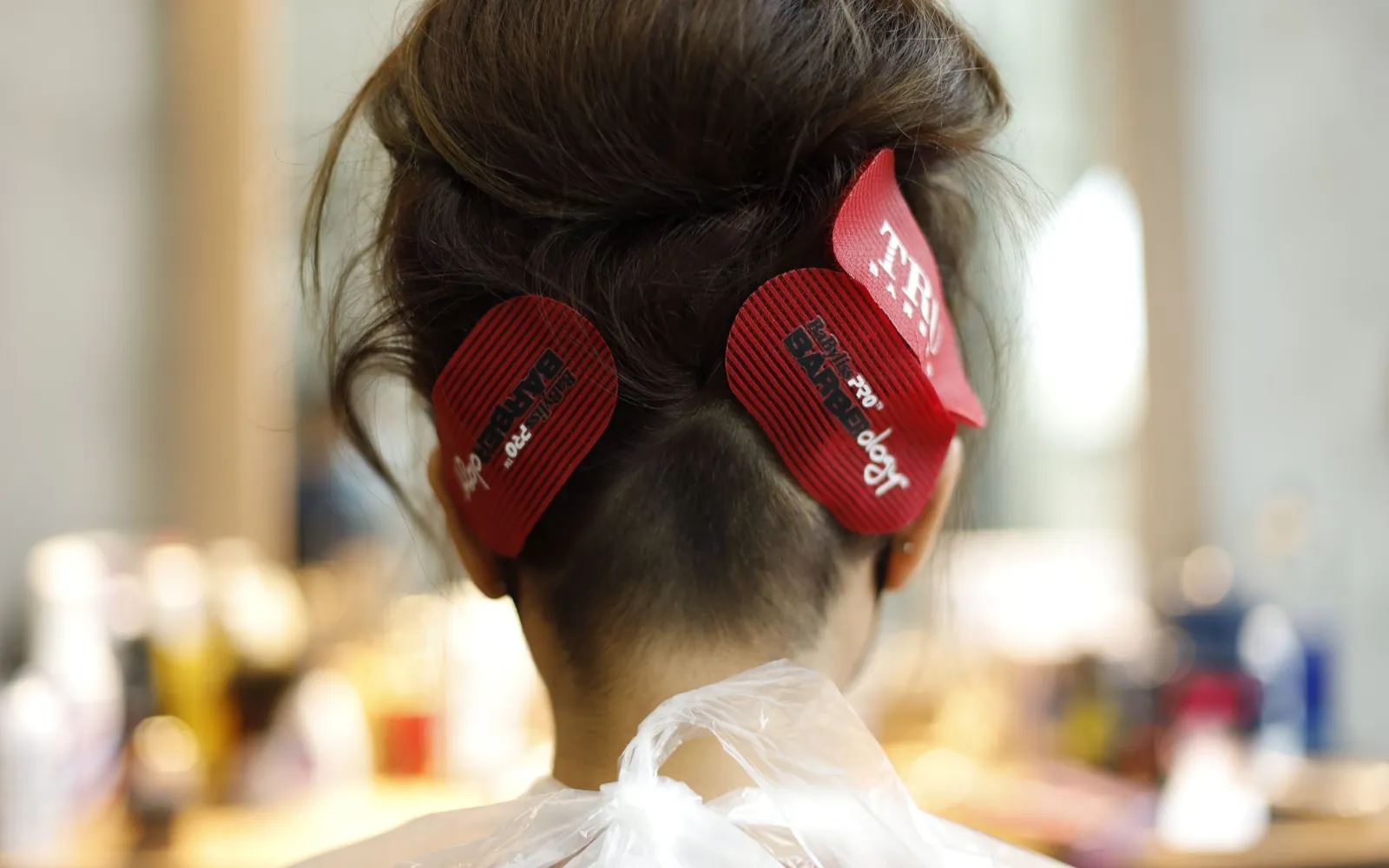
It usually shows about a fortnight in. The colour that left the salon cool and exact has warmed up, or flattened, or gone dull in a way conditioner does not seem to reach. Nothing about the colour itself was wrong. What changed is the water it has been washed in since, and coloured hair meets that water with its defences already down.
Coloured hair is the most absorbent hair in the room
Colouring is controlled damage, done on purpose. To get dye inside the fibre, the process lifts the cuticle and leaves it lifted: coloured and lightened hair is more porous than the hair you were born with, and carries more of the negative charge that dissolved minerals and metals are drawn to. The research on this is unusually clear. In work by Evans, Marsh and Wickett, how much calcium and magnesium hair took up from wash water depended far less on how hard the water was than on the condition of the hair: chemically treated hair pulled in large amounts of both metals even from soft water, concentrated in the cuticle layers, where they stiffened the fibre. Kérastase’s own research puts a number on it: damaged hair absorbs up to three times more calcium than healthy hair.
So coloured hair is hit from both directions at once: every wash lets a little of the dye out, and every wash lets minerals and metals in.
The fade itself: dye leaves by water
Start with the honest baseline, because it applies in any water. Permanent colour fades primarily through the dye dissolving out into the wash water: that is the finding of Zhou and colleagues, who tested how surfactant, pH and hair type change the loss. It is heaviest in the first washes after colouring and never fully stops. Shade matters too: red tones are built from smaller, more water-soluble dye molecules and wash out fastest, while browns hold up better against washing and lose more ground to sunlight, which is why a red done before a beach week is the most fragile colour on the map. Washing less often, in cooler water, is therefore real colour care, not salon folklore: each wash you skip is dye that stays where it was put.
The film: minerals sitting on top of the colour
The second act is the deposit. Hard water carries calcium and magnesium, and washing leaves a little of both behind each time. In the Srinivasan and Rangachari microscopy study, hair washed in hard water on alternate days for a month held about three times as much calcium and more than four times as much magnesium as hair washed in distilled water, and its surface came out visibly rougher. On coloured hair that film dulls: colour under a mineral coat reflects light badly, so the shade reads faded when much of the dye is still in there. And it blocks: conditioners end up conditioning the minerals instead of the hair, which is why filmed hair feels dry and coated no matter what you put on it.
The distinction matters, because the two problems have different fixes. Dye that has washed out is gone, and only a colourist puts it back. Colour that is filmed over is still there, waiting under the coat, and a chelating wash (a detox wash) brings it back in one wash. Much of what gets called fade in hard water country is film.
The shift: copper and iron change the colour itself
The third act is the metals, and they do not just sit on the colour, they alter it. Copper arrives in small amounts from pipework, binds inside the fibre, and shows green on the lightest hair. Iron, commonest in well water and older pipes, oxidises on the hair and tints blondes a rusty orange while dragging dark hair darker. The professional colour literature is blunt about iron: it discolours hair and interferes with colour services themselves, which is why salons detox a client whose home water carries it before colouring her.
Copper does a second, quieter damage. P&G’s research programme, led by Marsh, harvested hair from more than 400 women in nine countries and found copper in all of it, accumulated from washing. Copper is catalytic: under an oxidative insult, a colour service or ultraviolet light, it speeds the formation of free radicals, which degrade hair protein and show as dull colour, lost shine and breakage. Chlorine plays its supporting part, oxidising hair protein and roughening the cuticle so the fibre takes copper in more readily; the full swimmer’s version is in Chlorine, salt water and your hair.
The map is not kind to colour
None of this is evenly distributed, because the water is not. On our dataset, Rome runs at 346 mg/L and London at 320, both very hard; Paris is 269 and Palma de Mallorca 267. Barcelona at 175, Vienna at 160 and Athens at 145 are hard. Lisbon at 81 and Bangkok at 90 are moderate, and the gentle end is genuinely gentle: Madrid at 30, New York City at 32, Sydney at 57, all soft. A colour done the week before a Rome holiday spends its most fragile fortnight in some of the hardest showers in Europe; before a Madrid trip it barely meets the problem. Every city carries its figure and its source: Rome’s is on its city page, London’s on its.
Before you colour: clear the hair first
The order starts before the appointment. Minerals and metals already in the hair are the enemy of an even result: they block colour from processing uniformly, and copper reacts with the oxidant in the dye itself, which is where unpredictable tones and extra breakage during a service come from. L’Oréal’s research with the University of Ioannina built its Metal Detox line on exactly this, and the in-salon pre-treatment exists to neutralise metal inside the fibre before colour goes on; Malibu C’s salon detox is the long-standing equivalent. At home, the version is one chelating wash a few days before the appointment, and the timing is the point: a strong chelating wash can strip fresh toner laid over build up, so the detox belongs before the colour, not in the first washes after it. Then tell your colourist about your water. One who knows the home supply is hard, or comes from a well, plans for the hair actually in the chair.
On the trip: fewer washes, the right wash, a clean finish
Wash less, first of all, and wash cooler: every wash is a withdrawal from the colour, and a gentler wash spends less of it. The everyday shampoo is a gentle, colour-safe one; the planner’s lead pick for this profile is K18’s Damage Shield Shampoo, on the pattern in testing and salon use of colour that is not stripped. Davines’ NOUNOU Conditioner leads the rich conditioner slot for chemically treated hair.
The chelating wash still matters, but coloured hair rations it. However hard the water, our planner caps colour-treated hair at one every eighth wash, about fortnightly, because chelating lifts colour as well as minerals. On a one-week trip that usually means a single detox wash, on the last night, as the reset before you fly home. The product in that slot for coloured hair is L’Oréal Professionnel’s Metal Detox, built for this profile and aimed at the copper washing leaves inside the fibre; the pattern behind its place in the planner is colour staying truer and hair staying soft rather than stripped. In moderate water the gentler decalcifying option is Kérastase’s Première, whose citric acid works on the calcium itself. Bleached hair changes the pick: there the planner leads with Malibu C’s Hard Water Shampoo, on the mineral removal measured behind it. The full rhythm, band by band, is in Chelating, clarified.
Finish each wash as clean as the tap allows. Rome’s entry in our city notes records that Romans swear by a final rinse with bottled water for colour, and the planner gives the same advice at hard water stops: a final rinse with filtered or bottled water on wash days helps, because the last water to touch the hair is the water that dries on it. A leave-in with a UV filter earns its place on sun days, and the planner packs a colour-depositing or bond-repair mask as the mid-trip rescue; for bleached hair that mask slot is led by K18’s Leave-In Molecular Repair Mask, on the breakage results behind it.
Home again: read the colour before you fix it
Back home, diagnose before you treat, because the three problems look alike in a bathroom mirror and their fixes are opposites. If the tone is still right but the colour looks dull and feels coated, that is film: one chelating wash, and the colour underneath comes back. If the tone has shifted, warmer, orangey, faintly green at the ends, that is metal: chelate first, and only then reach for a toner or a gloss, because toning over a mineral film just tones the film. If the colour has genuinely washed out, no wash gives it back: a gloss or toner appointment is the honest fix. And if the trip was a hard water one, make the pre-appointment detox part of the next colour booking from the start.
Coloured hair does not need a bigger routine on holiday. It needs the washes counted, the one detox placed where it does the most good, and the water read before the colour is blamed. So start with the number, as always. It is on the map.