What 200 mg/L actually feels like: the hardness scale in plain words
Two hundred is not the top of the scale. It is the front door of the very hard band, the point where water stops being a background and starts leaving evidence on your hands, your kettle and your hair. The whole hardness scale, band by band, translated into what you actually feel in the shower.
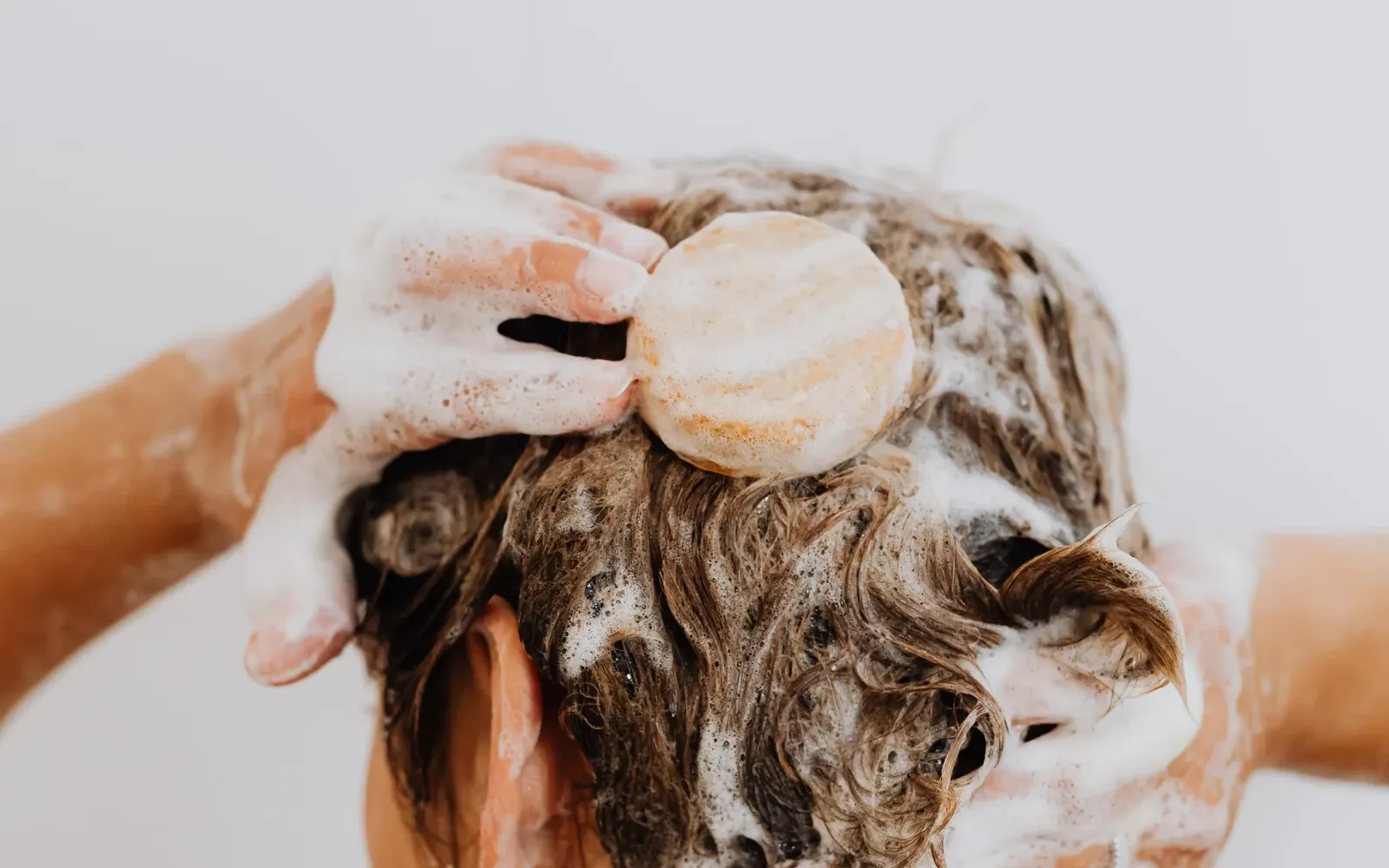
Yesterday's article on this site was about reading the number: what the mg/L on every city page counts, and how to find yours. Reading it is one skill. Feeling it is another, and your hair files its report in the shower long before you think to look a number up. So this is the same scale translated out of milligrams and into sensations: what soft, moderate, hard and very hard water each feel like on your hands and in your hair, and what the title's number, 200, feels like in particular.
Where 200 sits
The scale runs in four bands, the ones this site uses everywhere. Under 60 mg/L is soft. From 60 to 119 is moderate. From 120 to 180 is hard, and above 180 is very hard. Two hundred is not an extreme. It is twenty points past the very hard border, the shallow end of the deepest band. Copenhagen washes at 196 and Denpasar, in Bali, at exactly 200. Paris, at 269, and London, at 320, are the same band further in, and Cancún, at close to 700, is off the top of it altogether. What changes as you climb is not the kind of thing the water does. It is how fast it does it, and how hard you have to work to undo it.
Soft, under 60: the rinse that never ends
Soft water announces itself in the first ten seconds. Shampoo foams fast and generously, more lather than the same squeeze produces at home if home is harder. Then comes the famous soft water rinse, the one that seems never to finish: the water runs and runs and your hair still feels slippery, as if the soap will not quite leave. Nothing is wrong. With almost no mineral in the water, nothing is left behind, and clean hair in soft water simply feels different from clean hair anywhere else, lighter, sometimes flyaway, with fine hair prone to feeling over-washed by a routine built for harder country. Glasgow washes at 15, Madrid at 30 and Sydney at 57. There is nothing to fix in this band and nothing to pack for it. Its only trap is for visitors: people raised on soft water meet the rest of the scale abroad with no defences built, which is why the step up, when it comes, feels so large.
Moderate, 60 to 119: the forgettable middle
Moderate water is the band nobody writes home about, and that is its character. Lather behaves. The rinse finishes when you expect it to. Hair dries the way the bottle promised. Tokyo sits at 60, right on the border with soft, and Stockholm at 98 is comfortably in the middle. Minerals are arriving with every wash, but slowly enough that the build-up rarely surfaces before ordinary life removes it. This is the band where a travelling routine needs the least adjustment, and the planner's housekeeping for it is light: a chelating wash every eighth wash, less a rescue than a tidying, so the slow deposit never gets a head start.
Hard, 120 to 180: the first fingerprints
Cross 120 and the water starts leaving fingerprints, though at first they are on the room rather than on you. The kettle furs at the edges. Glasses come out of the wash spotted. Shampoo needs a fraction more product to feel like itself, because the minerals are spending some of its strength before it reaches your hair: the US Geological Survey's hardness page puts it plainly, that in hard water more soap or detergent is needed to get things clean, hands, hair or laundry. In the hair itself the band is a rumour for the first days and a fact by the end of a fortnight: the ends dry a touch rougher, the shine sits a little flatter. Tignes washes at 128, Amsterdam at 142 and Zurich, at 165, is near the band's ceiling. A chelating wash every fourth wash keeps the whole band feeling like nothing at all.
Very hard, above 180: where 200 lives
Here the fingerprints move onto your hands. Wash them with soap in very hard water and they can feel filmed afterwards, as if the rinse stopped early; the Survey describes exactly that residue, the product of soap meeting calcium. Shampoo repeats the story: the first squeeze lathers thin, the second does the work, and the rinse leaves hair that feels coated and somehow dry underneath at the same time. Both feelings are the same deposit. Wash after wash, the minerals settle onto the hair and build a film, and conditioner spread over that film conditions the minerals instead of the hair beneath them. By the second or third day the brush drags, the ends feel like straw, the shine goes quiet and colour looks tired before its time. The room keeps the records too: the shower head slows as its holes narrow, and the kettle furs in weeks rather than months. Paris and London run the same behaviours further along the band; 200 is where they first become a pattern you can read. The answer is in the wash rhythm, not in washing harder: a chelating wash every second wash in very hard water, from the planner's hard water shelf, K18 Peptide Prep Detox, Malibu C Hard Water Shampoo and the rest of that list, followed by conditioner, because a wash that strips minerals leaves hair asking for one. The full account of how those washes lift the film is in chelating, clarified.
Why the same 200 feels different on different heads
Two honest complications. The first is the hair itself. Mineral settles fastest where hair is porous, which is why the older lengths and the ends report every band earliest and worst, as we set out in hard water, explained. Coloured and lightened hair, its surface already opened up, feels a band the way the next band feels on uncoloured hair, and short hair forgives almost everything, because so little of it is old. The second complication is you. Hair is calibrated to its home tap, and feel is a difference, not a reading. A Glaswegian standing in a 200 shower has climbed to more than thirteen times the mineral level of home, and notices everything. A Londoner in the same shower has stepped down from 320 to the shallow end of their own band, and will tell you the water felt soft. Both are reporting accurately. That gap, between the number you live with and the number you are standing under, is the subject of read your own city's number, and it is why the planner asks for both cities before it says a word.
So learn the scale the way you learn a temperature scale in a new country, by what it does to you. Under 60, the rinse that never ends. Sixty to 119, nothing to report. One twenty to 180, fingerprints on the kettle and a rumour at the ends. Above 180, filmed hands, a thirsty shampoo bottle and a film building on the hair that only a chelating wash lifts. And 200, the title's number, is simply where that last country begins: not the worst water in the world, just the first water most travellers ever actually feel.