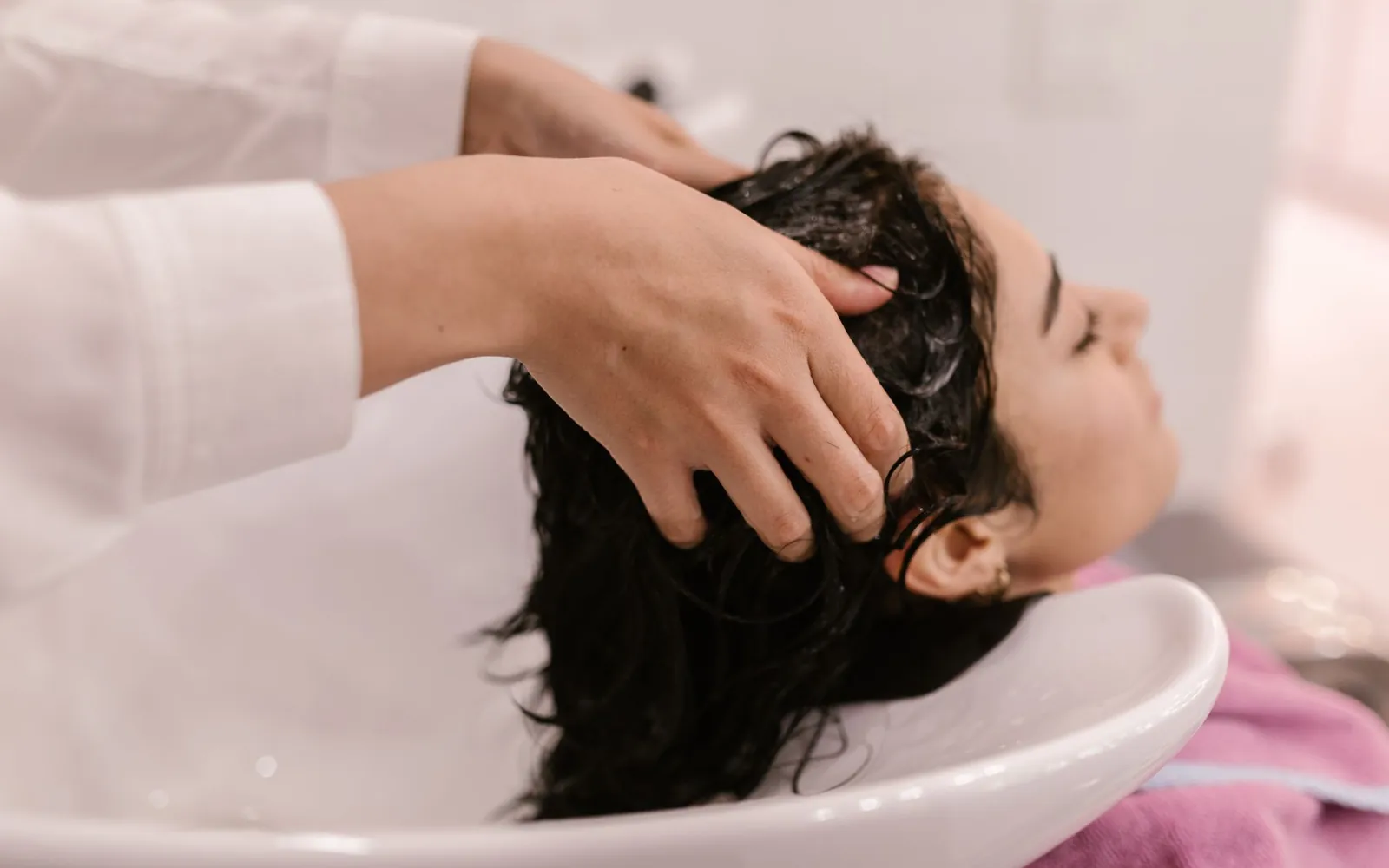
The question usually arrives at a shelf. In one hand, a supermarket shampoo for the price of a coffee. In the other, a salon bottle at four or five times the price, in a smaller size. Both promise shine and softer hair. So what does the extra money actually buy, and what does it not buy? The honest answer is less dramatic than either side tends to make it.
Professional ranges are more likely to be carefully tuned: a gentler balance of cleansers, a lower pH in many cases, and a formula aimed at a narrower problem, such as colour treated or very dry hair. Consumer ranges have to please almost everyone at a supermarket price. But the overlap is large, and part of the salon price is fragrance, packaging and the salon channel itself.
The same basic job, done the same basic way
Every shampoo, at every price, does the same job with the same toolkit. A typical formula contains about 10 to 30 ingredients: cleansers, conditioning agents, and stabilising additives. The main cleansers are almost always anionic surfactants, most commonly sodium laureth sulphate. Used alone, that class is strong, and it leaves hair carrying more negative charge, which means more friction and frizz.
Formulators soften that effect by blending. An amphoteric co-surfactant such as cocamidopropyl betaine, used alongside the main cleanser, lowers the charge density of the cleansing system and reduces its irritation potential in laboratory tests. Nonionic cleansers play a similar role. None of this is exclusive to salons. You will find the same blend, in different proportions, on supermarket shelves. The difference lies in the proportions and the balancing.
The clearest measured difference: pH
pH is where a measured gap does appear. Hair and scalp sit on the acidic side, and more alkaline washing raises the negative charge on the fibre, increasing friction. A study of 123 shampoos in the International Journal of Trichology included just 15 professional products, so treat it with care, but 75 percent of those salon products tested at pH 5.5 or below, compared with about 34 percent of popular brands. Lower pH shampoos caused less frizz.
Two cautions follow. First, pH is rarely printed on the bottle in either channel, so you cannot shop by it directly. Second, sulphate free is not a guarantee of gentleness. The dermatology literature has noted a lack of published analyses proving that sulphate free shampoos clean better or damage hair less.
Where professional ranges go further
Professional ranges earn their keep at the specific end of the shelf. A salon line can support a shampoo for bleached hair, another for a sensitive scalp and a third for hard water, because a stylist is there to match them. Conditioners follow the same logic. Their key agents are positively charged compounds that deposit on damaged, negatively charged hair, reducing friction and static. A well matched conditioner often matters more than the shampoo.
That specialisation includes chelating and detox lines, and the wording needs care. A chelating shampoo (a detox wash for minerals) contains agents such as EDTA that bind metal ions, including the calcium and magnesium in hard water. A detox or clarifying shampoo is usually just a stronger cleanser for oil and build-up. Only the first job removes minerals. A trace of EDTA low on a label may simply stabilise the formula, so look for a product sold for hard water.
What is mostly marketing
Start with the ingredient list. Ingredients are listed in descending order down to 1 percent. Below that they can appear in any order, and brands need not publish percentages. Claims about higher concentrations therefore usually cannot be checked from the bottle, and a fashionable oil near the end of the list may be present at well under 1 percent. Price is weak evidence too. The same groups often own both tiers, sharing research and similar base ingredients.
Price per wash is the fairer comparison, and it cuts both ways. A concentrated product, used sparingly, can cost less per wash than its shelf price suggests. A large, cheap bottle, squeezed generously, can cost more than it looks. Do the simple maths: price divided by the number of washes you get from the bottle. No independent evidence settles the claim that salon bottles routinely last twice as long.
Salon only distribution is real, but it is a business model before it is a quality mark. Brands such as Milbon, covered elsewhere in this Journal, sell only through salons, and other groups state that professional products are guaranteed only in authorised salons. That model can bring good advice when you buy. It does not, by itself, prove what is inside the bottle.
What this means in hard water, and at home
For a traveller washing in hard water, spend on function, not on the label. A chelating wash that actually binds minerals will do more for rough, dull, hard to comb hair than a luxury shampoo with no chelating action. That is the one professional style product worth packing on purpose. Between chelating washes, a gentle, well balanced everyday shampoo is enough, from either shelf, provided it suits your scalp.
At home, the case for paying more is weaker still. For gentle daily washing, for short hair, and for homes with soft water, a good consumer shampoo and a matched conditioner will usually do the job well. Save the extra money for cases where it buys something specific: a targeted formula your hair responds to, or that chelating wash for hard water stops. The rest is presentation.