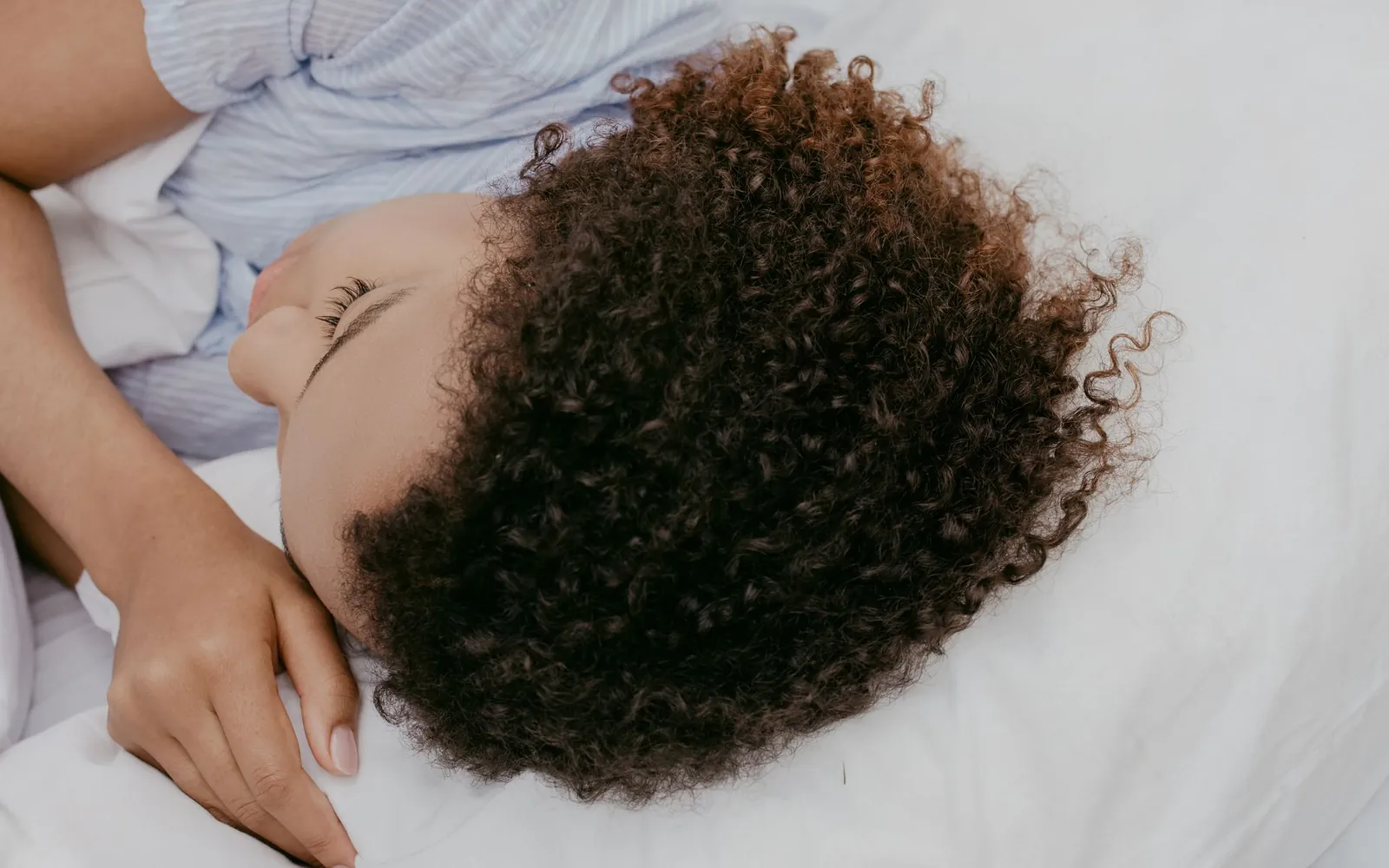
You have probably heard the pitch. Swap cotton for silk, the ads say, and you will wake up with calmer hair, fewer tangles and less frizz. It contains a real idea. It is also sold far harder than the evidence can support.
Our short answer: a smoother pillowcase really does create less drag overnight, and that matters more for some hair than for other hair. It will not transform your hair, repair damage already there, or outweigh the water you wash it in and the climate around you.
Why friction is the strongest part of the claim
Hair does not heal once it leaves the scalp. Its outer layer, the cuticle, wears from washing, brushing, heat and colour, and friction at night is one more small source of wear. As you turn, hair catches and rubs against the fabric under your head. A rougher surface gives it more to catch on. A smoother one lets it slide.
This is measurable in a textile laboratory, even if numbers vary by method. In one peer reviewed study of fabric against skin, silk and polyester satin recorded lower surface friction than woven cotton, and cotton took up water in seconds while silk and satin took far longer. That does not prove better hair in the morning. It does show the mechanism is real physics, not invention.
Whether less drag becomes visibly less breakage over months is another question, and there the evidence thins out. We could not find a large, well controlled clinical trial that followed people on silk and cotton and measured breakage properly. Much quoted research is small, self reported, funded by bedding sellers, or about skin rather than hair. The American Academy of Dermatology says satin or silk bonnets and pillowcases may reduce friction and help preserve a hairstyle. May is the right word.
The moisture story is messier than the ads say
Cotton is often described as drinking moisture from hair while silk leaves it alone. The real picture is less neat. In standard textile tables, silk holds a little more moisture vapour at equilibrium than cotton, around 11 percent of its dry weight compared with about 8.5 percent for cotton. Polyester holds almost none, around 0.4 percent.
What feels different is speed and surface. Cotton fibres swell and take up liquid quickly, and a cotton case can feel as if it is pulling in leave in conditioner, oils and sweat. Silk takes up liquid more slowly and feels smoother, even though it is not waterproof. The honest version is narrower: cotton may take up products and surface moisture faster. It is not draining hair dry in any cleanly measured way.
Satin is a weave, not a fibre
Silk is a fibre, the natural protein thread made by silkworms. Satin is not a fibre at all. It is a weave, a way of floating threads over others so the face of the fabric comes out smooth and glossy.
Most pillowcases sold simply as satin are polyester satin. That is not a scam: smoothness is what most people are buying, and polyester satin gives you much of it for far less money. It does behave differently: it tends to sleep warmer, can build static in dry air, and quality varies widely. A case sold as silk should say so in the fibre content, ideally with a momme weight, a measure of silk fabric weight. If the label only says satin or silky, assume polyester.
Who is most likely to notice, and what it costs
Those most likely to notice are people whose hair has the least margin for extra wear: curly and kinky coily hair, prone to dryness and breakage, and fragile, bleached or otherwise treated hair. Add longer hair with older ends, and anyone who wakes up fighting morning frizz and tangles. If your hair is short, untreated and rarely tangled, or you already sleep in a smooth bonnet, the difference is likely to be small.
Cost and care pull in opposite directions. Real silk costs real money and asks for gentle handling: a cool, delicate wash, ideally in a mesh bag, and air drying away from heat. Treated roughly, it dulls and weakens. Polyester satin is cheap and usually goes through a normal wash with little fuss. The trade is warmth, static for some, and a surface that can pill sooner.
The verdict, at home and on the road
For travel, this is one of the few hair tips that genuinely packs well. A silk pillowcase folds flat, weighs almost nothing and slips over a hotel pillow in seconds. A thin pillow liner does the same job in even less space. Against rough hotel cotton, that smooth layer can make the next morning easier.
Keep it in proportion. On most trips a bad hair day has far more to do with hard water, humidity or dry air, sun and wind than with what you slept on. A pillowcase will not rescue hair that the water has left rough. We would spend attention on water first, every time.
So, should you try one? If your hair is curly, fragile or frizz prone and mornings are a battle, yes, as a small experiment. Start with inexpensive polyester satin if price or laundry matters. Move to silk if you prefer a natural fibre or sleep warm, and will wash it gently. Judge it after a few weeks by tangles and ease, not by promises. A small, real, cheap to test difference for some hair types, not a transformation. That, honestly, is enough.