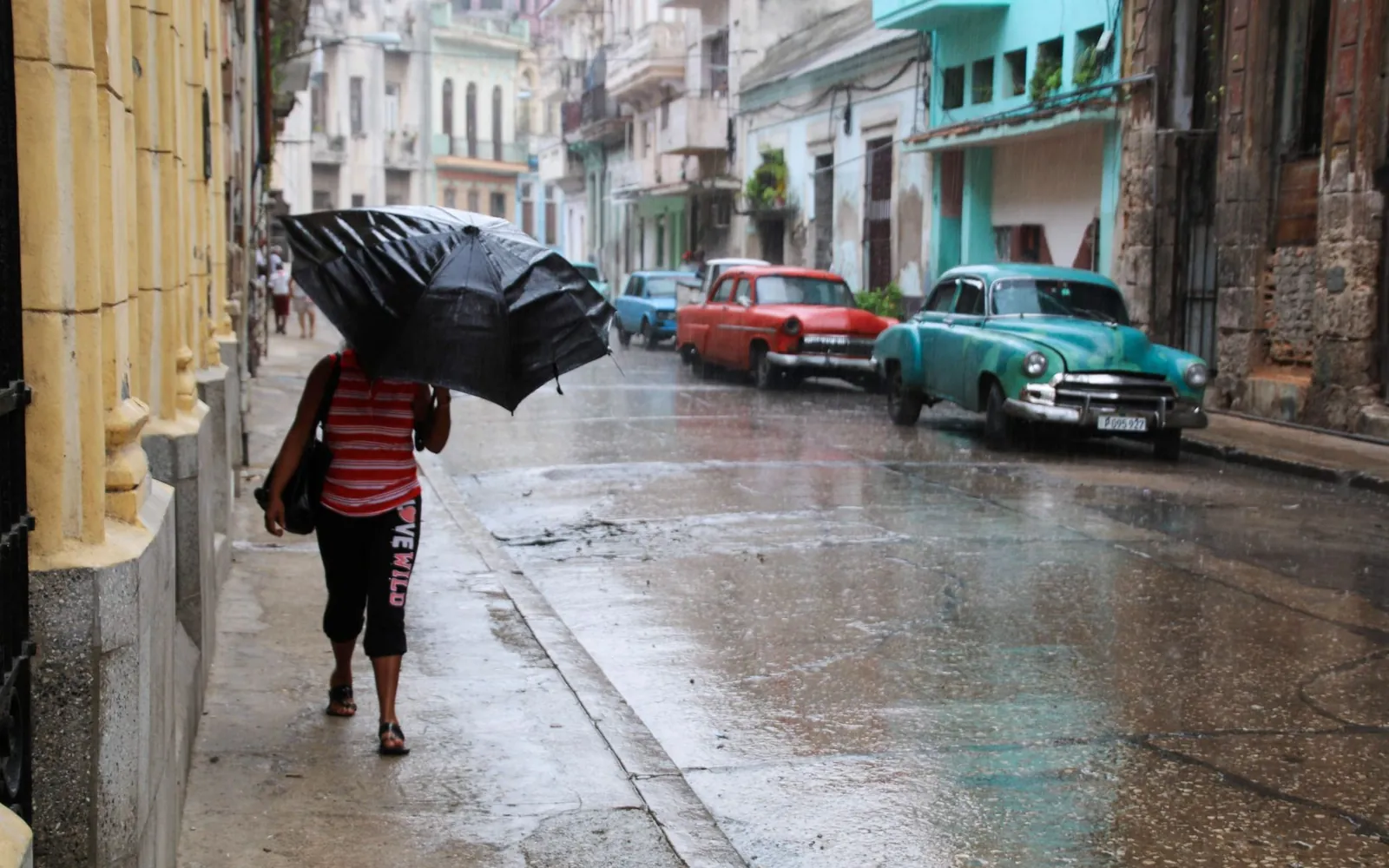
You packed the outfits. You planned the itinerary. Your hair, meanwhile, has entered its own weather system.
Step out of the airport in Bangkok and the air does something to your hair within the hour. It is not damage, exactly. It is physics, applied continuously, and most routines built for a temperate climate lose to it by the second day.
Humidity, in plain words
Hair absorbs water from the air. The strand is built from keratin proteins held in shape by weak hydrogen bonds, and water loosens those bonds temporarily, which is why wet hair can be restyled and why a style set in a dry room quietly comes undone in wet air. In saturated tropical air the process never stops. The cuticle, the strand's outer layer, swells as it takes in moisture, and it swells unevenly, so the surface roughens and neighbouring strands stop lying together. That is frizz: not dryness and not damage, but a strand full of air water, bending in its own direction.
Curls, which are already bends, expand along them and grow outward. Straight hair tends to go limp at the root and rough at the ends at the same time, which is why tropical frizz confuses people: the top is flat and the bottom is a cloud. No product changes the weather. The aim in the tropics is not to defeat humidity but to slow it down and keep the strand's own moisture where it belongs.
Sweat, scalp and the washing question
Heat means sweat, and sweat plus the scalp's own oil makes a scalp feel unwashed faster than the hair below it actually is. The answer is to wash more often, and in the tropics that is correct, provided the washing is gentle. Use a mild shampoo, a small amount, and aim it at the scalp, which is where the sweat and oil are. Let the rinse carry it through the lengths. A strong shampoo used daily to chase the feeling of freshness will strip the strand, and stripped hair in humid air frizzes harder, because a raised cuticle takes in air moisture even faster. A rinse with water alone, or with conditioner only, covers the in-between days for most hair.
The water is mostly moderate
Here is the good news the map shows: most tropical cities sit in the moderate band, where most routines work nearly unchanged. Bangkok runs at 90 mg/L, an official figure from the Metropolitan Waterworks Authority. Kuala Lumpur runs at 65 mg/L. At those numbers there is no mineral film to chelate (wash out, like a detox) away, and one stronger wash in a week is a reset, not a necessity. The exceptions are the limestone coasts: Cancún, where the aquifer runs through limestone, is close to 700 mg/L, some of the hardest water in the dataset. Tropical does not guarantee moderate, which is why the number is worth checking rather than the climate assumed.
The second climate is indoors
Tropical days are a swing, not a steady state. Saturated street air, then an air conditioned room cold and dry enough to feel like another country, then back out again, several times a day. Each swing swells and then dries the strand, and hair that swells and shrinks repeatedly through a holiday comes home tired: rougher, duller, more prone to tangle. You cannot opt out of the swing, but a leave-in conditioner worn through the day blunts it, holding moisture in the strand and smoothing the cuticle the street air is trying to lift.
Sea, pool, and the rinse first rule
Salt water dries hair and leaves it rough and tangled; pool chlorine strips it and can leave fair hair with a greenish cast. The single most useful habit costs nothing: rinse your hair with clean water before you swim. A dry strand takes up water like a sponge. A strand already full of clean tap water takes up far less of the sea or the pool. Rinse again when you come out, and wash properly at the end of a swimming day, gently. The damage people bring home from a beach holiday is usually a week's un-rinsed salt and chlorine, not the swimming itself.
The tropical kit
It is a short list, and it is lighter than the temperate one. An anti humidity leave-in is the core product, worn daily: it is the layer that slows the air's water getting in. Conditioner goes down a weight, not up: heavy masks in humid air weigh hair down and seem to melt out of it by midday, so a light or mid-weight conditioner, ends only, does more. The gentle shampoo earns its place because of the washing frequency, and the richer products stay home.
In the planner, this is already wired in. Cities carry their humid months in the dataset, and Bangkok's run from May to October. A trip in those months puts the anti humidity serum and the leave-in with a UV spray on the packing list without being asked, next to the moderate water's simple washing plan. Check your destination's number and its season before you pack. In the tropics the water will probably be kind. It is the air you are dressing for.