Eight hours at 35,000 feet: cabin air and your hair
You board with hair that behaved at breakfast. You land with hair that feels like it belongs to someone else: dry at the ends, flat at the roots, full of static, and oddly tired looking. Nothing happened to it. No rain, no heat styling, no new water. It simply sat, with you, in one of the driest indoor environments most of us ever enter, for the length of a working day.
How dry is it up there, exactly?
A 2024 review in Buildings pulled together 54 studies of measured cabin conditions. Across 20 studies covering 273 flights, relative humidity ranged from 9 percent to 40.6 percent, with a mean of 18.4 percent. Broken down by aircraft type, most cabins sat in a 10 to 30 percent band, most of those below 20 percent, and about 35 percent of flights measured below 15 percent. A standard reference chapter on the aircraft cabin environment, by Bagshaw and Illig, gives the mechanism: the air outside at cruising altitude is extremely dry, the conditioned air entering the cabin starts below 1 percent relative humidity, and the moisture passengers and crew breathe out lifts the average only to about 6 to 10 percent on older aircraft, or around 15 percent on newer types such as the Boeing 787 and Airbus A350, whose cabin materials retain moisture better.
So the honest summary is not a single number. It is this: expect the teens, be pleasantly surprised by the twenties, and do not be shocked by single figures on an older aircraft. Even the comfortable end of that range sits far below the 30 percent floor that building standards treat as the minimum for indoor comfort.
Why eight hours is the number that matters
Duration is the quiet variable. Nagda and Hodgson, reviewing the chamber and field literature on low humidity in Indoor Air, found that the effects of dry cabin air, including drying of the skin and mucous membranes, are generally not noticeable below about three to four hours of exposure, and that a modest rise in humidity alleviates a great number of the symptoms. A short hop, in other words, is mostly a comfort question. An eight hour flight is double the threshold the literature points to, which is why long-haul hair feels different from short-haul hair even when everything else about the trip is the same.
Hair itself is built to trade water with the air around it. A review of hair fibre science in Cosmetics puts it plainly: hair is hygroscopic, its water content depends on the relative humidity of the air, and that water content drives its physical and cosmetic properties. Put a hygroscopic fibre in air at 10 to 20 percent humidity for eight hours and the direction of travel is not a mystery. The strand gives up water to the cabin. What you feel at the other end, straw-like ends, flyaway lengths, static when the seatbelt sign dings and you stand up, is that exchange made visible. It is also why the fix is not more washing. The water did not leave in the shower. It left at altitude, slowly, all flight long.
The routine: before, during, after
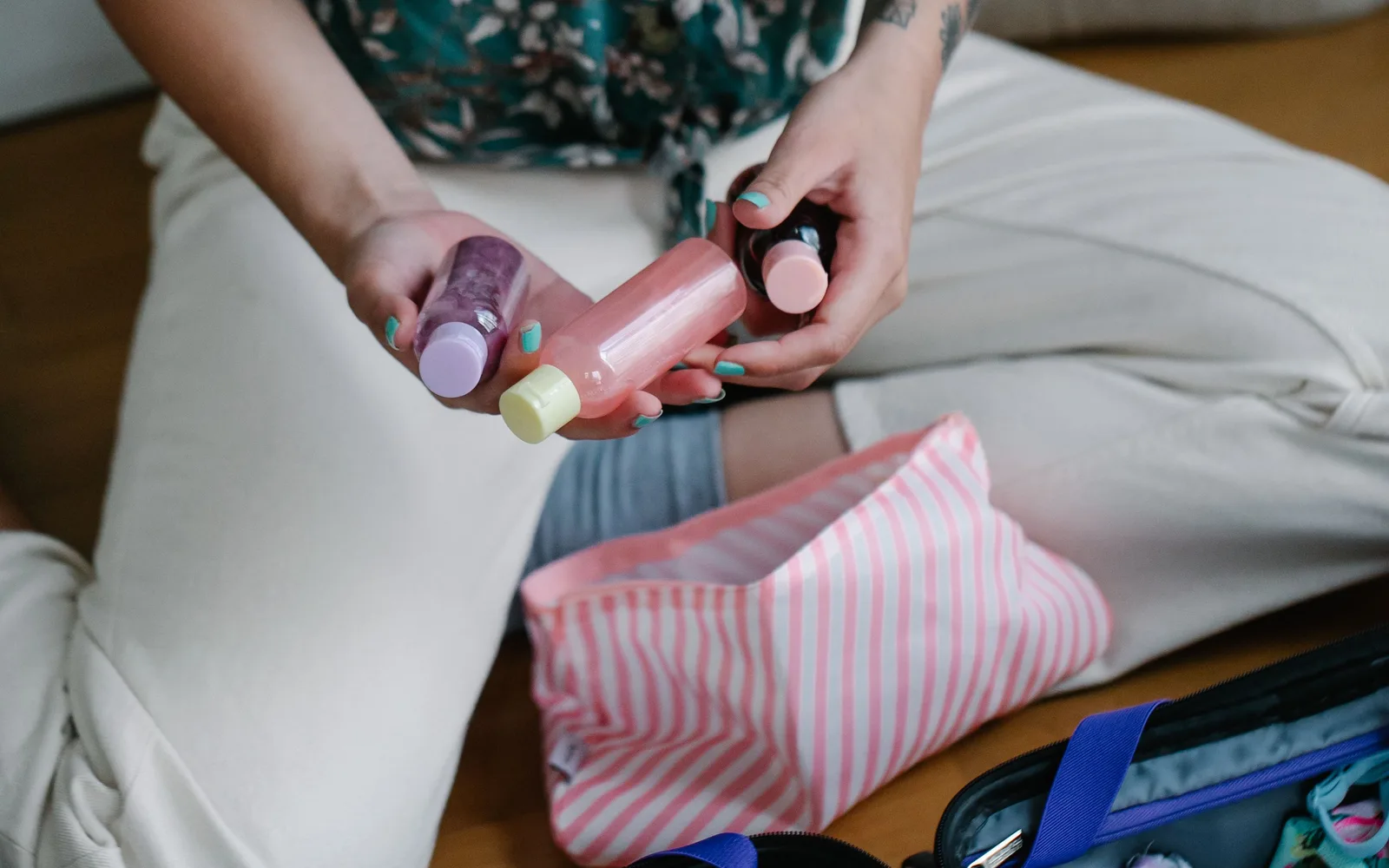
Before you fly. Wash on your normal schedule, not in a panic the night before, and put the effort into the conditioning step: conditioner worked through the lengths and ends and left for its full minutes. A leave-in through the mid-lengths and ends before you leave for the airport is the single highest value act of the whole routine, because it is the layer the cabin air has to get through first. Style for the seat, not the departure photo. Hair worn loose spends eight hours rubbing against a headrest; a plait, a low bun or a twist keeps the lengths off the fabric and off your shoulders, and arrives with something left to work with.
In the air. Resist the brush. Every pass through dry, charged hair adds friction and static, and a plastic brush is the worst tool for the job; fingers, or a wide tooth comb used sparingly, do less harm. If your hair drinks product, a pea-sized amount of leave-in smoothed over the ends midway through the flight replaces what the air has taken. Drink water on your own schedule. The cabin literature is clear that low humidity alone does not dehydrate a healthy body in any dramatic way, but dry mouth and dry skin are real, and comfort is not a trivial thing on hour six. If you sleep, sleep on something smooth if you have it: a silk or satin scarf or pillowcase between your hair and the headrest cuts the friction that roughens the surface while you are not awake to notice.
On arrival. Do not book the clarifying wash of your life for the first night. Your hair is dry, not dirty. Rinse or wash gently as your routine dictates, condition a weight up from usual, and treat the first wash at your destination as a rehydration exercise rather than a reset. Then check the number that actually governs the rest of the trip: the water hardness where you have landed. Cabin air is eight hours. A hard water hotel shower is every day of the stay, and our city guides and trip planner exist precisely because the second exposure is the one that compounds.
What this piece is not claiming
There are no published trials, in the sources we could read, that put hair itself in a cabin and measured it. The cabin studies measured air, skin and mucous membranes; the hair science establishes how the fibre exchanges water with air. The routine above is the honest join between those two bodies of evidence, plus the friction and static behaviour we have covered before in our winter static and mountain altitude pieces. It does not need inventing, and it does not need exaggerating. Eight hours in air that dry is quite enough on its own.