Yokohama
Japan · Asia
The water
56 mg/LSoft
Source: Yokohama City Waterworks Bureau · Official figure. Hardness counts dissolved calcium and magnesium in the water; it is the number your hair meets in the shower. Yokohama's tap water is drawn from the Sagami Lake, Sagami River and Doshi River systems and treated at the city's Nishiya, Kosuzume and Kawai purification plants, supplemented by prefectural enterprise plants. The bureau's annual report summarises its 15 city tap points at an average of 56 mg/L.
What soft water does to hair
Shampoo lathers fast and rinses away clean, with little mineral film left behind. The trade-off is at the roots: fine hair can sit flat and flyaway, and rich conditioners feel heavier than they do at home.
The washing routine for Yokohama
Keep your normal rhythm; soft water asks for no detox routine. If anything, use less conditioner than usual, as it feels heavier here, and give fine hair lift at the roots instead of product through the lengths.
Climate, from recent records (Open-Meteo, ERA5 2015-2024): August is the warmest month, averaging 30°C by day, and humidity peaks in July at about 83% on average. In the hot months, sun and sweat do as much damage as the water: shade, a hat and a rinse after swimming carry the routine. In the humid months, frizz is the main event; anti-humidity styling matters more than wash frequency.
Local note: Bureau water quality annual report FY2023, Table II-11: 15 city tap points, average 56 mg/L, maximum 72, minimum 34.
Plugs and power for your tools
Sockets: Type A and B. Supply: 100 V, 50 Hz.

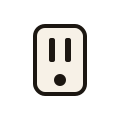
Japan runs at 100 V, lower than almost anywhere else: a dryer wound for 230 V only will barely warm up here, and one bought here can burn out on 230 V back home. Check the label for dual voltage (100-240 V) before you plug in.
Plug, voltage and frequency: IEC World Plugs and national standards.
Plan Yokohama properly
The trip planner turns this water profile into a wash plan for your hair type, a chosen kit and a packing list, month by month.