




Same hair. Different city. Same great results.

Every destination has a hair story. Notes on water, hair and travel with a brush of inspiration.

The world is your oyster. The water? That is another story.

Know your water. Some cities serve up soft water. Others are hard, heavy with minerals. Find your destination, check what is coming out of the tap, and see what it could mean for your hair. Tap a pin or a city to add it to your trip.

Soft · easy does it · under 60 mg/L Moderate · the middle ground · 60–119 Hard · mineral territory · 120–180 Very hard · the minerals mean business · over 180

The interactive map could not load here, so use the city list: it carries the same hardness figures.

New destination, new shower chemistry. Pick a city to see what is coming out of its taps.

How hardness is measured

One number, three scales. Milligrams per litre (mg/L) is the common currency; France uses degrees French (°f), Germany degrees German (°dH). 1 °f = 10 mg/L.

Bandmg/L°f°dHWhat it does to hair
Softeasy does itUnder 60Under 6Under 3.4Lathers easily, rinses clean. Can leave fine hair limp and flyaway; conditioners feel heavier.
Moderatethe middle ground60–1196–11.93.4–6.7The comfortable middle. Most routines work unchanged; a clarifying wash now and then keeps shine.
Hardmineral territory120–18012–186.7–10Minerals start to coat the strand: dullness, tangling, colour fade. Chelating (detox) washes enter the routine.
Very hardthe minerals mean businessOver 180Over 18Over 10Build-up is fast, especially on porous or bleached hair. Weekly chelation and richer conditioning are worth it on long stays.

Let’s get your hair ready.

Your shampoo did not change when you landed. Your water did. Hard water carries extra calcium and magnesium. Those minerals settle on hair, wash after wash. Hair turns dull and dry. It gets harder to manage. Your usual products work differently too. Soft water carries very little mineral. Hair often feels lighter in it. Products rinse clean. Fine hair can go flat, though. That is why the same routine can behave beautifully at home. Two cities later, it can behave badly. First, tell us where home is. Then add the places you are heading. We will check the local water. Then we will help you work out what your hair needs along the way.

First, a little about your hair.

Straight, wavy, curly, kinky coily: every head has its own agenda. Tell us a little about yours so we can tailor your plan. Texture does most of the work; age and routine fine-tune it.

Start here. Your home water is what your hair is used to, and putting up with, right now: every stop you add gets measured against it.

Hair texture

Colour changes what hard water does that you can see: minerals show on fair and grey hair as brassiness or yellowing, and red fades fastest.

How do you dry it?
Organic products

Add your next stop. Weekend in Rome? Two weeks in Tokyo? A summer of island-hopping? Let’s see what the water has in store for your hair. Pick a city from the suggestions, then tap Add this destination. Add stops in the order you visit them, up to 10 cities.

Your plan

CityWater hardnessWashing plan

Season calendar ·

Temperatures and humidity are typical for the month, from recent climate records (Open-Meteo, ERA5 2015-2024). They are planning figures, not a forecast.

Your hair’s carry-on essentials.

The products worth making room for, based on where you are headed.

    Altitude, UV and your hair

    Height changes the sunlight and the air, not the strand itself. Both are in every city plan, alongside the water.

    UV climbs about 10–12% per 1,000 m

    Thinner air filters less ultraviolet, so the sun gets stronger with every kilometre up. UV breaks down keratin and lifts the cuticle: hair goes drier, rougher and weaker, and colour fades faster. At Tignes (2,100 m) the UV load is roughly a quarter higher than at sea level.

    Snow bounces it back up

    Fresh snow reflects most UV back at you, so an alpine resort in winter delivers it from above and below at once. That is why a ski week wrecks hair in a way a beach week at the same water hardness does not: UV damage, dry air and minerals landing together.

    Mountain air is dry air

    High air holds very little moisture, and cold air holds less again. Hair loses water to the air around it: dryness, static and flyaway ends, plus a dry, flaky scalp. Heated indoor air dries it further overnight. The fix is moisture and sealing, not more washing.

    Altitude bandElevationWhat changes for hair
    LowUnder 500 mSea-level rules: UV and air moisture are background factors, water hardness does the talking.
    Moderate500–1,500 mUV is measurably stronger and the air drier. Add a leave-in with a UV filter in summer and step up moisture a notch.
    HighOver 1,500 mUV protection becomes part of the routine, not an extra: colour fades faster, scalps burn along the parting, and dry air plus indoor heating pulls moisture out day and night.

    Elevations are approximate, from Open-Meteo elevation data at each city's map position. Treat them as planning guides, like the water figures.

    The Journal

    Every destination has a hair story. Notes on water, hair and travel: what the numbers on the map mean in the shower, in a hotel, and in your wash bag.

    Weather6 min read

    Salt water and sunshine: what a beach holiday actually does to your hair

    The waves and lighter streaks are the visible part of a beach week. Underneath, sunlight is breaking down hair protein and pigment while salt roughens every strand. What the sun does to hair, why the beach concentrates it, and the routine that keeps the look without the damage.

    Read the article →

    World6 min read

    Professional or supermarket shampoo: what the extra money actually buys

    A salon bottle can cost five times a supermarket one. Some of that buys real tuning, a lower pH and narrower formulas. Much of it buys fragrance, packaging and distribution. Here is how to tell the difference.

    Read the article →

    World6 min read

    The pillowcase question: does your hair care what you sleep on?

    Silk promises less frizz and fewer tangles, but the clinical evidence for hair is thin. We look at what friction and moisture tests actually show, who is most likely to notice, and why a pillowcase is a useful travel extra, not a transformation.

    Read the article →

    Weather6 min read

    Hats, beanies and caps: keeping your hair great under cover

    Hats protect your scalp and hair from sun, wind and cold, but friction, sweat and static can undo a style. A smooth lining, a loose fit and the right hat for the trip make all the difference.

    Read the article →

    Weather6 min read

    Hair and the weather: planning around humidity, heat and temperature swings

    The water gets the blame, but the air does half the work. What humidity, dry heat and a twenty degree day to night swing actually do to hair, and how to pack for a day that cannot make up its mind.

    Read the article →

    World5 min read

    The brand that will not sell you shampoo

    Milbon supplies more Japanese salons than any other hair care company, and it refuses to sell you a bottle online. Inside the synchrotron science, the soft water logic, and the two different Milbons: the one Japan keeps at home, and the one it sends to the world.

    Read the article →

    Traditions6 min read

    Traditional Indian hair care: oiling, herbs and the head massage

    The original shampoo was an Indian head massage. The oiling ritual, the washing herbs and the Ayurvedic logic that modern hair care keeps coming back to.

    Read the article →

    Swimming6 min read

    Chlorine, salt water and your hair: a swimmer's guide

    The green tint is not the chlorine. What pool water and sea water each do to hair, and the rinse first habit that prevents most of it.

    Read the article →

    Water7 min read

    Hard water and your hair: the minerals you never invited

    That stubborn feeling after a wash might not be your shampoo’s fault. Meet the invisible minerals that can build up on your hair, one shower at a time, where they come from and what they actually do.

    Read the article →

    World6 min read

    Hair care trends around the world

    Dry shampoo was born in a French pharmacy and bond building in a California garage. How the world's hair ideas travel, and what they leave behind at the border.

    Read the article →

    Traditions6 min read

    Traditional Japanese hair care

    Rice water, camellia oil and the boxwood comb: a thousand years of Japanese hair care built on patience, polish and very soft water.

    Read the article →

    History6 min read

    The history of conditioner

    Conditioner is older than shampoo, and for most of its history it was oil. From Macassar oil and the antimacassar to protein science and the silicone era.

    Read the article →

    History7 min read

    Before shampoo bottles: the surprisingly long history of a good hair wash

    Today’s shower routine feels ordinary. But the story of how we wash our hair involves centuries of rituals, curious ingredients and some unexpected detours. It began as a massage, not a wash.

    Read the article →

    Tropics5 min read

    Tropical humidity: when your hair has other plans

    You packed the outfits. You planned the itinerary. Your hair, meanwhile, has entered its own weather system. What saturated air does to hair, why the water is rarely the problem in the tropics, and the lighter kit that works.

    Read the article →

    Altitude5 min read

    Après-ski hair: why the mountains are tougher on your locks

    Cold air, bright snow, cosy indoor heating. A dream holiday for you, and quite the workout for your hair. What altitude does to hair, and what a week in the mountains asks of your routine.

    Read the article →

    Water5 min read

    The water is different here

    Your shampoo did not change when you landed. Your water did. What hard water actually does to hair, why a week in a hotel exposes it, and what to do about it.

    Read the article →
    ← Back to the Journal

    The water is different here

    Your shampoo did not change when you landed. Your water did. What hard water actually does to hair, why a week in a hotel exposes it, and what to do about it.

    Back view of a woman rinsing her hair under a running shower

    You know the feeling: same shampoo, same routine, and your hair comes back from a trip acting like it belongs to someone else.

    Every wash is two products, not one. There is the shampoo you packed, and there is the local water, which is an ingredient too, whether you chose it or not. Water hardness is simply how much calcium and magnesium the water picked up on its way through rock and soil, measured in milligrams per litre. Toyama in Japan runs at about 40. London runs at 320. Paris is 269. Cancún is close to 700. Same shower, same shampoo, completely different chemistry, and your hair can tell the difference within three or four washes.

    What the minerals actually do

    Hard water does not damage hair the way bleach or heat does. It coats it. Each wash leaves a thin film of mineral residue on the hair shaft, and the film builds. Hair that is coated feels rough and dry at the ends even when it is well conditioned, because the conditioner is now sitting on top of minerals instead of hair. Shine goes first, then softness. Colour follows: mineral build up dulls salon colour and makes it fade unevenly, and where the water also carries copper or iron, fair hair can pick up a greenish or brassy cast that no toner at home quite explains.

    There is a second, quieter effect. Hard water makes shampoo work harder for less result. The minerals react with cleansers, so you get less lather and more residue, and the natural response, washing more often with more product, adds more build up. People come home from a hard water city convinced a product has stopped working for them. The product is innocent. The water changed.

    The soft water problem nobody mentions

    Soft water is not automatically kind. In very soft water cities, Tokyo, Hong Kong and Vancouver among them, cleansers rinse almost too well. Shampoo strips efficiently, hair can feel squeaky and flyaway, and fine hair goes limp because there is no mineral weight in it at all. Travellers from hard water homes often over-wash in soft water cities and then over-condition to compensate. The fix is the opposite of the hard water fix: a gentler shampoo, less of it, and a light conditioner kept away from the roots.

    Why travel exposes it

    At home your hair and your water have reached an accommodation. Your routine, your products and your wash frequency are all tuned, without you thinking about it, to one water supply. Travel breaks the tuning in both directions at once. Hotel stays usually mean daily washing, hotter showers and unfamiliar products, so a week in London can lay down more mineral build up than a month at home. Then you fly somewhere soft and the same hair suddenly feels over-cleansed and thin. It is the contrast that makes it visible. Most people have had both problems on the same trip and blamed the hotel shampoo for both.

    What actually works

    The honest answer starts with a distinction the beauty industry blurs on purpose. A clarifying shampoo is a strong cleanser: it removes product build up, oils and silicones. A chelating shampoo (a detox wash) does something different. It contains ingredients such as EDTA or phytic acid that bind to metal and mineral ions and carry them off the hair. Only the second one addresses hard water. A clarifying wash in a hard water city can leave hair feeling cleaner for a day while the mineral film stays exactly where it was.

    Used well, chelating is a small, occasional intervention, not a routine. In a hard water city, one chelating wash partway through a week, and a second near the end if the stay is long, is enough for most hair. Colour treated hair needs less: chelating also lifts colour, so the frequency drops and the rich conditioner matters more. In a soft water city, skip it entirely. There is nothing to remove.

    Shower filters sit in an awkward middle. A good one reduces chlorine, which is a real benefit for hair and skin, but it barely touches hardness, because dissolved calcium and magnesium pass straight through a carbon filter. If a filter promises to soften your hotel shower water, it is promising chemistry it cannot do. The only true fixes for hardness are ion exchange softeners and reverse osmosis, and neither fits in a suitcase. What fits is a plan: know the water where you are going, pack the two or three products that match it, and leave the rest of the shelf at home.

    A traveller's rule of thumb

    Under 60 mg/L, the water is soft. Go gentle, wash as normal, keep conditioner light. Between 60 and 120, you are in moderate territory: most hair copes, with one stronger wash in a week long stay. Above 120, treat it as hard water country: plan a chelating wash, take the richer conditioner, and if your hair is coloured, protect it like you would from the sun. Above 250, which includes London, Paris, Rome and much of the Mediterranean, the water is a real factor in how your hair will behave, and it is worth planning for rather than discovering on day four.

    That planning is what this site is for. The water map and the trip planner turn a city's number into a short list of what to bring. Your hair does not need more products. It needs the right ones, for the water you are actually standing under.

    ← Back to the Journal

    Après-ski hair: why the mountains are tougher on your locks

    Cold air, bright snow, cosy indoor heating. A dream holiday for you, and quite the workout for your hair. What altitude does to hair, and what a week in the mountains asks of your routine.

    A woman with long hair blowing sideways in the wind, snowy mountain peaks behind her

    Cold air, bright snow, cosy indoor heating. A dream holiday for you, and quite the workout for your hair.

    A mountain trip changes three things at once. The sunlight gets stronger, the air gets drier, and the water, which most people assume is soft because it comes from snow and springs, is often nothing of the kind. Hair that behaved all winter at home can come back from a ski week dry, faded and full of static, and its owner blames the cold. The cold is the least of it.

    The sun you cannot feel

    Ultraviolet light rises by about 11 per cent for every 1,000 metres of altitude. Thinner air filters less of it, so the same midday sun that is unremarkable at sea level does measurably more work at resort height. Tignes sits at 2,098 metres, where the UV load is roughly a quarter higher than on the coast, and it arrives in winter, when nobody is thinking about sun protection for their hair.

    What UV does to hair is slow chemistry. It breaks down keratin, the protein the strand is built from, and it lifts and roughens the cuticle, the overlapping outer layer that keeps hair smooth and shiny. The visible results are dryness, roughness and colour that fades weeks earlier than it should. Colour-treated hair shows it first. The scalp is skin, too, and it burns along the parting in a way people rarely connect to a day on snow.

    Snow sends it back up

    Fresh snow reflects most of the UV that hits it straight back up. On a glacier or a bright piste, your hair and scalp are lit from above and below at once, and the exposure runs all day, not just at noon. It is why a ski week is harder on hair than a beach week at the same water hardness: the beach has the sun, but the mountain has the sun twice, plus dry air, plus whatever minerals the local water carries.

    The air is dry, and the heating makes it drier

    Cold air holds very little moisture, and high air holds less again. Hair gives up its water to the dry air around it, between washes as much as during them. The results are the familiar mountain set: ends that feel like straw by day three, flyaway strands, and static that makes a brush crackle. Hats and helmet liners add friction on top: wool and fleece rub the cuticle the wrong way all day, which roughens the surface and builds the charge that lifts fine strands. Then you go indoors, where heated air is drier still, and the hair loses more moisture overnight. None of this is fixed by washing more. Washing is not where the water is going.

    The water is not always soft up there

    It is tempting to assume mountain water is soft: it fell as snow, after all. What matters is the rock it travelled through afterwards. Tignes runs at 128 mg/L, which is hard water, on the French Hub'Eau network figures. Aspen, at 2,404 metres, runs at 215 mg/L, well into very hard territory. Denver is the counterexample that proves the rule needs checking: 1,598 metres up, with moderate water at 97 mg/L. Altitude tells you about the air. It tells you nothing reliable about the tap, which is why the planner holds the two as separate layers for every city.

    What to do differently

    Four changes cover most of it. First, treat UV protection as a daily product at altitude, the way you would sunscreen: a leave-in with a UV filter every morning, not just on beach days, and a hat or hood whenever you are out for hours. Lining matters: silk or satin under a hat cuts the friction that roughens the cuticle and feeds static.

    Second, step the conditioner up a weight, even where the water is only moderate. In Denver the water is not drying your hair; the air is, and a richer conditioner is the compensation. Third, set a mask rhythm: a deep conditioning mask mid week and another at the end of a ski week, because moisture loss at altitude is cumulative and a single treatment on the last night arrives after most of it has happened.

    Fourth, keep whatever hardness routine the water asks for. In Tignes the chelating wash (a detox wash) still belongs in the week, on the plan's schedule, because mineral film and UV damage together are worse than either alone. And on the brightest days, covering your hair does more than any product applied afterwards.

    The planner on this site carries an elevation for every one of its 360 cities, and the plan adjusts for it: at high altitude it adds the leave-in with a UV filter, steps up the moisture, and in snow season adds a hat or helmet liner to the packing list. Put your resort in, and the altitude is already in the plan.

    ← Back to the Journal

    Tropical humidity: when your hair has other plans

    You packed the outfits. You planned the itinerary. Your hair, meanwhile, has entered its own weather system. What saturated air does to hair, why the water is rarely the problem in the tropics, and the lighter kit that works.

    A rainy street in the tropics, a woman carrying an umbrella past classic cars

    You packed the outfits. You planned the itinerary. Your hair, meanwhile, has entered its own weather system.

    Step out of the airport in Bangkok and the air does something to your hair within the hour. It is not damage, exactly. It is physics, applied continuously, and most routines built for a temperate climate lose to it by the second day.

    Humidity, in plain words

    Hair absorbs water from the air. The strand is built from keratin proteins held in shape by weak hydrogen bonds, and water loosens those bonds temporarily, which is why wet hair can be restyled and why a style set in a dry room quietly comes undone in wet air. In saturated tropical air the process never stops. The cuticle, the strand's outer layer, swells as it takes in moisture, and it swells unevenly, so the surface roughens and neighbouring strands stop lying together. That is frizz: not dryness and not damage, but a strand full of air water, bending in its own direction.

    Curls, which are already bends, expand along them and grow outward. Straight hair tends to go limp at the root and rough at the ends at the same time, which is why tropical frizz confuses people: the top is flat and the bottom is a cloud. No product changes the weather. The aim in the tropics is not to defeat humidity but to slow it down and keep the strand's own moisture where it belongs.

    Sweat, scalp and the washing question

    Heat means sweat, and sweat plus the scalp's own oil makes a scalp feel unwashed faster than the hair below it actually is. The answer is to wash more often, and in the tropics that is correct, provided the washing is gentle. Use a mild shampoo, a small amount, and aim it at the scalp, which is where the sweat and oil are. Let the rinse carry it through the lengths. A strong shampoo used daily to chase the feeling of freshness will strip the strand, and stripped hair in humid air frizzes harder, because a raised cuticle takes in air moisture even faster. A rinse with water alone, or with conditioner only, covers the in-between days for most hair.

    The water is mostly moderate

    Here is the good news the map shows: most tropical cities sit in the moderate band, where most routines work nearly unchanged. Bangkok runs at 90 mg/L, an official figure from the Metropolitan Waterworks Authority. Kuala Lumpur runs at 65 mg/L. At those numbers there is no mineral film to chelate (wash out, like a detox) away, and one stronger wash in a week is a reset, not a necessity. The exceptions are the limestone coasts: Cancún, where the aquifer runs through limestone, is close to 700 mg/L, some of the hardest water in the dataset. Tropical does not guarantee moderate, which is why the number is worth checking rather than the climate assumed.

    The second climate is indoors

    Tropical days are a swing, not a steady state. Saturated street air, then an air conditioned room cold and dry enough to feel like another country, then back out again, several times a day. Each swing swells and then dries the strand, and hair that swells and shrinks repeatedly through a holiday comes home tired: rougher, duller, more prone to tangle. You cannot opt out of the swing, but a leave-in conditioner worn through the day blunts it, holding moisture in the strand and smoothing the cuticle the street air is trying to lift.

    Sea, pool, and the rinse first rule

    Salt water dries hair and leaves it rough and tangled; pool chlorine strips it and can leave fair hair with a greenish cast. The single most useful habit costs nothing: rinse your hair with clean water before you swim. A dry strand takes up water like a sponge. A strand already full of clean tap water takes up far less of the sea or the pool. Rinse again when you come out, and wash properly at the end of a swimming day, gently. The damage people bring home from a beach holiday is usually a week's un-rinsed salt and chlorine, not the swimming itself.

    The tropical kit

    It is a short list, and it is lighter than the temperate one. An anti humidity leave-in is the core product, worn daily: it is the layer that slows the air's water getting in. Conditioner goes down a weight, not up: heavy masks in humid air weigh hair down and seem to melt out of it by midday, so a light or mid-weight conditioner, ends only, does more. The gentle shampoo earns its place because of the washing frequency, and the richer products stay home.

    In the planner, this is already wired in. Cities carry their humid months in the dataset, and Bangkok's run from May to October. A trip in those months puts the anti humidity serum and the leave-in with a UV spray on the packing list without being asked, next to the moderate water's simple washing plan. Check your destination's number and its season before you pack. In the tropics the water will probably be kind. It is the air you are dressing for.

    ← Back to the Journal

    Before shampoo bottles: the surprisingly long history of a good hair wash

    Today’s shower routine feels ordinary. But the story of how we wash our hair involves centuries of rituals, curious ingredients and some unexpected detours. It began as a massage, not a wash.

    A vintage barber shop with green leather chairs and a chequered floor

    Today’s shower routine feels ordinary. But the story of how we wash our hair involves centuries of rituals, curious ingredients and some unexpected detours.

    For most of human history, shampoo was not a product, and it was not really a wash either. It was a pair of hands. The word comes from Hindi: champo, a form of a verb meaning to press or knead, and in India it named a head massage given with oils, often as part of a bath. When you say shampoo today you mean a bottle. For most of its life, the word meant a service.

    The massage that travelled

    British traders and soldiers encountered champi in India and brought the habit home with them. Its great populariser was Sake Dean Mahomed, born in Patna in 1759, who had served in the East India Company's army before settling in England. In 1814 he and his wife Jane opened Mahomed's Baths on the Brighton seafront, offering vapour baths, herbal treatments and shampooing, and the resort town took to it immediately. Hospitals referred patients to him. In 1822 George IV appointed him his shampooing surgeon, a post Mahomed kept under William IV, and he published a book setting out the treatment's benefits. One small consequence outlasted the baths: the word stuck to the washing that sometimes followed the massage, and by the early 1900s shampoo had quietly changed meaning, from the pressing and kneading to the soap.

    Soap, and the problem with soap

    Through the 1800s, hair in Europe and America was washed with the same soap used for everything else, and washed rarely. A full hair wash was an event: planned, assisted, sometimes monthly. Soap cleans, but it has a flaw that this site exists to talk about. In hard water, soap reacts with calcium to form an insoluble film, the same scum that rings a bath, and on hair that film means dullness, drag and a residue that brushing could not remove. The countermeasures were kitchen chemistry: rinses of vinegar or lemon juice to cut the film with acid, egg yolk beaten into a wash for shine, oils for gloss. Empress Elisabeth of Austria, famous for hair that reached her ankles and for spending hours a day on it, is said to have washed hers in a mixture of cognac and egg yolk. Between washes, brushing and scented powders did the rest.

    A powder in Berlin

    The break came in 1903, when Hans Schwarzkopf, a Berlin chemist, launched Schaumpon: a violet scented powder, sold in small paper bags for a few pennies, that dissolved in water and washed hair without soap's film. It was cheap, measured and consistent, and it sold across Europe. In 1927 the same house produced the first mass made liquid shampoo, and in 1933 Onalkal, the first alkali free shampoo, set the template modern formulas still follow. In the United States the 1930s brought Drene, the first shampoo built on synthetic detergents rather than soap. The distinction sounds technical and is actually this site's whole subject: detergents do not form scum with calcium the way soap does, so a detergent shampoo works in hard water where soap had failed for centuries.

    The wash becomes a habit

    After the war came bathrooms with showers, rising incomes and television advertising, and the frequency of washing climbed with them: monthly became weekly, and by the 1970s and 1980s daily washing was normal for many people, shampoo makers' preferred outcome. Salon culture moved the same way. Vidal Sassoon's precision cuts of the 1960s were designed to be washed and fall back into place, a style that quietly assumed a wash was never far away. Lather became the public sign of clean, although foam is mostly theatre: it is what cleansers do in soft, clean water, and it vanishes first exactly where the water is hardest, which is why generations of travellers have concluded that foreign shampoo does not work.

    The ingredient era, and the return of water

    The late twentieth century segmented the bottle: shampoos for fine hair, coloured hair, dry hair, dandruff. The 2000s brought a counter movement: sulfate free formulas for gentler cleansing, co-washing, conditioner only washing borrowed from curly hair practice, and the no poo argument that daily detergent washing was the problem all along. Chelating shampoos (detox washes), once a salon and swimmers' niche, moved into ordinary shops as hard water households recognised their own problem on the label.

    The newest shift is the oldest idea coming back into fashion. Mahomed's customers understood that a wash was an encounter between hair, hands and water. The chemistry changed beyond recognition, but the encounter did not: a shampoo that sings in Toyama can sulk in London, not because the bottle changed, but because the water did. Reading the water first, then choosing the wash, is not a modern invention. It is the original one, returning with better chemistry.

    ← Back to the Journal

    The history of conditioner

    Conditioner is older than shampoo, and for most of its history it was oil. From Macassar oil and the antimacassar to protein science and the silicone era.

    A traditional red, white and blue barber pole on a shopfront

    Every traveller knows the moment: the wash went fine, yet the hair still feels wrong, and the fix turns out to be the step that comes after it.

    Shampoo's history is about taking things away. Conditioner's is about putting something back, and as a practice it is by far the older of the two. People were dressing hair with oils and fats for thousands of years before they washed it with anything stronger than water. The bottle labelled conditioner is new. The idea that hair needs something left on it, not just rinsed through it, is ancient.

    Oil first

    Ancient Egyptian preparations worked castor and other plant oils into the hair. In India, oiling before washing became a complete system of its own, with its own herbs and rituals. In Europe, pomades and scented greases served the same purpose: coat the strand, add shine, keep it in place. All of it ran on the same principle, and all of it had the same flaw. Oil conditions generously and stops reluctantly.

    The Macassar years

    In the late 1700s the London barber Alexander Rowland popularised Macassar oil, a dressing said to be made from oils sourced from Makassar, in what is now Indonesia. It became the fashionable hair product of the early Victorian decades, and its popularity left a piece of furniture vocabulary behind: the antimacassar, the small cloth pinned over the back of chairs and sofas to protect the upholstery from their owners' hair. Few products can claim to have named a household object. Fewer still would want the honour to be a stain guard.

    Paris, 1900: the first modern conditioner

    At the 1900 Exposition Universelle in Paris, the perfumer Édouard Pinaud presented a product he called Brilliantine: a perfumed, lighter dressing intended to soften men's hair, beards and moustaches and give them gloss without the weight of grease. Brilliantine is usually credited as the first modern conditioner, and the description matters more than the date. Its job was not to clean, and not to hold a style in place. Its job was how hair felt and looked after everything else was done. That is the job description every conditioner since has inherited.

    Cream rinses and the damage economy

    In the first half of the twentieth century, what most shops sold was the cream rinse: a thinner preparation, closer to a detangler than to a treatment, meant to make washed hair combable. Meanwhile the need for something stronger kept growing. Permanent waves, bleaches and dyes spread through salons, washing itself became more frequent, and hair was being asked to survive chemistry it never evolved for. A detangler was no longer enough. Conditioner needed a theory of repair.

    Protein and pH: the Redken turn

    It arrived in California in 1960, when the actress Paula Kent and her hairdresser Jheri Redding founded Redken Laboratories with, by the company's account, 3,800 dollars from a beer commercial. Their argument was scientific: hair is made of protein, hair and skin are mildly acidic, so products should return protein to the strand and be formulated at an acidic pH, between 4.5 and 5.5, instead of the alkaline settings of soap era products. Redding, who also pioneered pH balanced shampoos and put vitamins and minerals into hair products, is widely credited as the inventor of the modern conditioner. Whether one man invented it is debatable. That Redken marks the moment conditioner stopped being a dressing and became a treatment with a mechanism is not.

    The chemistry of smooth

    From the 1970s, conditioner became the standard second step, and its chemistry got precise. Damaged hair carries a stronger negative electrical charge than healthy hair, and most where it is most damaged. Modern conditioning ingredients, the quaternary ammonium compounds, are positively charged, so they deposit preferentially exactly where the damage is, and stay through rinsing. Silicones added the second trick: a thin, even, slippery film that lowers friction between strands, so hair combs without tearing and shines without oil's weight. Fatty alcohols gave the cream its body. The result is a product that is less a coating than a targeted delivery system, aimed by static electricity.

    Conditioner meets water

    What the twentieth century's conditioners were never designed for is mineral film. In a hard water city, each wash lays calcium and magnesium on the strand, and conditioner applied over that film conditions the minerals, not the hair: the softness never quite arrives, so more product gets used, and the build up compounds. In soft water the opposite holds, and the rich masks built for hard water homes weigh hair down. The newest conditioners are quietly sold by water as much as by hair type, and the planner on this site treats the pairing as the decision: chelate (wash out the minerals, like a detox) first where the water demands it, then condition, at the weight the water allows.

    ← Back to the Journal

    Traditional Japanese hair care

    Rice water, camellia oil and the boxwood comb: a thousand years of Japanese hair care built on patience, polish and very soft water.

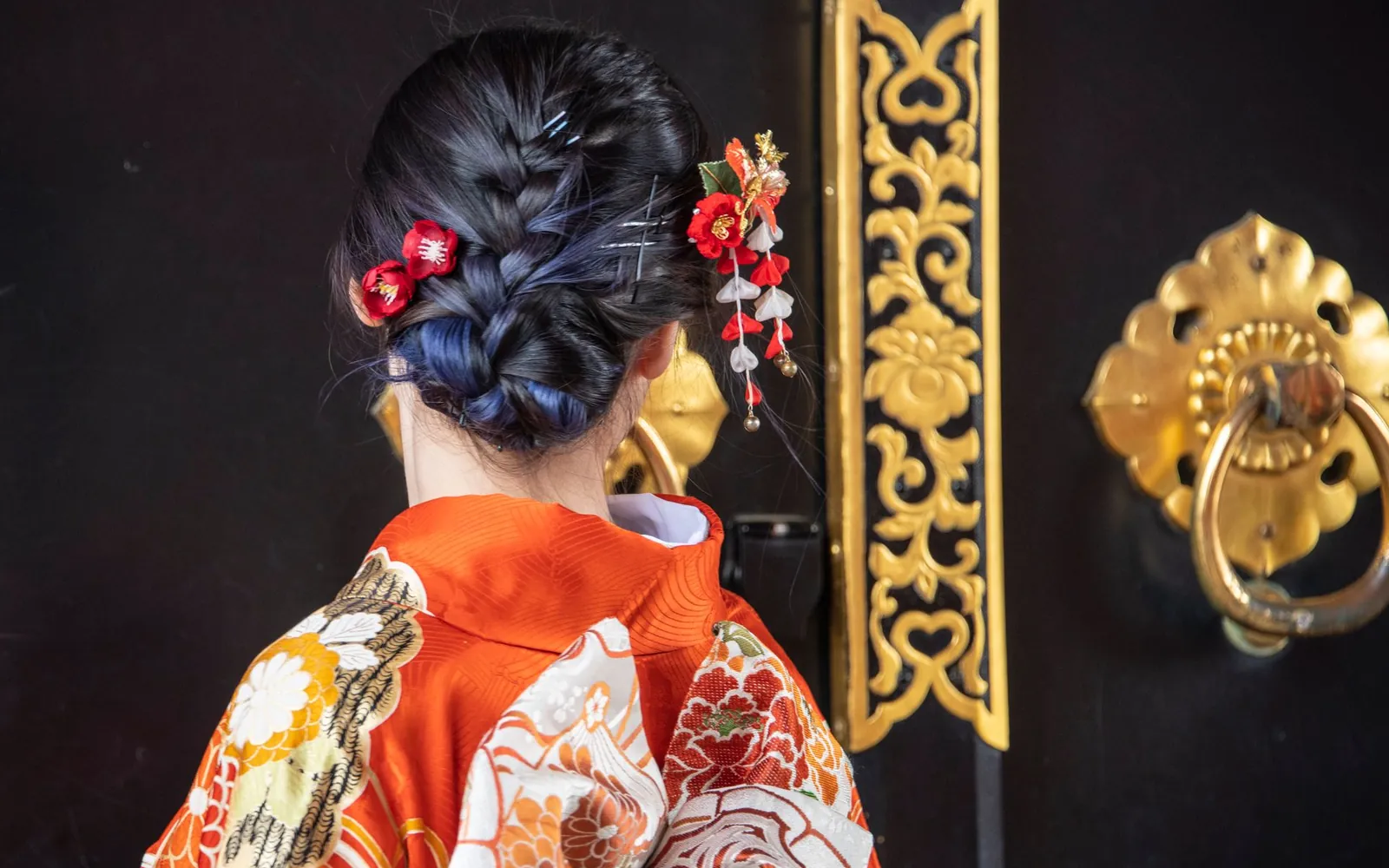
    Back view of a traditional Japanese hairstyle with ornamental hairpins, above a patterned kimono

    Imagine hair so long that washing it takes a full day, and help.

    In Heian Japan, beautiful hair was not a style. It was a discipline, and it was measured in metres.

    Hair longer than the woman wearing it

    The Heian period, from 794 to 1185, set the ideal: court women wore their hair loose, straight and unbound, grown past their feet, in some accounts longer than the women were tall. Hair like that reorganised a life around itself. A full wash was an all day affair that needed attendants to lift, wash and dry the length in sections. Court waiting women were granted days off remembered as washing hair holidays, because drying hair of that length simply took that long. Hair was trimmed at the ends only. To cut it short was to announce a withdrawal from the world, the gesture of a woman entering religious life.

    Between the great washes, care was daily and small: combing, smoothing, and combing again. That rhythm, rare deep cleanses and constant gentle attention, is the skeleton of Japanese hair care ever since.

    Rice water

    The cloudy water left over from rinsing rice was the Heian court's working rinse, combed through the hair to add moisture and keep it orderly between washes. Rice water carries starch and amino acids from the grain, and the practice has an unbroken pedigree: variants of it, including fermented rice water, circle the internet today as a discovery. In Japan it is not a trend. It is a habit older than most countries, and it survived because it suits the hair and the water it evolved with, a point this article comes back to.

    Camellia oil

    The gloss came from tsubaki, camellia oil, pressed from the seeds of Camellia japonica. It is a light oil that spreads thin and sinks in rather than sitting on the surface, which is why it could dress very long hair without weighing it into strings. Geisha used it to keep dressed hair sleek and shining. It is still at work in the sumo ring, where a wrestler's topknot is set with camellia based wax, and the island of Izu Oshima, covered in camellias, remains famous for the oil. Of all the traditional ingredients now exported in Japanese hair products, camellia is the one that travelled with its reputation intact.

    The comb as an instrument

    Grooming meant the tsuge comb, cut from dense boxwood and polished smooth by years of use and the oil it carried. A fine wooden comb does several jobs at once: it detangles without tearing, it draws oil from the roots along the length of the hair, it massages the scalp as it passes, and wood raises far less static than plastic, so the hair lies where it is put. In a culture of floor length hair, the comb was not an accessory. It was the main tool, used daily, where the bottle is used weekly.

    Soap arrives, the philosophy stays

    Western products arrived in force in the Meiji era, and the industry that grew from them kept the older logic. Shiseido opened in 1872 as a Western style pharmacy in Tokyo's Ginza district, a pharmacist's shop before it was a cosmetics house, and Japanese hair care has carried a pharmacist's respect for the scalp ever since: the scalp treated as skin, the wash treated as a procedure, cleansing thorough but never harsh. The modern head spa, in which the wash itself becomes a long, deliberate treatment of the scalp, is the Heian rhythm in modern dress, and it is now exported to salons around the world.

    The soft water underneath it all

    There is a material reason the tradition works. Japan's tap water is mostly soft: on this site's map, Toyama runs at 40 mg/L, Kyoto at 40, Osaka at 41 and Tokyo at 60. Gentle cleansers, light oils and infrequent deep washing are perfectly calibrated to water that leaves almost nothing behind. There is little mineral to remove, so nothing in the routine is built to remove it. Take the same routine to London, at 320 mg/L, and it feels underpowered within a fortnight, not because it is wrong but because it was tuned, over a thousand years, to different water. Traditions are technologies for local conditions. The planner's job is to translate them when the conditions change.

    ← Back to the Journal

    Hair care trends around the world

    Dry shampoo was born in a French pharmacy and bond building in a California garage. How the world's hair ideas travel, and what they leave behind at the border.

    A spacious modern hair salon interior with styling chairs and mirrors

    Scroll any feed and you will meet a hair ritual from the other side of the world, usually without the story of where it started.

    Hair trends used to travel at the speed of a magazine. Now they travel at the speed of a feed. But they still start somewhere specific, and if you look at where each one began, you usually find a local problem it was solving: a climate, a hair type, or, very often, a water supply.

    France: the pharmacy and the stretched wash

    France's gift to the world's wash bags is restraint, sold through pharmacies. Its emblematic invention is dry shampoo: in 1971 Klorane, a botanical brand owned by the pharmacist Pierre Fabre, launched the first one, made for new mothers in hospital who could not wash their hair. The product of necessity became the product of style, the engine of the undone French look. It helps that Paris runs at 269 mg/L, hard water in which daily washing punishes hair with mineral build up. A national habit of stretching washes, and a pharmacy culture that treats hair care as near medicine, is rational chemistry wearing chic clothes.

    Brazil: the smoothing boom, and its lesson

    Brazil's keratin smoothing treatments, the escova progressiva at home, promised months of straight, weatherproof hair and swept the world's salons in the 2000s as the Brazilian blowout. Then came the correction. In 2011 the United States OSHA issued a hazard alert and the FDA sent a warning letter to the leading brand, after testing found that products marketed as formaldehyde free released formaldehyde when heated with a dryer or iron. Regulators in other countries acted too. Smoothing did not disappear; the chemistry got cleaner and the labelling more honest. The episode remains the industry's standing lesson in reading an ingredient list sceptically, including the absences.

    The United States: natural hair, and the law follows

    The natural hair movement that grew through the 2010s, wearing curls and coils as they grow and styling them in braids, twists and locs, ran into workplace and school dress codes that treated those styles as unprofessional. California answered with law: the CROWN Act, signed in July 2019, made it the first state to ban discrimination based on hair texture and protective hairstyles. New York followed within days, and other states have followed since. It is the rare hair trend that changed statutes as well as salons, and it reframed protective styling from a preference into a right.

    East Asia: the scalp becomes skincare

    Korea and Japan exported an organising idea: hair care starts at the skin it grows from. Multi step scalp routines, exfoliating scalp scrubs, serums dosed like facial skincare, and the Japanese head spa, the wash rebuilt as a treatment, all come from this school. The beauty industry calls the wider shift skinification, and you can see it on any shelf now: shampoos and scalp products sold by active ingredient, the way serums are. The aesthetic flagship is glass hair, the mirror flat, high shine finish popularised from Korean salons, which is less a product than a standard of surface: cuticle lying flat, light bouncing straight back.

    Bond building: repair goes inside the strand

    The most technical trend began in a Santa Barbara garage in 2014, where Olaplex launched with a single patented molecule designed to patch broken disulfide bonds, the strong links inside the hair shaft that bleach and heat snap. In late 2020 K18 arrived with a different mechanism, a peptide intended to reconnect broken keratin chains. Between them they moved the idea of repair from coating the surface of hair to working inside it, and every major brand now sells a bond product. Notably, both are answers to damage done by chemistry and heat rather than by water, which is why they pair with, rather than replace, the mineral side of care.

    What travels, and what does not

    Set the trends side by side and a pattern shows. Techniques travel beautifully: a head spa works in any city, a braid protects anywhere, a peptide does not care about geography. Conditions do not travel at all. The French stretched wash is liberation in Paris and slow frustration in a soft water city where hair needs the opposite. The products inside every exported routine were chosen, originally, for the water, climate and hair of the place that invented them. Copy the technique by all means. Then check the number on the map for where you actually are, and adjust the products to your own tap.

    ← Back to the Journal

    Hard water and your hair: the minerals you never invited

    That stubborn feeling after a wash might not be your shampoo’s fault. Meet the invisible minerals that can build up on your hair, one shower at a time, where they come from and what they actually do once they reach your hair.

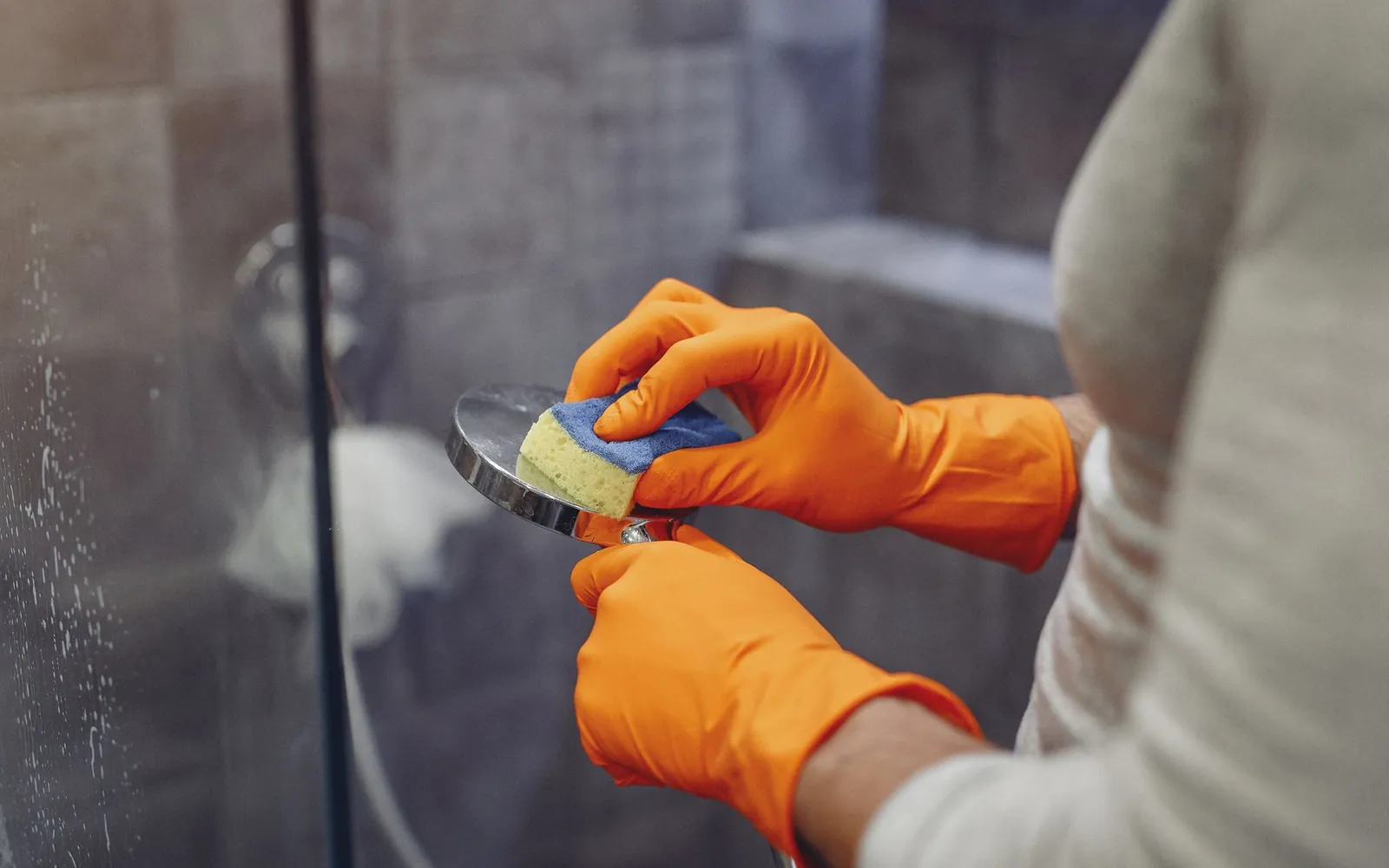
    A gloved hand scrubbing a shower head to remove limescale

    That stubborn feeling after a wash might not be your shampoo’s fault. Meet the invisible minerals that can build up on your hair, one shower at a time.

    Hard water is not a judgement about quality, and it has nothing to do with dirt. It is a measurement of two minerals, calcium and magnesium, that water collects honestly on its way from the sky to your tap. This is the science underneath everything else on this site, set out in one place.

    Where hardness comes from

    Rain falls soft. As it soaks through soil and rock it dissolves what it touches, and limestone, chalk and dolomite are generous: they load the water with calcium and magnesium compounds. Water that runs over granite or sand, or is collected before it travels far underground, picks up very little. Geology, not plumbing, sets most of a city's number. London's supply crosses chalk and limestone country and arrives at 320 mg/L. Cancún sits on a limestone aquifer and runs close to 700. Toyama, fed by snowmelt off the Japanese Alps, runs at 40. Cities can blend sources and treat water at the plant, which is why figures vary by district and season, but the rock has the first and last word.

    How it is measured

    The unit used on this site is milligrams per litre, expressed as calcium carbonate: mg/L as CaCO3. The United States also uses grains per gallon, at roughly 17 mg/L to the grain. The bands used across this site, and in every plan the planner builds, are these: under 60 mg/L is soft, 60 to 120 is moderate, 120 to 250 is hard, and above 250 is very hard. They are worth learning as a traveller's scale, the way you learn what a temperature means in a new country. At 60 your home routine works anywhere. At 250 the water has become an ingredient in your hair care whether you invited it or not.

    Temporary and permanent hardness

    Part of the load can be boiled away. Calcium bicarbonate, the main form in limestone country, breaks down with heat and deposits as solid carbonate: that is the fur inside a kettle, and the fraction it represents is called temporary hardness. The rest, mostly calcium and magnesium sulfates and chlorides, survives boiling unchanged: permanent hardness. Your kettle, in other words, is a hardness meter you already own. A kettle that furs in a fortnight is telling you the temporary fraction of your water's story, and a shower in the same house is writing the rest of it on your hair.

    What the minerals do in the wash

    Three things, in the order you meet them. First, they fight the cleanser. Soap reacts with calcium to make soap scum, an insoluble salt that coats whatever it touches; that reaction is why soap performed so badly for so long in hard water cities, and why synthetic detergents, which resist it, were a revolution. Even with detergents, minerals blunt lather and consume cleansing power, so you reach for more product to get less clean. Second, they deposit. Wash after wash, calcium and magnesium salts settle onto the hair shaft and build a mineral film: hair turns rough, dull and tangly, and conditioner applied over the film conditions the minerals instead of the hair. Third, they carry colour problems with them. Where water also picks up copper or iron, from wells or ageing pipes, those metals oxidise on hair: copper pushes fair hair green, iron pushes it brassy and orange.

    Why hair minds more than skin does

    Skin renews itself and sheds its evidence. Hair cannot. A strand is dead keratin, armoured in overlapping cuticle scales and carrying a slight negative charge, and mineral particles lodge at the lifted edges of those scales and stay. The film roughens the surface, friction between strands rises, and the hair tangles, snags and breaks at the points of most friction. The ends of long hair show it first and worst, for a simple reason: they are the oldest hair on your head and have survived the most washes. Hard water damage is cumulative bookkeeping, and the ends hold the longest ledger.

    Removing it: chelation

    You cannot rinse minerals off with more of the water that deposited them. What removes them is chelation (washing the minerals out, like a detox): ingredients such as EDTA, phytic acid and citric acid whose molecules bind metal ions and hold them dissolved, so they rinse away instead of resettling. That binding step is the entire difference between a clarifying shampoo, which strips oils and product build up, and a chelating shampoo, which takes the minerals too. At home, the genuine fix is an ion exchange softener, which swaps calcium and magnesium for sodium before the water reaches the tap. Carbon filters, whatever their boxes promise, do not remove hardness: dissolved minerals pass straight through them. A filter can take chlorine out of your shower, which is worth having. It cannot soften it.

    Reading your own water

    The field signs are easy once you know them: a furring kettle, a scum line that survives the bath being cleaned, soap and shampoo that will not lather, spotted glassware, hair that feels coated by day three of a trip. Then get the number. Every city on this site's map carries its figure and its source, and the planner turns the band into a short list of decisions: how often to chelate, how rich a conditioner to pack, when to leave both at home. Hard water is not a mystery and not a misfortune. It is a measurement, and like most measurements, it is only a problem when nobody has taken it.

    ← Back to the Journal

    Chlorine, salt water and your hair: a swimmer's guide

    The green tint is not the chlorine. What pool water and sea water each do to hair, and the rinse first habit that prevents most of it.

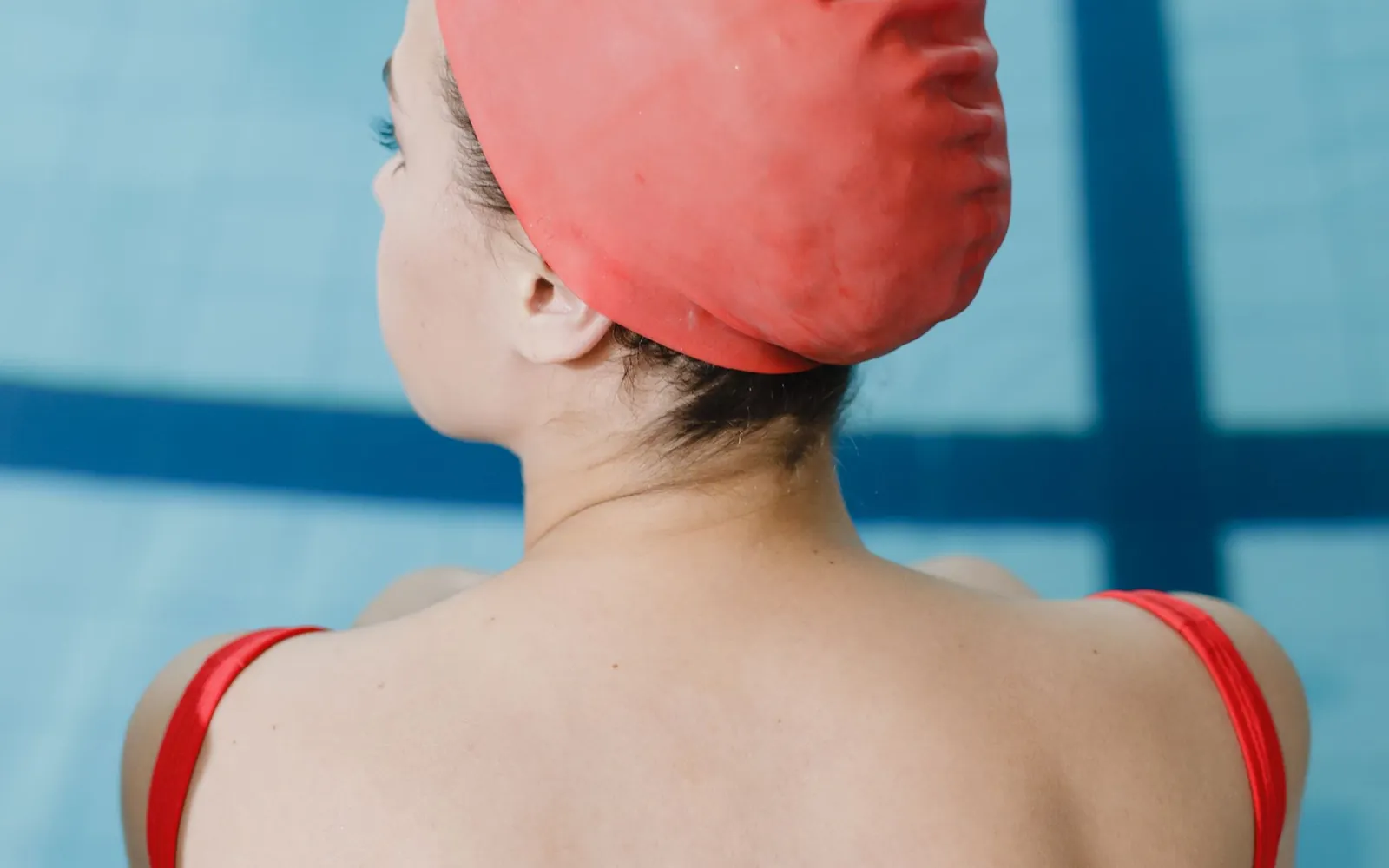
    Back view of a swimmer in a red swim cap sitting at the edge of a pool

    The holiday hair in the photos rarely matches the hair that comes home.

    Most of the hair damage people bring home from a holiday was not done by the tap. It was done by the other two waters of a trip, the pool and the sea, working on hair for hours at a time while its owner was thinking about lunch. The good news is that the two waters damage hair in different, well understood ways, and most of both is preventable with one habit.

    The pool: an oxidiser at work

    Pool chlorine is held deliberately low, typically between 1 and 3 parts per million, enough to keep the water sanitary. But chlorine is an oxidising agent, and hair is one of the things it oxidises. It strips the sebum that waterproofs the strand, attacks the keratin the strand is built from and fades colour pigments, salon colour first. One swim does little. A holiday's worth of daily swims, in and out of the sun between them, is a slow bleach bath: hair comes home dry, porous, tangly and lighter than it left, and porous hair then absorbs everything faster, including the next swim.

    The green tint is copper

    The famous green cast on fair hair after a pool week is not chlorine, and treating it as chlorine sends people to the wrong remedy. The colour is copper: from algaecide treatments dosed into pools and from corroding copper plumbing, oxidised by the chlorine and bound onto the hair, where porous and bleached strands take it up most eagerly. Chlorine's role is accomplice: it oxidises the copper and roughens the hair so the copper sticks. This is why purple shampoo disappoints. It lays a compensating tint over the surface while the metal stays in the hair. A chelating wash (a detox wash) is the actual fix, because chelating ingredients bind copper ions and carry them out, the same binding chemistry that removes hard water minerals from hair in a London shower.

    The sea: salt, crystals and sun

    Sea water is about 3.5 per cent salt, and salt is hygroscopic and drying: it draws water out of the strand, and as hair dries between swims, salt crystals form on and in it, roughening the cuticle and setting the tangle. Wet hair full of salt then meets the day's other two agents, ultraviolet light, which degrades keratin and colour, and wind, which works the roughened strands against each other. None of this argues against swimming. It argues that sea hair is a managed condition, not an accident, and that the management is cheap.

    Before you get in: the rinse first rule

    Hair takes up water like a sponge, and a sponge that is already full takes up very little more. So the single most useful act in this entire guide costs nothing: before you swim, soak your hair thoroughly with clean tap water. A strand saturated with fresh water absorbs a fraction of the pool or sea water a dry strand would. Work a little leave in conditioner through it as a barrier layer, braid long hair or put it up so the lengths are not trailing and tangling, and if you swim seriously or daily, wear a cap: unfashionable, unbeatable. Every later step in this guide is a partial repair of damage this one step prevents.

    After: rinse, wash gently, chelate occasionally

    Rinse with fresh water as soon as you leave the pool or the beach, even if a full wash has to wait. At the end of a swimming day, wash gently: a mild shampoo aimed at the scalp, a proper conditioner on the lengths. Shampooing harder does not remove chlorine damage and adds its own. Then, the rhythm that ties this guide back to the rest of this site: after a heavy swimming week, or whenever fair hair starts to show a cast, use one chelating wash. It clears copper, mineral load and pool residue in a single pass, and it is the same product a hard water traveller already has in the bag.

    When the tap joins in

    The two exposures compound in hard water destinations. A swimmer in Cancún, where the tap water runs close to 700 mg/L, some of the hardest in this site's dataset, is laying pool chemistry over mineral film every single day, and the rinse first habit plus one mid week chelating wash stops being a refinement and becomes the plan. The planner treats swimming the same way: tell it your destination and it weighs the water from the tap and the water you will be swimming in together, which is how your hair experiences them anyway.

    ← Back to the Journal

    Traditional Indian hair care: oiling, herbs and the head massage

    The original shampoo was an Indian head massage. The oiling ritual, the washing herbs and the Ayurvedic logic that modern hair care keeps coming back to.

    Hands working hair oil through the ends of long hair

    In millions of homes, wash day still starts the night before, with oil and unhurried hands.

    The word shampoo is Indian, and so is the thing it first named. Not a bottle, and not even a wash: a head massage, done slowly, with warm oil, by somebody who had time. Traditional Indian hair care is built around that act, and its logic, oil first, wash second, length protected always, is the oldest complete hair system on this site.

    The ritual: oil, massage, then wash

    Ayurveda, India's traditional system of medicine, treats the head as a site of care in its own right. The practice is unhurried: oil warmed and worked into the scalp with the fingertips, massaged in, left to sit for an hour or overnight, and only then washed out. The massage has its own name, champi, and the name travelled. When Sake Dean Mahomed opened his baths in Brighton in 1814, the shampooing he sold to kings was this massage, and the washing that came with it was the incidental part. In Indian households the order has never reversed: the oil is the treatment, and the wash exists to serve it.

    Why the oil works

    The classic oils are regional: coconut in the south, sesame and mustard further north, often infused with herbs and kept in the family like a recipe. Coconut oil is the one modern laboratories have put to the test, and it passed in an interesting way. In a comparison published in the Journal of Cosmetic Science, coconut oil reduced the protein lost from hair during washing, where mineral oil and sunflower oil did not, because its main fatty acid is small and straight enough to penetrate into the hair shaft rather than only coating it. Washing hair is a small act of erosion: some protein leaves with the water every time. An oil inside the strand before the wash measurably reduces the toll. The tradition, it turns out, was a delivery mechanism.

    The washing herbs

    Before bottled shampoo, the wash itself was botanical, and the botany was precise. Shikakai, the pods of Acacia concinna, contain saponins, natural soap like compounds that lift oil gently without stripping; an Ayurvedic name for the plant is bahuphena, which means very foam making, a compliment paid by people who measured a cleanser by its lather centuries before advertising did. Reetha, the soapnut, is richer in saponins still and makes a true lather in warm water. Amla, the Indian gooseberry, rich in vitamin C, goes into washes and oils for strength and shine. Bhringraj and brahmi are infused into scalp oils. Neem is the scalp herb, reached for where itch and flaking are the complaint. Henna does double duty: its dye molecule, lawsone, binds directly to keratin, so it colours the strand red orange while coating and thickening it.

    Traditional does not mean inert, and the tradition itself knows it. Shikakai in the eyes stings memorably, as generations of children washed with it can testify. Henna is a commitment: its bond with keratin makes later chemical colour unpredictable. These are active preparations with rules, which is exactly what a mature tradition looks like.

    Hair kept, not cut

    The system's final principle is conservation. Hair is worn long and kept: braided for school and work, oiled at the ends, combed with wide combs, put up rather than left to weather. A braid is protective styling long before the term existed, holding the lengths together, sparing the ends friction and sun, and reducing the tangles that cost hair at every combing. Everything in the routine points the same way: grow it, keep it, and let the care be frequent and gentle rather than rare and drastic.

    The tradition now, and its water

    Western hair care has quietly adopted the sequence whole: pre wash oiling is now a named step in routines that had never heard of champi, scalp massage tools sell in every beauty shop, and amla and brahmi appear on exported labels worldwide. One calibration is worth adding, and it is this site's home ground. India's own water varies enormously: on our map Mumbai is soft at 46 mg/L while Delhi runs to 120, at the edge of hard. Where the water is harder, the oiling matters more, because the wash waiting at the end of the ritual is working against minerals as well as oil. A tradition is always, quietly, an adaptation to the water it grew up beside. Read yours before you borrow one.

    ← Back to the Journal

    The brand that will not sell you shampoo

    Milbon supplies more Japanese salons than any other hair care company, and it refuses to sell you a bottle online. Inside the synchrotron science, the soft water logic, and the two different Milbons: the one Japan keeps at home, and the one it sends to the world.

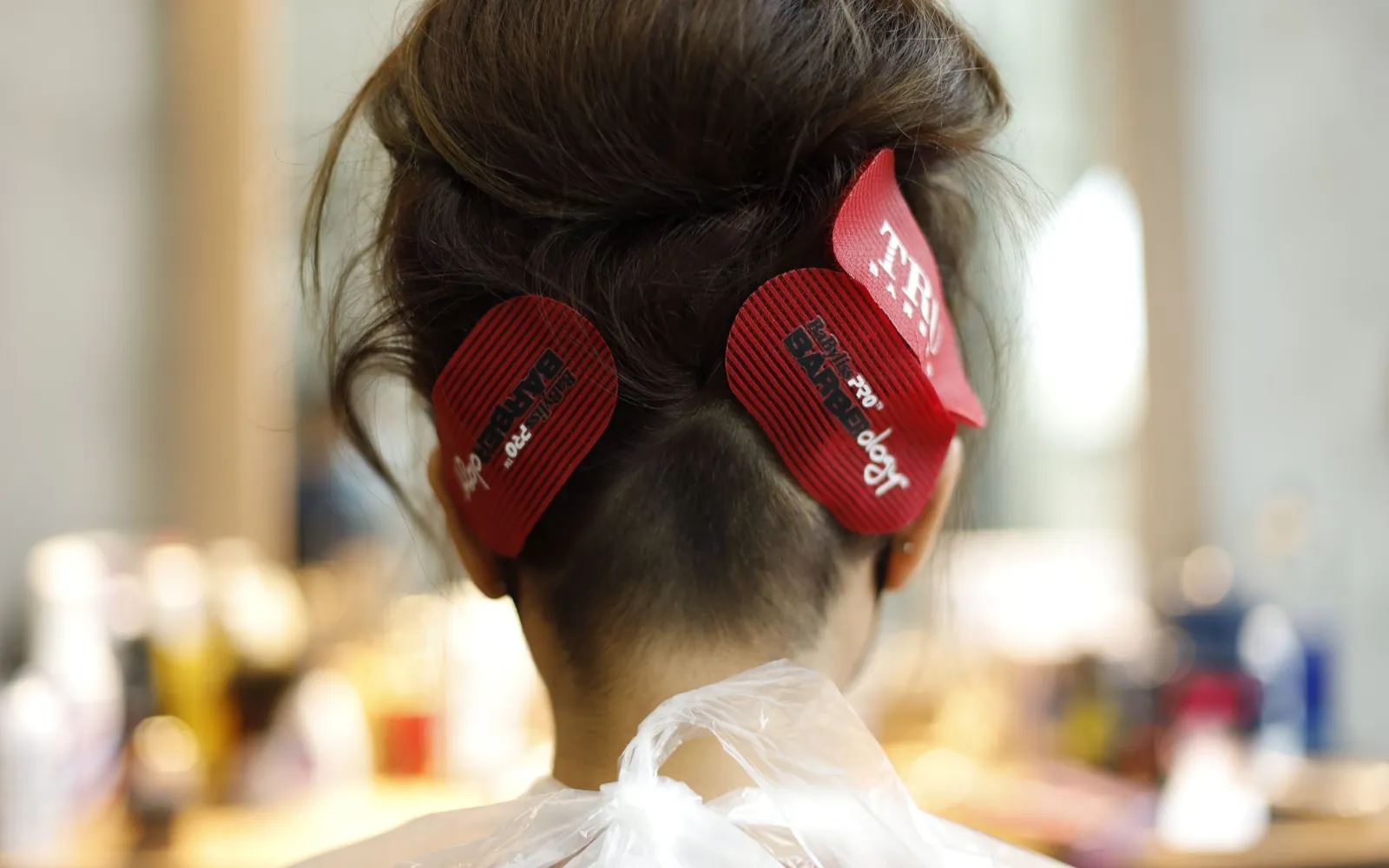
    Back view of a client's hair held in red sectioning clips in a salon

    There is a shampoo you will see in Tokyo salon windows, in ski town salons in Hokkaido, and on the back bars of good salons from Osaka to Sapporo, that the manufacturer will not sell you. Not online, not by phone, not in a department store. If you find it on a marketplace site, the company's own position is that the quality is not guaranteed, because the bottle was never meant to travel that way.

    The company is Milbon, and the refusal is the business model. Everything it makes is sold to hair salons, and only to hair salons, on the theory that a professional should stand between the product and your head.

    Built for hairdressers since 1960

    Milbon began in Osaka in 1960, founded as Yutaka Beauty Chemicals and renamed Milbon in 1965, selling to Japan's hairdressers from the start. It never built a consumer business on the side, and it shows no interest in starting one now. By the company's own account it is the leader in Japan's salon hair cosmetics market, and it counts more than 40,000 salons carrying its products worldwide.

    That scale buys a certain kind of science. Milbon studies hair the way a materials institute would, and its best known discovery came from imaging damaged hair at SPring-8, the enormous synchrotron facility in Hyogo prefecture, where researchers found stick shaped voids running inside damaged strands, hollow channels where the hair's inner structure had fallen away. The finding shaped a generation of its formulas, built around filling those voids rather than coating over them, and the research programme behind it has examined hair gathered from more than twenty countries.

    Two Milbons

    Here is the part that matters to a traveller. The Milbon on a Japanese salon shelf is mostly not the Milbon you will find in London or Los Angeles.

    Japan gets its own brand family. At the top sits Aujua, launched in 2010, a premium range developed from research into Japanese hair and the demands of Japan's sharply different seasons, humidity, dry winters and all. It is built as a salon ritual first and a take home shelf second, with multi step in salon treatments matched to the products you are sent home with. Around it sit other domestic lines that most visitors never learn the names of, because they rarely leave the country.

    The rest of the world gets Global Milbon, the lowercase "milbon" brand launched in 2016, developed from analysing hair characteristics across twenty countries and designed to work on the full global mix of hair types and waters. And in 2019 the company ran the experiment in reverse: Sophistone, a colour brand developed exclusively for salons outside Japan, the first Milbon brand built only for export. The traffic runs both ways at the edges now, and Global Milbon is sold in Japanese salons too, but the centre of gravity holds. One company, two catalogues, divided by what it learned about hair and water at home and abroad.

    Why Japan can formulate this gently

    The split makes sense once you know the water. Japan's tap water is mostly soft, and on this site's map the pattern is striking: Nozawa Onsen at 18 mg/L, Hakuba at 30, Toyama at 40, Tokyo at 60. Water like that leaves almost nothing behind on hair, so Japanese formulas never had to learn to strip mineral out. They could concentrate on delicacy instead, on fine textures, thorough but gentle cleansing, and the scalp treated as skin.

    Take that delicacy to Paris at 269 mg/L or London at 320 and it feels underpowered within weeks, not because it is badly made but because it was tuned for water that asks very little of it. Milbon's answer was not to sell the Japanese products harder abroad. It was to build a second brand for the rest of the world's conditions, which is more or less the most honest response a hair company has ever given to a map of water hardness.

    What to do with this on a trip

    Treat the Japanese salon visit as the experience. If you are passing through Tokyo, Osaka or a ski town with a good salon, book the treatment itself, a head spa or an Aujua treatment, and let the stylist read your hair. That consultation is the part worth travelling for: the ritual, the diagnosis, the unhurried care. The domestic lines on the shelf beside you are salon only in Japan, made for Japanese water and Japanese hair, and they largely stay that way.

    And check the water before you judge the products. Japan's softness is the exception in the world, not the rule, which is rather the point of everything on this site.

    Facts checked against Milbon's corporate history and global pages, its FY2026 results presentation, Milbon USA's FAQ and purchasing policy, and this site's own water dataset, 18 October 2026. Salon count and market leadership are the company's own figures and are worded as such in the text.

    ← Back to the Journal

    Hair and the weather: planning around humidity, heat and temperature swings

    The water gets the blame, but the air does half the work. What humidity, dry heat and a twenty degree day to night swing actually do to hair, and how to pack for a day that cannot make up its mind.

    Back view of a woman facing a bank of dark storm clouds

    Ask a room of travellers what ruins their hair on a trip and most will blame the water. They are half right. The other half is the air: the humidity that swells hair by lunchtime, the dry heat that pulls the moisture out of it, and the swing between a hot afternoon and a cold night that asks one head of hair to live in two climates on the same day. Anyone who plans a trip around a weather app already knows this in their bones. Hair does too.

    Humidity: hair drinks the air

    Hair is hygroscopic, which is a laboratory word for something everyone has felt in a mirror: it absorbs water vapour from the air around it. On a humid day that vapour moves into the strand, and as it does, the hydrogen bonds that hold your style in place are broken and re-formed in the shape the hair wants to fall, not the shape you set. The strand swells, the cuticle, the flat overlapping scales on its surface, lifts instead of lying smooth, and lifted cuticles catch light badly and rub against each other. That is frizz, described mechanically: swollen strands, raised scales, a style quietly renegotiated by the weather.

    The numbers explain why some cities feel like a different planet. In Singapore, the typical day runs 29 to 30 degrees with humidity around 85 per cent, in every month of the year. There is no dry season to plan around and no swing to exploit: the air is saturated, all the time. The honest kit for that climate is a light conditioner kept off the roots and an anti humidity leave-in worn daily, a barrier layer that slows the vapour getting in. Heavy masks melt out by midday. Gentle washing and patience do the rest.

    Dry air: the pull in the other direction

    Dry air runs the same physics in reverse. When the air holds little moisture, the gradient pulls water out of the strand, and hair that loses water loses flexibility first: ends feel brittle, lengths feel rough, and the scalp can feel tight and thirsty. Then there is static. In dry air, the electrical charge hair picks up from brushing and friction has nowhere to dissipate, so strands repel each other and stand off the head. Anyone who has taken a hat off in a heated room in January and watched their hair follow it knows the effect.

    Indoor heating makes winter a double exposure: cold, dry air outside, then warm, even drier air inside, all day. It is why the planner on this site marks cold months as a season of its own and answers them with richer conditioning, a mask once a week and a leave-in kept in rotation. The water in a cold city may be unremarkable. The air is the story.

    Swings: two climates before dinner

    The third pattern is the one visitors plan for least. In desert and high valley climates the temperature does not drift between day and night, it jumps. Sacramento in July typically runs 37 degrees by day and 17 at night, a twenty degree swing. Marrakech in July runs 39 by day and 21 at night, with humidity down at 39 per cent. Aspen, up in the Colorado mountains, swings eighteen degrees on a July day, 26 down to 8, because thin mountain air holds the day's heat poorly.

    For hair, a swing day is two climates in one outfit. The warm half is dry and demanding: moisture leaves the strand, sun adds UV on top, and hair feels parched by afternoon. The cool half flips the problem: as the air cools it holds less moisture, static builds, and hair styled for the heat goes flat or flyaway by evening. A heavy routine chosen for the night smothers hair at noon; a light routine chosen for noon deserts it by dinner. One product regime rarely fits the whole day, which is why swing climates reward the layer you can reapply, the leave-in, more than any single heroic wash.

    Planning like the weather app generation

    None of this needs a forecast to be useful. Forecasts answer the wrong question for packing: you do not need next Tuesday's exact temperature, you need the shape of the month you are travelling in. Is the air wet or dry? Does the day swing? Is the season the harsh one or the kind one? Those are climate questions, and they are stable enough to plan a wash bag around weeks ahead.

    That is the bet behind this site's season calendar. Every city in the dataset now carries its typical month by month temperatures and humidity, drawn from recent climate records, so a plan can weigh the air alongside the water: humidity shown next to the anti humidity advice it justifies, the swing in degrees printed rather than implied, dry and heated months answered with moisture before the static starts. The weather made your hair's day harder long before the shower did. It deserves a line in the plan.

    Climate figures are monthly typical values for each city from this site's dataset, computed from Open-Meteo ERA5 records, 2015 to 2024: Sacramento and Marrakech July, Singapore year round, Aspen July. They are planning figures, not forecasts.

    ← Back to the Journal

    Professional or supermarket shampoo: what the extra money actually buys

    A salon bottle can cost five times a supermarket one. Some of that buys real tuning, a lower pH and narrower formulas. Much of it buys fragrance, packaging and distribution. Here is how to tell the difference.

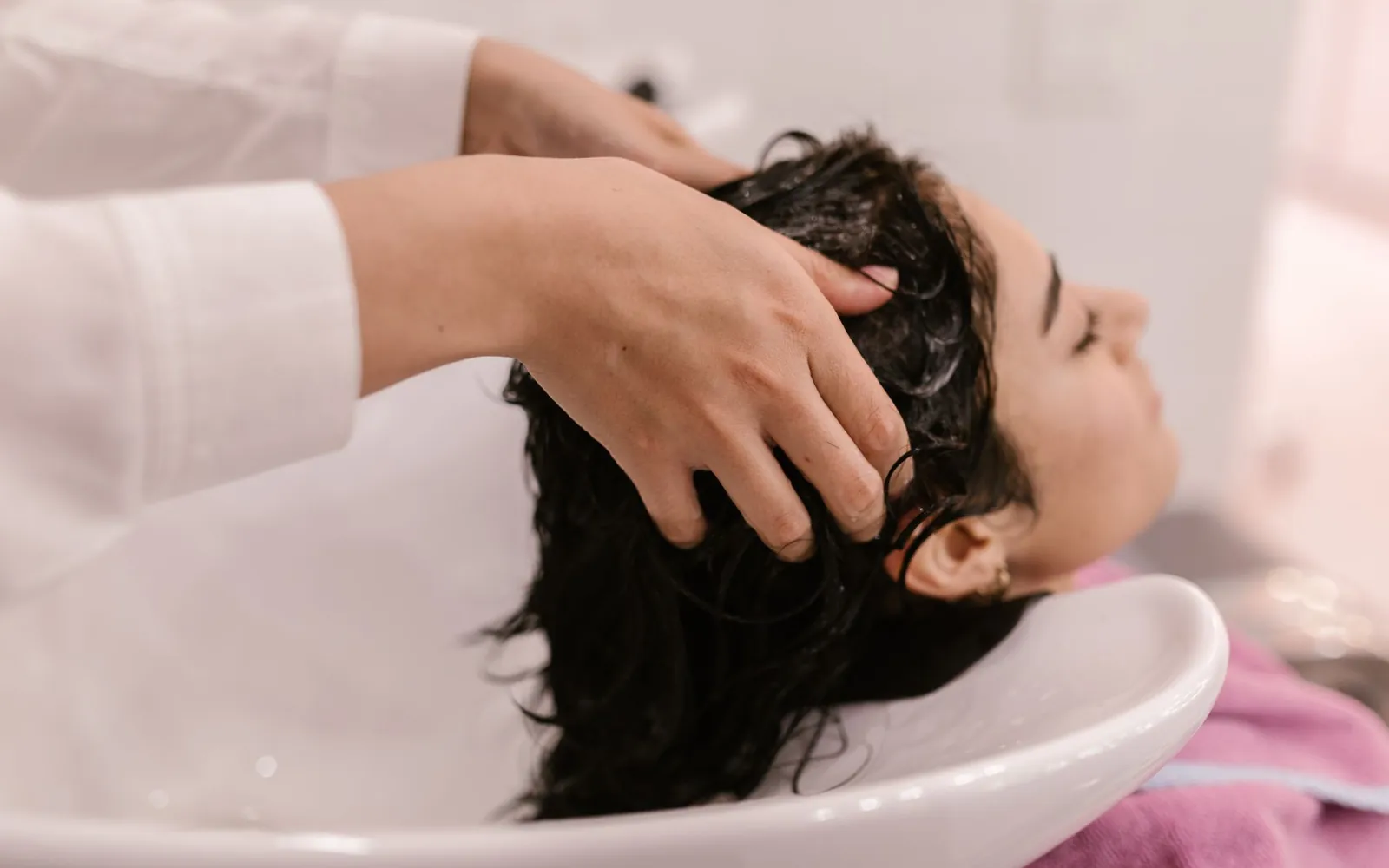
    A stylist washing a client's hair at a salon backwash basin

    The question usually arrives at a shelf. In one hand, a supermarket shampoo for the price of a coffee. In the other, a salon bottle at four or five times the price, in a smaller size. Both promise shine and softer hair. So what does the extra money actually buy, and what does it not buy? The honest answer is less dramatic than either side tends to make it.

    Professional ranges are more likely to be carefully tuned: a gentler balance of cleansers, a lower pH in many cases, and a formula aimed at a narrower problem, such as colour treated or very dry hair. Consumer ranges have to please almost everyone at a supermarket price. But the overlap is large, and part of the salon price is fragrance, packaging and the salon channel itself.

    The same basic job, done the same basic way

    Every shampoo, at every price, does the same job with the same toolkit. A typical formula contains about 10 to 30 ingredients: cleansers, conditioning agents, and stabilising additives. The main cleansers are almost always anionic surfactants, most commonly sodium laureth sulphate. Used alone, that class is strong, and it leaves hair carrying more negative charge, which means more friction and frizz.

    Formulators soften that effect by blending. An amphoteric co-surfactant such as cocamidopropyl betaine, used alongside the main cleanser, lowers the charge density of the cleansing system and reduces its irritation potential in laboratory tests. Nonionic cleansers play a similar role. None of this is exclusive to salons. You will find the same blend, in different proportions, on supermarket shelves. The difference lies in the proportions and the balancing.

    The clearest measured difference: pH

    pH is where a measured gap does appear. Hair and scalp sit on the acidic side, and more alkaline washing raises the negative charge on the fibre, increasing friction. A study of 123 shampoos in the International Journal of Trichology included just 15 professional products, so treat it with care, but 75 percent of those salon products tested at pH 5.5 or below, compared with about 34 percent of popular brands. Lower pH shampoos caused less frizz.

    Two cautions follow. First, pH is rarely printed on the bottle in either channel, so you cannot shop by it directly. Second, sulphate free is not a guarantee of gentleness. The dermatology literature has noted a lack of published analyses proving that sulphate free shampoos clean better or damage hair less.

    Where professional ranges go further

    Professional ranges earn their keep at the specific end of the shelf. A salon line can support a shampoo for bleached hair, another for a sensitive scalp and a third for hard water, because a stylist is there to match them. Conditioners follow the same logic. Their key agents are positively charged compounds that deposit on damaged, negatively charged hair, reducing friction and static. A well matched conditioner often matters more than the shampoo.

    That specialisation includes chelating and detox lines, and the wording needs care. A chelating shampoo (a detox wash for minerals) contains agents such as EDTA that bind metal ions, including the calcium and magnesium in hard water. A detox or clarifying shampoo is usually just a stronger cleanser for oil and build-up. Only the first job removes minerals. A trace of EDTA low on a label may simply stabilise the formula, so look for a product sold for hard water.

    What is mostly marketing

    Start with the ingredient list. Ingredients are listed in descending order down to 1 percent. Below that they can appear in any order, and brands need not publish percentages. Claims about higher concentrations therefore usually cannot be checked from the bottle, and a fashionable oil near the end of the list may be present at well under 1 percent. Price is weak evidence too. The same groups often own both tiers, sharing research and similar base ingredients.

    Price per wash is the fairer comparison, and it cuts both ways. A concentrated product, used sparingly, can cost less per wash than its shelf price suggests. A large, cheap bottle, squeezed generously, can cost more than it looks. Do the simple maths: price divided by the number of washes you get from the bottle. No independent evidence settles the claim that salon bottles routinely last twice as long.

    Salon only distribution is real, but it is a business model before it is a quality mark. Brands such as Milbon, covered elsewhere in this Journal, sell only through salons, and other groups state that professional products are guaranteed only in authorised salons. That model can bring good advice when you buy. It does not, by itself, prove what is inside the bottle.

    What this means in hard water, and at home

    For a traveller washing in hard water, spend on function, not on the label. A chelating wash that actually binds minerals will do more for rough, dull, hard to comb hair than a luxury shampoo with no chelating action. That is the one professional style product worth packing on purpose. Between chelating washes, a gentle, well balanced everyday shampoo is enough, from either shelf, provided it suits your scalp.

    At home, the case for paying more is weaker still. For gentle daily washing, for short hair, and for homes with soft water, a good consumer shampoo and a matched conditioner will usually do the job well. Save the extra money for cases where it buys something specific: a targeted formula your hair responds to, or that chelating wash for hard water stops. The rest is presentation.

    ← Back to the Journal

    The pillowcase question: does your hair care what you sleep on?

    Silk promises less frizz and fewer tangles, but the clinical evidence for hair is thin. We look at what friction and moisture tests actually show, who is most likely to notice, and why a pillowcase is a useful travel extra, not a transformation.

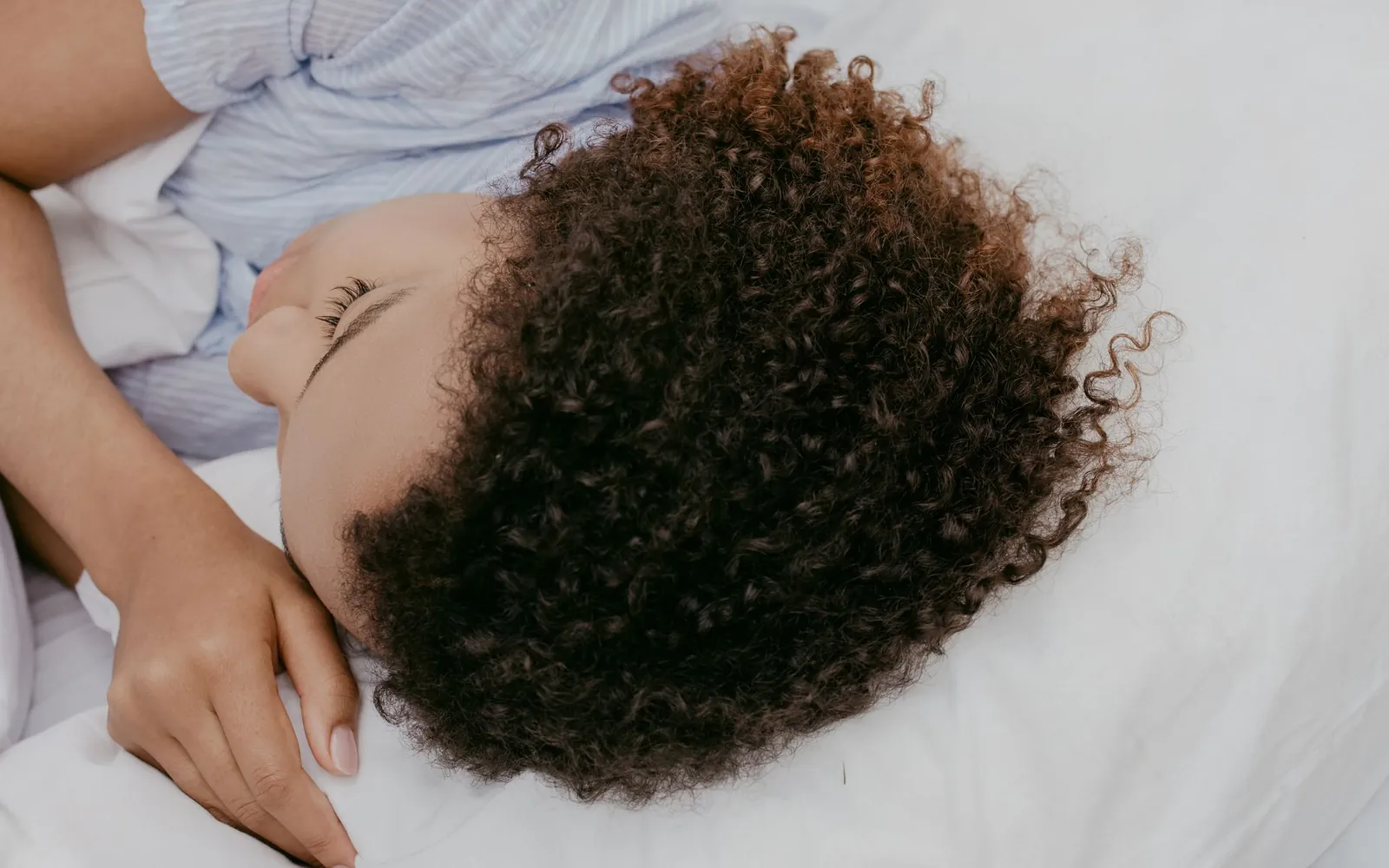
    A woman asleep with her curly hair spread across a pillow

    You have probably heard the pitch. Swap cotton for silk, the ads say, and you will wake up with calmer hair, fewer tangles and less frizz. It contains a real idea. It is also sold far harder than the evidence can support.

    Our short answer: a smoother pillowcase really does create less drag overnight, and that matters more for some hair than for other hair. It will not transform your hair, repair damage already there, or outweigh the water you wash it in and the climate around you.

    Why friction is the strongest part of the claim

    Hair does not heal once it leaves the scalp. Its outer layer, the cuticle, wears from washing, brushing, heat and colour, and friction at night is one more small source of wear. As you turn, hair catches and rubs against the fabric under your head. A rougher surface gives it more to catch on. A smoother one lets it slide.

    This is measurable in a textile laboratory, even if numbers vary by method. In one peer reviewed study of fabric against skin, silk and polyester satin recorded lower surface friction than woven cotton, and cotton took up water in seconds while silk and satin took far longer. That does not prove better hair in the morning. It does show the mechanism is real physics, not invention.

    Whether less drag becomes visibly less breakage over months is another question, and there the evidence thins out. We could not find a large, well controlled clinical trial that followed people on silk and cotton and measured breakage properly. Much quoted research is small, self reported, funded by bedding sellers, or about skin rather than hair. The American Academy of Dermatology says satin or silk bonnets and pillowcases may reduce friction and help preserve a hairstyle. May is the right word.

    The moisture story is messier than the ads say

    Cotton is often described as drinking moisture from hair while silk leaves it alone. The real picture is less neat. In standard textile tables, silk holds a little more moisture vapour at equilibrium than cotton, around 11 percent of its dry weight compared with about 8.5 percent for cotton. Polyester holds almost none, around 0.4 percent.

    What feels different is speed and surface. Cotton fibres swell and take up liquid quickly, and a cotton case can feel as if it is pulling in leave in conditioner, oils and sweat. Silk takes up liquid more slowly and feels smoother, even though it is not waterproof. The honest version is narrower: cotton may take up products and surface moisture faster. It is not draining hair dry in any cleanly measured way.

    Satin is a weave, not a fibre

    Silk is a fibre, the natural protein thread made by silkworms. Satin is not a fibre at all. It is a weave, a way of floating threads over others so the face of the fabric comes out smooth and glossy.

    Most pillowcases sold simply as satin are polyester satin. That is not a scam: smoothness is what most people are buying, and polyester satin gives you much of it for far less money. It does behave differently: it tends to sleep warmer, can build static in dry air, and quality varies widely. A case sold as silk should say so in the fibre content, ideally with a momme weight, a measure of silk fabric weight. If the label only says satin or silky, assume polyester.

    Who is most likely to notice, and what it costs

    Those most likely to notice are people whose hair has the least margin for extra wear: curly and kinky coily hair, prone to dryness and breakage, and fragile, bleached or otherwise treated hair. Add longer hair with older ends, and anyone who wakes up fighting morning frizz and tangles. If your hair is short, untreated and rarely tangled, or you already sleep in a smooth bonnet, the difference is likely to be small.

    Cost and care pull in opposite directions. Real silk costs real money and asks for gentle handling: a cool, delicate wash, ideally in a mesh bag, and air drying away from heat. Treated roughly, it dulls and weakens. Polyester satin is cheap and usually goes through a normal wash with little fuss. The trade is warmth, static for some, and a surface that can pill sooner.

    The verdict, at home and on the road

    For travel, this is one of the few hair tips that genuinely packs well. A silk pillowcase folds flat, weighs almost nothing and slips over a hotel pillow in seconds. A thin pillow liner does the same job in even less space. Against rough hotel cotton, that smooth layer can make the next morning easier.

    Keep it in proportion. On most trips a bad hair day has far more to do with hard water, humidity or dry air, sun and wind than with what you slept on. A pillowcase will not rescue hair that the water has left rough. We would spend attention on water first, every time.

    So, should you try one? If your hair is curly, fragile or frizz prone and mornings are a battle, yes, as a small experiment. Start with inexpensive polyester satin if price or laundry matters. Move to silk if you prefer a natural fibre or sleep warm, and will wash it gently. Judge it after a few weeks by tangles and ease, not by promises. A small, real, cheap to test difference for some hair types, not a transformation. That, honestly, is enough.

    ← Back to the Journal

    Hats, beanies and caps: keeping your hair great under cover

    Hats protect your scalp and hair from sun, wind and cold, but friction, sweat and static can undo a style. A smooth lining, a loose fit and the right hat for the trip make all the difference.

    Back view of a woman in a wide straw hat relaxing on a beach

    A good hat does two jobs. It protects you from sun, wind and cold, and it sits on the hair and scalp you are trying to look after. That second job is easy to forget until you take a beanie off in a warm room and find flat roots, flyaways and a sore hairline.

    That is no reason to stop wearing hats. Dermatologists recommend them, especially for sun protection. It is a reason to choose fabric, fit and lining with care.

    Friction, sweat and hat hair

    Most hat problems start with rubbing. Each time a hat goes on, comes off or shifts, its band and crown drag across the hairline, temples and nape. Those edges are delicate, and repeated friction can snap weakened strands there. It builds slowly, so it often shows as short, uneven hairs around the edge.

    Under a close hat, the scalp gets warm and damp. Sweat and oils have nowhere to go, so they sit on the skin with product and shed skin cells. For most people that means hair feels less fresh by evening. If you are prone to itching or flaking, a warm, occlusive cover worn for hours can feel more uncomfortable, especially if the hat is rarely washed.

    Then there is hat hair. A hat presses hair flat in the shape of its crown, so root volume goes first. Static is the other half. Dry hair rubbing against a hat picks up the same charge on each strand, and strands push apart. Drier air lets that charge linger, which is why lift off is worst in winter.

    Why the lining matters

    What touches your hair matters more than the outside looks like. Silk and satin linings are popular for a practical reason: they are smooth, so hair glides against them instead of catching. That means less drag at the hairline and nape, and usually less frizz to undo. A sewn in lining is simpler than a scarf underneath, though a scarf can do a similar job.

    Rough wool against hair all day is the harder case. Its fibres are textured, it creates more friction, and it is worn for long stretches in dry conditions that make hair brittle. Cotton sits in between: it absorbs sweat and moisture, which can feel comfortable, but it is not a low friction surface like silk or satin. For fine, fragile or kinky coily hair prone to dryness, the lining matters more, not less.

    Sun protection for scalp and hair

    This is where a hat earns its keep. The scalp and parting are exposed skin, easy to miss with sunscreen. The American Academy of Dermatology recommends sun protective clothing including a wide brimmed hat, alongside shade and sunscreen on uncovered skin. That matters because skin cancers do occur on the scalp, often hidden by hair and found late.

    Coverage and fabric decide how much protection you get. A wide brim shades face, ears and neck as well as the crown. A cap leaves ears and neck exposed. Look for a UPF rating, the clothing equivalent of SPF. The Skin Cancer Foundation notes that UPF 50 fabric blocks about 98 percent of UV rays. A loose weave you can see light through will not do the same job.

    Hair itself is damaged by UV too. Studies of irradiated hair show colour change in all hair types, more pronounced in lighter hair, and a substantial increase in protein loss. In everyday terms that is faded colour, dryness and rougher feeling hair. The need grows with height: as we note across this site, UV rises by about 11 percent for every 1,000 metres of altitude.

    Winter beanies, cold air and static

    In winter the balance flips. A beanie shields hair and scalp from cold wind, which can leave exposed hair dry and tangled. The trade off arrives indoors. Wool and many synthetic knits build static as they rub, heated indoor air is very dry, and the charge has nowhere to go. You pull the beanie off and strands lift and cling, while roots held flat for hours can look lank even when lengths feel dry. A lined beanie, a looser knit and well conditioned hair reduce that contrast.

    Wearing them well, and what to pack

    Fit is the simplest fix. A hat should stay on without gripping. If it leaves a deep mark or sore edges, it is too tight, and worn that way daily it can stress the hairline. That is different from the worry that hats cause baldness. Ordinary, comfortable wearing is not established as a cause of pattern hair loss, and twin studies reviewed by the Cleveland Clinic found no worsening of thinning in hat wearers. Sustained tension over years, known as traction, is real, but it comes from very tight coverings, not a normal cap or beanie.

    A few habits help. Put a hat on once and leave it, rather than pulling it on and off, and smooth hair in the direction it naturally lies before covering it. A slightly loose fit preserves volume better. Wash hats per the care label, rotate two or three if you wear one daily, and let each dry fully between wears.

    For travel, pack for the job. For a sun trip, take a packable wide brim hat with a stated UPF rating, or a lined cap if space is tight, and use sunscreen for ears, neck and any parting the hat misses. For a ski trip, take a lined beanie that does not grip, and plan the small reset after skiing that our altitude guide covers.

    ← Back to the Journal

    Salt water and sunshine: what a beach holiday actually does to your hair

    The waves and lighter streaks are the visible part of a beach week. Underneath, sunlight is breaking down hair protein and pigment while salt roughens every strand. What the sun does to hair, why the beach concentrates it, and the routine that keeps the look without the damage.

    A woman sunbathing on a yellow towel on the sand, her long hair blowing in the sea breeze, with the sea behind her

    Beach hair has excellent publicity. A week by the sea and hair looks thicker, wavier, a shade lighter, and the photographs are wonderful. What the photographs do not show is the invoice, which arrives a fortnight later, when the ends start snapping and the colour has drifted somewhere nobody chose.

    Our swimmer's guide covers what the water itself does: chlorine, copper and salt. This piece is about the other half of a beach holiday, the sunshine, and about the holiday pattern itself. Sunlight is the largest single source of hair damage on a beach trip, and unlike sea water, it cannot be rinsed off.

    What ultraviolet light does to a strand

    Hair is dead keratin. Skin renews itself after a burn; a strand cannot, so every hour of sun it collects stays in it until the hair is cut off. Ultraviolet light spends that time on two targets, the protein the strand is built from and the pigment that colours it. In irradiation studies, every hair type tested lost substantially more protein after sunlight and UV exposure, with UVB doing the protein damage at roughly two to five times the rate of UVA. Colour changed in every type too, driven mainly by UVA, and most in lighter hair.

    The pigment, melanin, is the strand's own sunscreen, and it is consumed doing its job: it absorbs ultraviolet light and breaks down in the process, which is precisely why sun lightens hair. Dark hair carries more of it and spends it slowly. Light, fine and grey hair has less in store; bleached and colour treated hair, pigment and cuticle already stripped, fades and roughens fastest. The sun kissed highlights are real enough. They are also the visible receipt for pigment and protein that have left the hair.

    Why the beach concentrates it

    Damage is dose: strength multiplied by hours. A beach holiday maximises both. The days are spent outdoors, either side of the midday peak, and the setting adds to the sky's contribution. Sand reflects roughly 15 to 25 percent of ultraviolet light back upwards, so shade under an umbrella helps without finishing the job: reflected and scattered light still arrives. Nor is the water shelter. In clear tropical water, UV stays strong a metre or more below the surface, so swimmers are exposed through the brightest hours too.

    The wet and dry cycle adds its own wear. Water swells a strand, sun and wind dry it, and a beach week repeats that daily. Hair is weaker while wet, and wind works the roughened strands against each other. A beach week simply asks more of hair than the same week at home, so the care has to be planned, not improvised.

    The salt, in its proper place

    Salt water plays the supporting role here; our swimmer's guide gives it the full treatment. One part of the popular account is true. Salt coated strands grip each other, waves hold, and fine hair looks fuller: a styling effect, the feel of a roughened surface, and genuinely enjoyable. What does not follow is that the sea is feeding your hair. The studies quoted for mineral rich water were about skin, not hair, and no study we could find shows sea water improving hair's condition. Enjoy the texture. Rinse it out at the end of the day.

    Hair SPF, oils and other promises

    SPF is a skin measurement, defined by a standard laboratory test on skin. For hair there is no equivalent standard test, so a number on a hair product is not measured the way sunscreen SPF is, and the two are not comparable. Leave in products with UV filters are not useless: they coat the strand and can slow colour fade, the most defensible claim in this category. But the coating is uneven, and a swim and a towel take much of it off. Treat them as a supporting layer under a hat, not as the plan.

    Oils need the same sorting. Coconut oil has real evidence behind it, but for a different job: as a pre wash treatment it reduced protein loss in classic laboratory comparisons, because it penetrates the strand and limits swelling in water. As sun protection it does not hold up. The widely repeated natural SPF of around 7 comes from a single in vitro method that later studies have not reproduced; vegetable oils absorb very little UVB. Use oil for conditioning if you like it. For protection, remember that your scalp is skin, and burns like skin: it needs real sunscreen on the parting, or a hat over it.

    The routine that works on a beach week

    Before the beach: wet your hair thoroughly with clean water before swimming, work a little leave in conditioner through it, and put long hair up or in a braid, the rinse first habit our swimmer's guide explains. Out of the water, the first line is a hat, wide brimmed with a stated UPF rating if you can, as our guide to hats, beanies and caps sets out. Shade at midday does more than any product on the shelf.

    Afterwards: rinse with fresh water as soon as you can, and at the end of the day wash gently: shampoo at the scalp, conditioner through the lengths, detangle wet hair slowly with a wide toothed comb. Two or three evenings in the week, give the lengths a richer conditioning treatment. If your destination's tap water is hard, one chelating wash (a detox wash) at the end of the week clears the combined load of minerals, salt and pool residue in a single pass.

    What to pack

    Bring: a packable wide brim hat, your usual leave in conditioner, a gentle shampoo and a proper conditioner, a richer mask for mid week, a chelating wash if the water where you are going is hard, ties for braids, and the sunscreen you already own, for the parting as well as the skin. Then let the planner weigh your destination's water and your travel month's weather: sun, sea and tap, planned for together.

    ← Back to home

    About Good Hair Everywhere

    We are seasoned travellers, and for years our hair on the road felt like a gamble.

    The products were the same. The routine was the same. One city would give us the hair we had at home, and the next would give us straw, static or a fringe with its own opinions, and nothing in the suitcase explained the difference. We packed better. We bought better. It kept happening.

    The clue arrived from an unlikely direction: sake. Studying sake, we kept meeting the same idea in brewer after brewer. Brewers talk about water the way winemakers talk about soil. The hard water of Nada, in Kobe, and the soft water of Fushimi, in Kyoto, are famous in the sake world precisely because they brew differently, and a brewer chooses water for what its minerals will do long before a single grain of rice is polished.

    Which raised an obvious question. If water could change what ended up in the glass, what was it doing to what came out of the shower?

    The answer turned out to be the gamble itself. Hard water carries calcium and magnesium, and wash after wash those minerals settle on hair, leaving it dull, dry and harder to manage, while products behave as if they have forgotten their job. Soft water carries very little mineral, rinses clean and can leave fine hair flat. Same hair, same shampoo, different water, different result. Our hair was never misbehaving. It was responding, faithfully, to water nobody had told us anything about.

    So we decided to do something about it, and started collecting the numbers.

    Good Hair Everywhere maps the tap water of 360 cities in 76 countries, taken from the utility or authority that publishes each city's supply wherever one exists. Every figure carries its source and a confidence level, estimates are labelled as estimates, and cities whose utilities publish nothing are left out rather than guessed. The planner then turns the water into something useful: a washing rhythm for the trip, and a packing list of what to order before you go and pack. The Journal carries the stories behind the science, from the history of shampoo to why one Japanese company makes entirely different products for home and abroad.

    We check the figures against their sources regularly, because water changes and so do supplies.

    Good hair, no matter the destination.

    ← Back to home

    Privacy

    Good Hair Everywhere is run by Maison V Group LLC. This page explains, plainly, what happens to information when you use this site.

    Accounts, if you make one. You can use the planner without an account, and everything stays in your browser. If you create an account, we store your email address, a securely hashed version of your password (we never see or store the password itself), the hair profile you save and the trips you save. That information is stored with Cloudflare, our hosting provider. We use saved profiles and trips in aggregate, with names and email addresses removed, to understand which cities and hair types the site serves and to improve it. We never sell personal data. You can delete your account and everything attached to it at any time from your account page, or by writing to info@goodhaireverywhere.com.

    Emailing yourself a plan. The "Send me my hair plan" button opens your own email app with the plan written out, addressed by you, to yourself. Your email address never reaches us that way, and emailing a plan stores nothing with us: saving a trip to an account is a separate, deliberate step.

    Messages you send us. Messages sent through the contact form are stored with our hosting provider so we can read and reply, and are not used for anything else.

    What your browser remembers. So the site can keep your place, your plan choices and your cookie choice are saved in your browser's local storage, on your device only. They never leave your device, and you can clear them at any time in your browser settings.

    Analytics, only with your permission. We use Google Analytics 4 to understand which cities and articles people find useful. It is switched off by default and only loads if you tap Accept on the cookie banner. If you decline, no analytics cookies are set and we see nothing about your visit. The choice you make is the choice that is kept.

    Newsletter, only if you ask. If you tick the newsletter box when emailing yourself a plan, or use a signup form on this site, your email address goes to MailerLite, the service that runs our mailing list. You will be asked to confirm by email before anything is sent to you, and every newsletter carries an unsubscribe link. We do not hold a copy of the list ourselves, and plan email addresses are never added to it unless you tick the box.

    Affiliate links. Some product links on this site are affiliate links. A service called Skimlinks runs on this site and turns eligible outbound product links into affiliate links, and some links are placed with affiliate networks and retailers directly. If you click through to a retailer and buy something, the retailer and the relevant network may use cookies to attribute the purchase, and we may earn a commission at no extra cost to you. Those cookies belong to the retailer and the network, not to us, and they are governed by their own privacy policies.

    Hosting and security. The site is delivered by Cloudflare, which processes standard technical information, such as your IP address and browser details, to serve the site and keep it secure.

    Your choices. You can decline analytics and the site works in full. You can clear your browser's local storage to remove everything the site has remembered. If you have an account, you can delete it, together with your saved profile and trips, at any time from your account page. If you would like to ask anything about this page, write to info@goodhaireverywhere.com.

    Last updated 18 October 2026.

    ← Back to home

    Terms of use

    Good Hair Everywhere is operated by Maison V Group LLC. By using this site you accept these terms.

    What the site is. Good Hair Everywhere provides information about tap water hardness around the world, travel hair care guidance and product recommendations. The content is editorial and is provided in good faith for general information.

    The water figures. Every city's figure comes from the source cited on its plan: the publishing utility or authority where one exists, a published study or compilation, or, in a small number of cases, an estimate labelled as an estimate. Water varies by district, treatment plant and season, so treat each figure as a well sourced planning guide rather than a measurement of the tap in a particular hotel room. We re-check figures against their sources regularly and correct them when sources change.

    The advice. Washing rhythms, product types and packing suggestions are general guidance drawn from the water and the preferences you enter. They are not medical advice and not a substitute for a professional who can see your hair. If you have a scalp or skin condition, follow your clinician's advice. Always follow a product's own instructions, and patch test a new product before using it in full, particularly colour treatments and strong treatments.

    Products and links. Product recommendations are our editorial picks. Prices, stock and delivery terms are set by the retailer and shown on the retailer's site. Some links are affiliate links and we may earn a commission if you buy, at no extra cost to you. We are not responsible for the content, products or policies of third party sites.

    Intellectual property. The site's text, design and dataset presentation belong to Maison V Group LLC unless credited otherwise. You may link to the site and quote short extracts with credit. Please do not republish the dataset or substantial parts of the site without asking first.

    Liability. The site is provided as is. To the extent permitted by law, Maison V Group LLC is not liable for losses arising from reliance on the site's information or from purchases made through links on it.

    Governing law. These terms are governed by the laws of the State of Delaware, USA.

    Questions about these terms: info@goodhaireverywhere.com.

    Last updated 18 October 2026.

    ← Back to home

    Contact us

    A city's water figure that looks wrong, a plan that does not add up, an idea for the Journal, or anything else about hair and travel: write to us.

    We read every message. Your details are only used to reply. If you would rather use your own email app, write to info@goodhaireverywhere.com.

    ← Back to home

    Your account

    Save your hair profile and your trips, and pick them up on any device. The planner works in full without an account: signing in is only about saving.

    Sign in or create an account

    Create an account to store and access your hair profile and trips anytime, anywhere.

    By creating an account you agree to our Terms and acknowledge the Privacy page.

    We store your email address, a securely hashed version of your password, and the profile and trips you choose to save. We never sell personal data. The Privacy page has the plain version.